
Found a few more photos of street art in Oaxaca lingering in my files….


Gayle Brennan Spencer – sending random thoughts to and from South Austin
Found a few more photos of street art in Oaxaca lingering in my files….
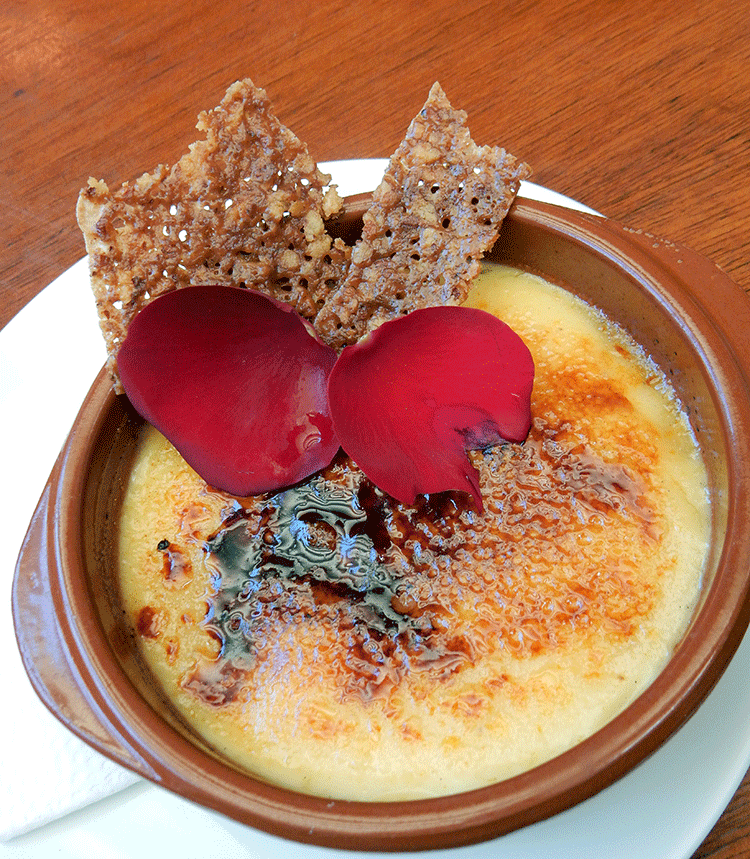
The enclosed patio of Los Danzantes is always a favorite, with top-notch service and a diverse menu. With the accompanying tortillas, the queso fundido appetizer with an abundance of huitlacoche, corn smut, is hearty enough to completely fill up two. The delicate tuna tartar tostadas are a more manageable starter for venturing farther down the menu. A giant leaf of hoja santa is filled with goat cheese and surrounded by a tangy sea of tomatillo sauce. Regional goat cheese flavors the creamy rice and fills a hearty serving of chicken with a huitlacoche sauce. The chocolate cascada releases warm, molten chocolate, and crème brulee is tinged with fragrant rosemary.


Many people head to El Olivo Gastropub for tapas, but we found their main seafood dishes are amazing, even after spending six weeks in Spain this past summer. The arroz negro, blackened with squid ink and fortified with an assortment of seafood and vegetables, was the Mister’s favorite dish during our month-long stay in Oaxaca. The pernod flavoring the shrimp dish had me hooked. The coffee ice cream with nut brittle tucked under it was both better and, amazingly, less expensive than the helados peddled on the Plaza Socrates in front of Soledad. The rooftop is fanned by breezes on even a warm afternoon.

In the early 1700s, Native Americans dug an elaborate system of irrigation ditches, or acequias, to water the farmlands surrounding the string of missions founded by Spanish friars. According to an article written by Jose A. Rivera in the Southwestern Historical Quarterly in 2003, the farmlands near Mission San Juan Capistrano were served by this system:
… until the spring of 1958, when a channel improvement project relocated the bed of the San Antonio River two hundred feet away from the headgate of the San Juan Acequia. In the process of straightening, widening, and deepening the river, the site of the original saca de agua (the historic San Juan Dam) was buried with excavated dirt and rubble. The new channel was too far away and deep to supply water to the San Juan headgate by way of gravity-flow irrigation as had been the practice for more than two hundred years.
Secularization of Mission San Juan Capistrano in 1824 included close to 500 acres served by San Juan Acequia. This land was granted to:
… military officers from the Bexar garrison, a former military chaplain, and four women, each coveting the quality of agricultural lands available at this mission site.
It took subsequent landowners decades of litigation and negotiations to regain their water access following the 1950s’ flood-control work undertaken by the U.S. Army Corps of Engineers and the San Antonio River Authority. The oldest water rights in Texas, Rivera writes, finally were restored in 2001, ahead of the San Antonio River Improvements Project.
Now, a short jog off the west bank trail of the San Antonio River Improvements Project leads through a field of wildflowers back to the ancient stone arched acequia, topped once again by water flowing into the restored ditches nourishing neighboring fields. The 13 miles of the recent river project, including the Mission Reach, represent a monumental effort by the Corps, the River Authority, the City of San Antonio and Bexar County to restore the river ecosystem to a more natural, healthy state. The wildlife, fisher-folks, hikers, runners, bicyclists and paddlers using it attest to their success.


Only a stroll away is a contemporary addition to the river’s banks, “Whispers.” In 2015, the San Antonio River Foundation contributed this site-specific sculpture by Belgian artist Arne Quinze to the Mission Reach project. (Read more about Quinze’s sculpture here.)
Lush greenery and wildflowers carpet the banks all along the Mission Reach. Hope you get a chance to walk and explore it before spring is overtaken by the summer heat.
 Postcards from Barton Springs