Postcard from Malaga, Spain: Street Art, Part III

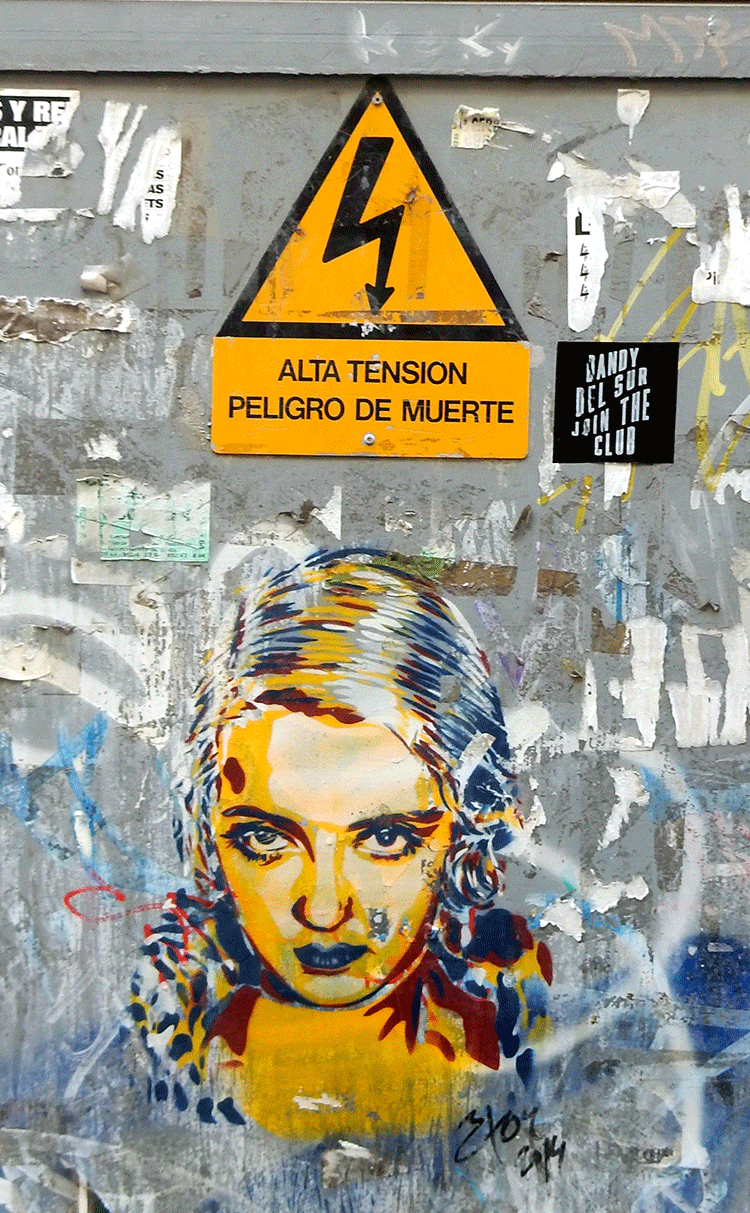
Some street art is contentious; some is soothing. Some is found tucked away on tiny side streets; some scales tall buildings.

Here is the third installment of art encountered during wanderings in Malaga.

Perhaps T-V-Boy says it best in a series of murals painted this past spring: “Malaga Loves Art.”

T-V-Boy Malaga 2019

Postcard from Malaga, Spain: Discovering a church’s “changing tower”

Holy banner of the Virgin Mary paying a call on Santuario de la Victoria

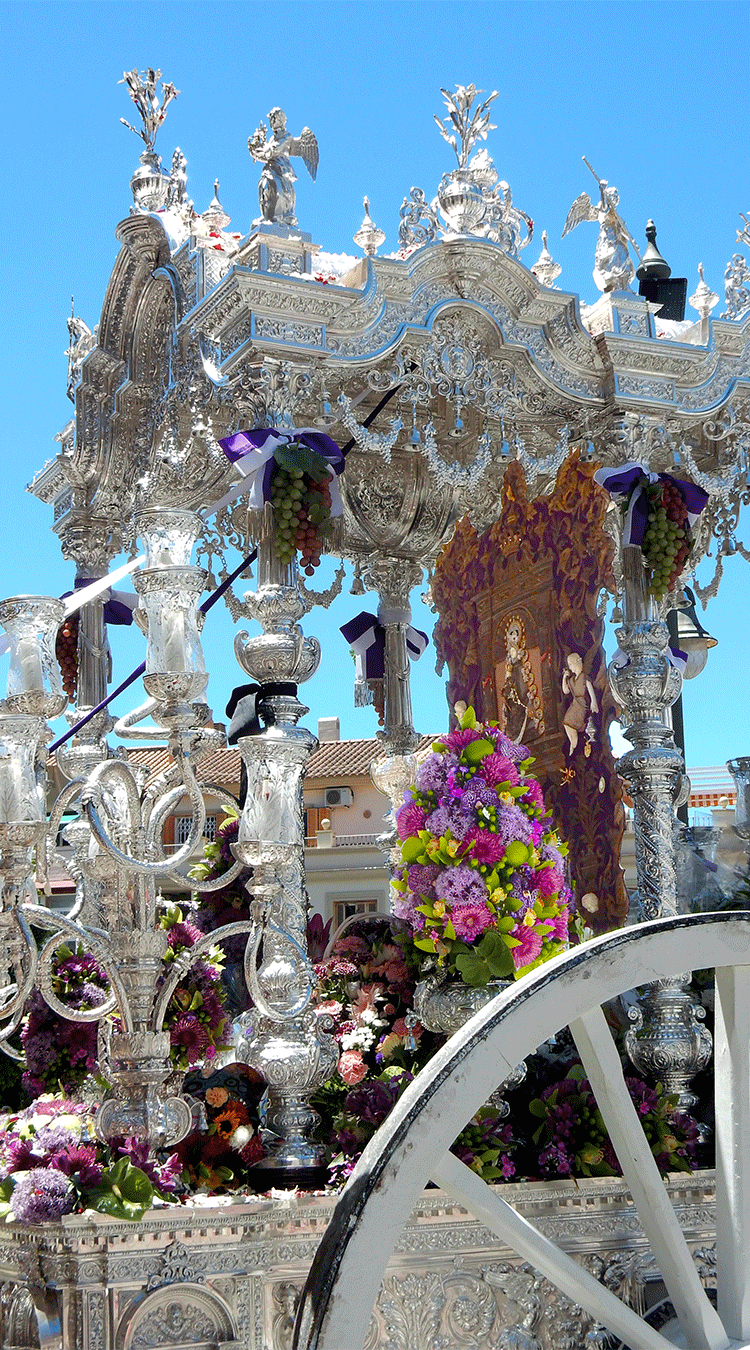
Judging from the silvered coach transporting the banner of the Virgin Mary on a traffic-snarling journey through the streets of Malaga to visit some of city’s other prominent figures of Mary – of which there are many, all elegantly attired and crowned – the banner must be highly regarded by the supporting brotherhood. A team of well-groomed oxen pulled her ahead of a fleet of flatbed tented trailers bearing a host of traditionally costumed followers, refueling themselves periodically from kegs of beer or wine.

We caught up with the procession after its visit to Santuario de la Victoria. The basilica dedicated to Saint Mary of Victory stands on the site of the encampment of King Ferdinand II of Aragon (1452-1516) when he laid siege to recapture Malaga from the Moors in 1487. The original church built soon after was replaced by a grander edifice completed in 1700.

What makes this church one of my favorites in Spain is the most spectacular chamber we almost missed. Up high behind the altar, accessed by a stairway tucked away behind doors off to the side of the altar, is what is referred to as a camarin torre, a changing tower. I am still unsure what that means, but inside a beautifully carved Virgin and Child are held aloft under a most ornate snowy white and gold dome.

The basilica might have risen to be my favorite anywhere if we had been allowed into the crypt down below. Inside are the sculptured tombs of the Counts of Buenavista, accompanied by a host of carved skeletons. Alas, the crypt was closed for restoration, perhaps completed by now.

Including a few final remaining shots of other Malaga churches and Marias in this post as well.

Postcard from Malaga, Spain: Perusing 2,000 years of art

“Dying Moments: Kicking a Man When He’s Down,” Bernardo Ferrandiz y Badenes (1835-1885), 1881

From Museum of Malaga label: This allegorical composition alludes to an episode in the artist’s life. A man of choleric temperament, he had a run-in with a fellow Academy member… which resulted in Ferrandiz being tried and sent to prison. Deeply shaken by this event, which led to his removal from the post of director of the San Telmo Fine Art School and social and personal disgrace, the once-haughty artist depicted himself as the skeleton of a cat. Only then, when the feline is “down,” so to speak, does the weakest of its sworn enemies, the mouse, dare to scurry among its remains.

Pondered how to pick a piece of art to represent a museum’s enormous collection…. Not sure why this painting by the man regarded as a founder of the Malaga School of painting was nominated, except Day of the Dead has been on my mind.

The Mister spied the painting first, perhaps drawn by the unusual printing painted directly on the frame. Somewhat illiterate in Spanish (understatement), I am label dependent. But what a great personal story – a tale of the politics of art – lurks within that frame.

The Museum of Malaga occupies the Palacio de la Aduana. The former customs house was commissioned by King Charles III (1716-1788) in 1787 in recognition of Malaga’s major role as a maritime trading center.

Two collections, one of fine arts and one of archaeology, were merged to become the Malaga Museum of Art and moved into the almost 200,000 square-foot neoclassical building in 2016. A lot to wander through and absorb, but here’s an abbreviated armchair tour.

Loved the horse “volunteering” his serum to inoculate a child in the 1900 painting by Enrique Borras. But my particular favorite is Enrique Simonet’s 1890 painting of an autopsy – “Anatomy of the Heart: And She Had a Heart.” Alas, now she has none. Seems a screen-shot from a macabre film.