Postcard From Madrid, Spain: Bewitched and bedeviled

Vintage Spanish stamp depicting a witch flying with children, inscribed with 'Quinta Sevilla Goya' and 'Correos Aéreos España'.

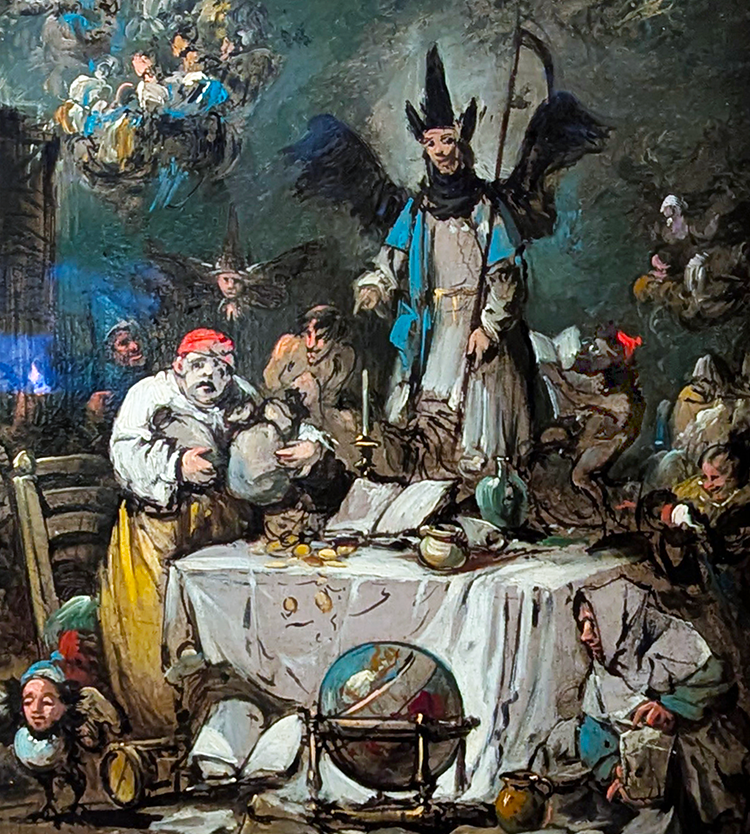
Above: Detail of “Allegoric Capricio,” Eugenio Lucas Velazquez (1817-1870), 1852, Lazaro Galdiano Museum.

Vispera de Todos los Santos. The hallowed eve preceding two holy days in the Catholic Church: All Saints’ Day and All Souls’ Day. Or, for the superstitious, La Noche de Brujas, when the witches fly.

Today, it appears Spain has succumbed to the highly contagious American-style celebration of Halloween. With all its horror-film-like bloody mess.

Continue reading “Postcard From Madrid, Spain: Bewitched and bedeviled”

Postcard from Catania, Sicily: Ambling about Acireale

A colorful vintage postcard featuring Mount Etna, with vineyards in the foreground and a bright blue sky.

Above: A version of a negroni created in honor of Mount Etna at Moro Acireale superimposed over a view of the simmering volcano in the distance.

Ambling sounded appealing, and, with a tenth of the population of bustling Catania, nearby Acireale beckoned. The predominant style of its architecture is Late Sicilian Baroque, sometimes referred to as “Earthquake Baroque.”

Then came an earthquake so horrible and ghastly that the soil undulated like the waves of a stormy sea, and the mountains danced as if drunk, and the city collapsed in one miserable moment….”

Account from an eyewitness to the 1693 Val di Noto Earthquake, The Genesis of Noto: An Eighteenth-Century Sicilian City, Stephen Tobriner, University of California Press, 1982

At the start of the new year in 1693, Mother Nature cursed most of southeastern Sicily with a triple whammy: Etna erupted; an earthquake believed to have measured well above 7 on the Richter Scale struck; and a tsunami hit. One way or another, more than 60,000 perished in the disaster.

Continue reading “Postcard from Catania, Sicily: Ambling about Acireale”

Postcard from Padua, Italy: How could I forget Giotto’s Hell?

A postage stamp depicting a scene from the Scrovegni Chapel, showing the Nativity with the Virgin Mary, Joseph, and angels, artistically rendered.

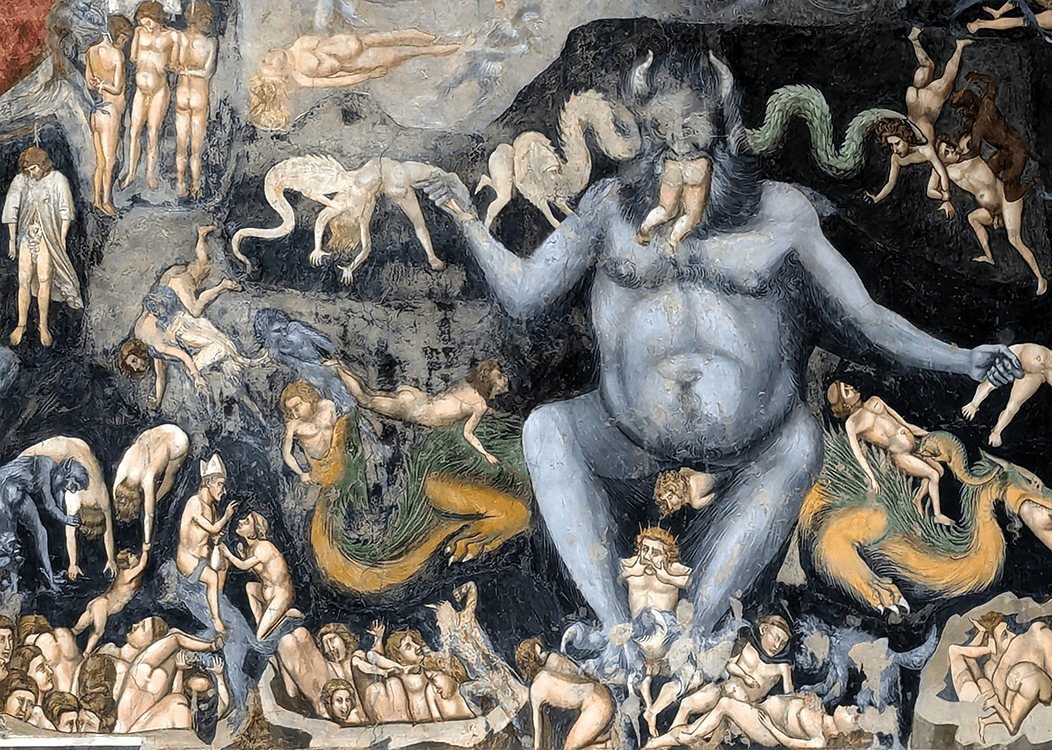
Above: The devil lording over Hell as depicted in “The Last Judgment” by Giotto (Ambrogiotto di Bondone, 1266-1337) in the Scrovegni Chapel

But as for the cowardly, the faithless, the detestable, as for murderers, the sexually immoral, sorcerers, idolaters, and all liars, their portion will be in the lake that burns with fire and sulfur, which is the second death.”

Book of Revelation, Chapter 21, Verse 8

Slides in Professor Bill White’s Renaissance art course at Hollins University groomed me into a Giotto groupie prior to standing in awe before Giotto’s actual frescoes in the Scrovegni Chapel. And Professor Henning surely pointed out Giotto’s horrific visions of Hell when I was on summer tour about a half-century ago, but I had sharper memories of gazing upward toward his Heaven.

Continue reading “Postcard from Padua, Italy: How could I forget Giotto’s Hell?”