Postcard from Puebla, Mexico: My first bilingual dream

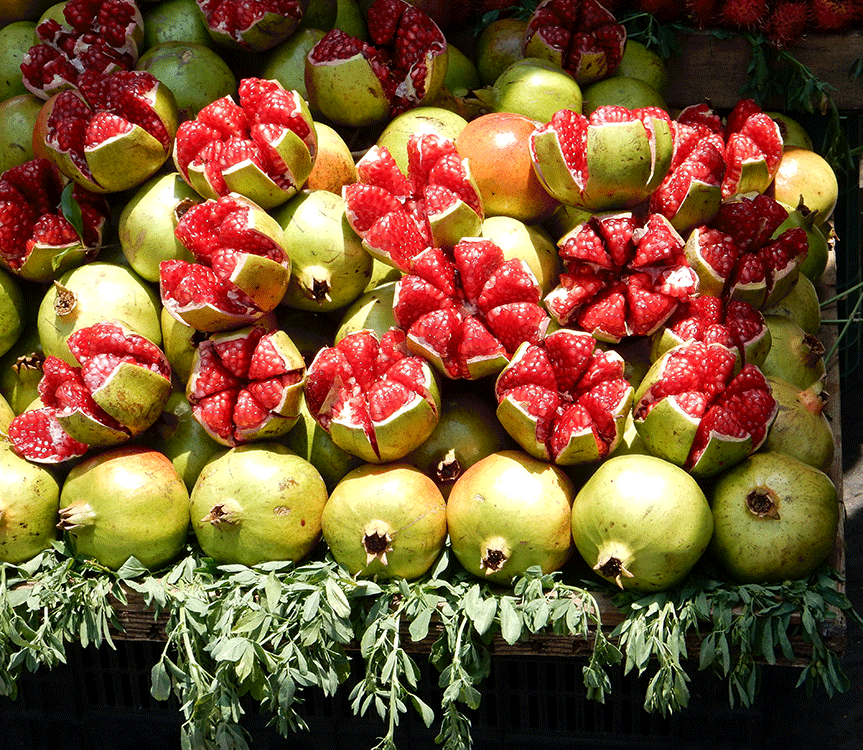
The conversion of high season for chiles poblanos, walnuts and pomegranates translates into a prime time to visit one of Mexico’s UNESCO World Heritage Sites – Puebla. The simultaneous ripening of those crops mean chiles en nogado are found on almost every menu. We heeded the call.

The city is ancient, founded by the Spanish as Puebla de los Angeles in 1531. One of the notable characteristics singled out by UNESCO is the logical grid layout of Puebla’s urban center. But logic and sense of direction are not among my strong suits.

Instead of learning the streets by their numbers and compass-orientation during our month of wanderings, I found myself referring to them by their retail occupants. There is the lawnmower street, the backpack street and the street of optician after optician to make price comparisons and style selection easier. There are corners noted for their cemita sandwiches, tacos arabes and, my favorite, freshly fried platano chips.

All extremely memorable landmarks not part of the UNESCO nomination.

There is a block full of shirts for los caballeros, blocks of Cinderella dresses and even a block lined with studio after studio of mariachi musicians.

And, who could not fall under the spell of a city with such an incredible sweet tooth? The main quarter for dulces probably stretches a mile.

While Puebla is one of Mexico’s colonial cities, it is no San Miguel de Allende. Its magic is that it is a bustling urban center clearly demonstrating the increasing rise of the middle class in modern-day Mexico. While there are a lot of tourists from Mexico City, there are relatively few Americans. The Main Plaza and pedestrian streets are filled with people who actually live there year-round.

Which brings me around to my first bilingual dream. With so few Americans staying there long-term, we two gringos spending a month there seemed to represent somewhat of a curiosity. Parents would smile for permission and then send their 12-year-olds over to us to practice their English. Everywhere we went, people were extremely friendly and flattered we had chosen such an extended stay in their city.

Then there was this empresario who was “muy, muy importante,” he explained several times. Yes, he was a bit inebriated in the late afternoon in the company of his adult son and the pouty-lipped, shapely woman of the same age who I misunderstood to be his third wife but actually was, by her own definition, one of his three girlfriends. He started sending us shots of a rich smoky mezcal for toasting. He soon invited himself to partake of them with us at our table, and proceeded to let us know how happy he was to see Americans enjoying Mexico. And how he was important. And how happy he was to see us. And that meant more mescal all around. And it was not easy to escape politely.

Yes, he was obnoxious. But he truly was friendly and exemplified the warmth of the welcome we felt everywhere in Puebla, despite the current rhetoric spewing from the mouths of some American candidates for president.

But the best part was that the empresario led linguistically-impaired me to have a dream in Spanish. That night in my sleep, his mescal-driven dialogue replayed. And, as we rose to escape, I heard him utter yet again: “A proposito….” “By the way….”


Postcard from Madrid, Spain: ‘To market, to market….’

An earlier post makes it obvious we ate out in Madrid… a lot. But we atoned, somewhat, for that activity with light meals at our apartment. Learning where to find specific foods in a different country is an entertaining part of the overall adventure.

Searching for an ideal loaf of grainy artisan bread took us on numerous explorations of nearby neighborhoods. Accidental encounters resulting in totally different purchases sometimes happened along the way, including a gleaming “extreme chocolate” pastry and a dinner-plate size meringue that made their way back to the apartment.

The route to my favorite mercado for buying both bread and cheese passed through the narrow, tree-lined streets of Salamanca. Residences fill the top floors along the way, while ground-floor storefronts display the wares of designer boutiques. The tonier the boutique, the more shelf space allotted each individual item. Dresses hanging on racks are separated from one another by about a foot; each purse is distanced from its neighbor by the same; shoes stand individually on pedestals, as though fine sculptures perched in museums. Prices in the windows have a startling extra zero on the end. Well beyond my budget, but people in the fashionable neighborhood could be spotted actually wearing the designer outfits as they walked to join friends for afternoon pastry breaks or cocktails. Why, oh why, didn’t we snap a photo of the man in the red suit?

After finally ambling our way to Mercado de la Paz, we were rewarded with fresh, healthy and surprisingly inexpensive breads (if you avoid their seductive pastries) at La Tahona de Ayala and a tantalizing cheese selection at La Boulette.

Many a guidebook steers you straight to Mercado de San Miguel adjacent to the Plaza Mayor. The mercado is stocked with an amazing selection of expensive gourmet items, with most individual vendors selling tapas and wine that you could possibly manage to balance enough to eat and drink by aggressively elbowing your way to a shared sliver of a stand-up table. Almost every tourist heads there. It’s crazy crowded, so bustling busy I didn’t even pause to take photos of the appetizing displays.

Chased out of the too-successful Mercado de San Miguel, locals find refuge in the 70-year-old Mercado de San Anton in the trendy yet still rough-around-the-edges Chueca neighborhood. The new San Ildefonso Mercado nearby completely abandons any pretense of selling foods to prepare at home in favor of gourmet food stalls with enough elbow-room and tabletops to enjoy them.

Back in San Antonio, just returned from a 20-minute car drive to restock our larder at home. Convenient? Maybe. Fun and exciting? No. Sigh.

P.S. Okay, life here is not all that bad. In addition to snagging seasonally cheap fresh Gulf shrimp at my H-E-B, I bumped into a new item in the produce section – bags of padron peppers. Blistered in a little olive oil in a skillet and finished with some flaky pink Hawaiian salt (a gift), they transported me back to a stool in Taberna Maceiras….

Postcard from Madrid, Spain: Flavorful food memories

Yearning for a great arroz dish, after much reading, we settled on a Madrid classic – El Caldero. The paella pan of beautiful looking rice arrives tableside, and, with much formality, the waiter divides it up and then tops it with the seafood in a dark, rich broth. As we looked at it, we were happy he divided it fairly because there really was not much there, considering the price, once you removed the shells – a small piece of bonito each, one or two shrimp, maybe two pieces of squid. The rice was good, but did not bowl us over. The fried eggplant appetizer, however, was heavenly. Most of the people in the restaurant were suits conducting serious international business of some kind or another. In other words, El Caldero was a bit stuffy for this pair of travelers.

The place we preferred down the street a few blocks definitely was more casual. In fact, it was chaotically crowded, with walls covered with funky collections of random things. The place was inexpensive. Dishes arrived in no particular or predictable order. The seating was upon uncomfortable wooden stools at wooden tables too small to accommodate all the pots of food presented. But we really liked this place, Taberna Maceiras, enough so that we ate there at least three times. A skillet of sizzling padron chiles made for a great starter. We enjoyed Galician style octopus rice, fried calamari, traditional bean stews, meat stews and perfectly prepared mussels in this polar opposite of El Caldero.

Another wonderful rut we slipped into was Gastromaquia Chueca. Maybe it was the grilled goat cheese caramelized with honey and topped with a glistening pesto. Or the scoops of lemon basil sorbet with rum poured over them tableside for a refreshing mojito-style desert. Guacamole was served with ultra-thin plantain chips; seafood arroz topped El Caldero; and richly curried mussels were moist and plump. And, as we were regulars, we enjoyed sipping Spanish liqueurs offered us at the end of our meals. Please, fly me back there today.

Croquettes can be found everywhere, but many of them are not worth the calories. We opted to go to the specialists, La Croquetta. Squash and eggplant croquettes arrived with a refreshing sauce of yogurt and mint, and the jamon Iberico ones were perfect. Melting goat cheese in one was studded with nuts and raisins, and fried eggplant was drizzled with honey.

Salmorejo is a seasonal favorite in Madrid. The creamy rich cousin of gazpacho traditionally arrives with bits of chopped egg and thinly shaved jamon Iberico in the middle. One of the places we spooned into this was a.n.e.l., a popular neighborhood tapas spot a block from our apartment. This was a nice stop for lightly battered vegetable tempura, fried calamari or sliders; although I never understood its name.

Directly across the street from our apartment in the Casa de America cultural center was Le Cabrera. The comfortable patio offered bargain lunch specials, many of which emerged from the kitchen of the extremely tony restaurant next door, Cien Llaves. Grilled asparagus topped with thin slices of parmigiano reggiano and grilled trout were among the dishes we tried. We probably would have eaten there again, but, by lunch time, we generally had wandered far from home.

Also close to home was La Vaca y la Huerta, a place that fills up completely at prime times. Here the Mister could find beef entrecote served as rare as he wanted, while I could get a beautiful plate of grilled vegetables or salmon.

We enjoyed the comfortable atmosphere of Saporem during two of our lunches. While the bowl full of vegetables looks bland, they were wonderfully prepared. Shrimp tempura atop rice was nicely presented with a spicy sauce.

In a capital city, one needs to experience some of the cuisines imported from abroad. We loved both the look and food of Arabia, but photos turned out too poorly to share. Falafel and grilled eggplant topped with fresh chopped tomatoes were artfully presented, and the lamb couscous was tender.

Then we decided to dip into Sub-Sahara African food at Kim Bu Mbu, easier to type than say. The small intimate restaurant is nothing short of handsome inside. Among the specialties were fish croquettes with eggplant sauce and fish steamed in a banana leaf.

Now, I’m stopping because I have made myself starving.

If you know us at all, you are probably wondering where are all the photos from Italian restaurants. Believe it or not, we didn’t find an Italian restaurant in Madrid we liked enough to include.

If you are staying in Madrid for any length of time and read Spanish, revolt against TripAdvisor. Guia Metropoli Comer y Beber en Madrid is written by locals for locals and is updated radically on an annual basis. The paperback doesn’t have quite enough information to replace internet research, but it doesn’t just rattle off the tired top 10 tourist favorites.