Postcard from Lyon, France: Film trivia challenge

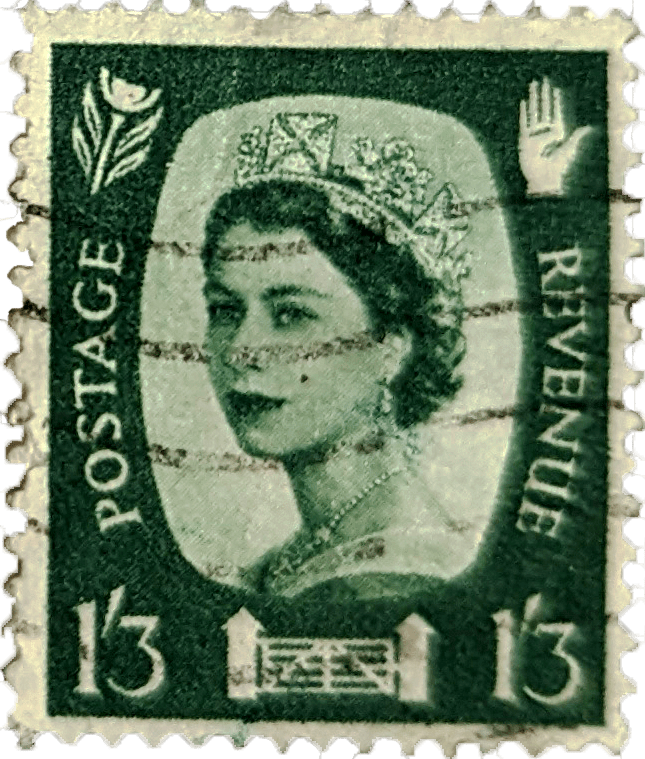
A postage stamp featuring a black and white image from the film 'La Femme du Boulanger' by Marcel Pagnol, with the inscription 'République Française 2,20' and the year 1986.

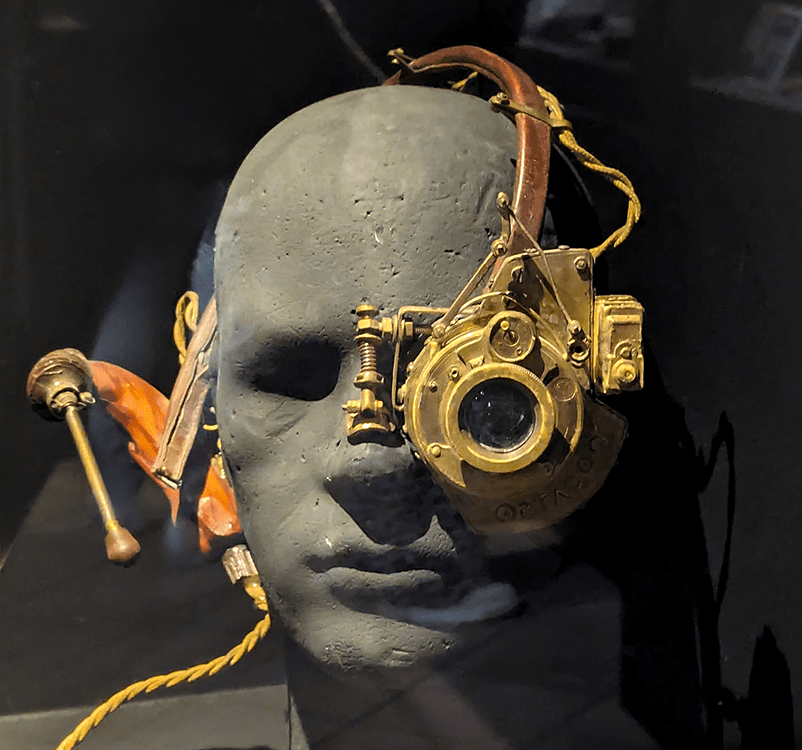
Above: Mechanical eye and listening device used by cyborgs in The City of Lost Children, 1995, Musee de Cinema et Miniature

I’ve always been a fan of science fiction, of models used in cinema. But I prefer miniatures, to dream a little…. I freeze frames of moments in life, places that touch me.”

Dan Ohlmann interviewed by Ludivine Corporal, “His Miniatures Have Been Wildly Successful for Years in This Renowned Museum,” Actu France, November 17, 2024

Dan Ohlmann’s construction of realistic miniatures is more time-consuming than it even looks, yet, by 1990, he had accumulated a substantial enough collection to open his Palais de la Miniature. As his fascination with set-design continued, he expanded to the acquisition of film memorabilia, costumes and props. A lot of them.

With a museum bursting at the seams and attracting an increasing amount of international attention, a Swiss fan arose as a major beneficiary. The donor purchased an early 15th-century Renaissance inn and turned it over to house the collection in 2004 – Le Musee de Cinema et Miniature.

Continue reading “Postcard from Lyon, France: Film trivia challenge”
Postcard from London, England: Stonehenge to “Pottershire” road trip

Above: Definitive proof that a family of giants, so advanced they had cellphones, built Stonehenge.

According to folklore, Stonehenge was created by Merlin, the wizard of Arthurian legend, who magically transported the massive stones from Ireland, where giants had assembled them. Another legend says invading Danes put the stones up, and another theory says they were the ruins of a Roman temple. Modern-day interpretations are no less colorful: some argue that Stonehenge is a spacecraft landing area for aliens, and even more say it’s a giant fertility symbol in the shape of female genitalia.”

“Stonehenge,” James Allen, National Geographic

Kate, third from the left in this family of giants, arranged a driver for a road trip from London into Wiltshire and Berkshire so we had no difficulty comfortably working the stops below into a day.

Far be it from me to attempt an explanation of the site of Durrington (“The Farm of the Deer People”) Walls Henge, aside from the archaeologists’ conclusions that the Neolithic Bronze Age settlement of Durotiges Celts dates from about 2,500 B.C. In other words, an extremely long, long time before Mel Gibson’s Wallace of Braveheart.

Continue reading “Postcard from London, England: Stonehenge to “Pottershire” road trip”

Oakwood Cemetery: Gleaning snippets of history from headstones

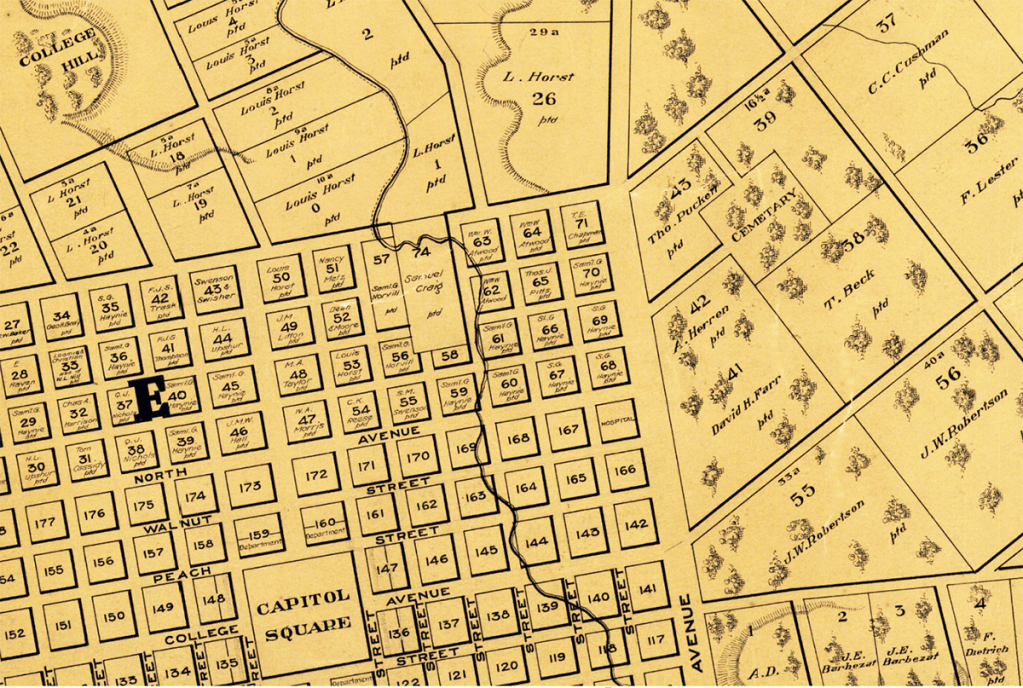
At the urging of President Mirabeau B. Lamar*, the Congress of the Republic of Texas selected a site on the Colorado River to serve as the country’s capital. In October of 1839, the government was loaded into oxcarts and moved to a site bounded by Shoal Creek and Waller Creek and newly named in honor of Stephen F. Austin.

William H. Sandusky’s 1840 map of the new capital, Austin, indicates a square plot of land dedicated for use as a cemetery. Texas General Land Office collection.

By January 1840, the population swelled to 839, and the need for a cemetery was obvious. The original core of what would later become known as Oakwood Cemetery is marked on the right of the map above.

Continue reading “Oakwood Cemetery: Gleaning snippets of history from headstones”