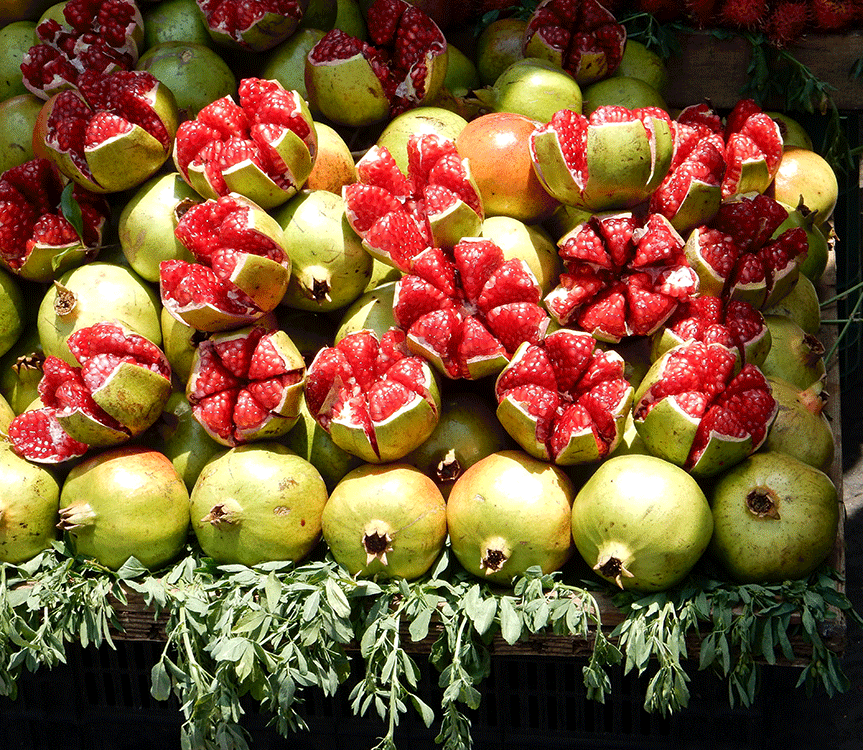
The conversion of high season for chiles poblanos, walnuts and pomegranates translates into a prime time to visit one of Mexico’s UNESCO World Heritage Sites – Puebla. The simultaneous ripening of those crops mean chiles en nogado are found on almost every menu. We heeded the call.
The city is ancient, founded by the Spanish as Puebla de los Angeles in 1531. One of the notable characteristics singled out by UNESCO is the logical grid layout of Puebla’s urban center. But logic and sense of direction are not among my strong suits.
Instead of learning the streets by their numbers and compass-orientation during our month of wanderings, I found myself referring to them by their retail occupants. There is the lawnmower street, the backpack street and the street of optician after optician to make price comparisons and style selection easier. There are corners noted for their cemita sandwiches, tacos arabes and, my favorite, freshly fried platano chips.
All extremely memorable landmarks not part of the UNESCO nomination.
There is a block full of shirts for los caballeros, blocks of Cinderella dresses and even a block lined with studio after studio of mariachi musicians.
And, who could not fall under the spell of a city with such an incredible sweet tooth? The main quarter for dulces probably stretches a mile.
While Puebla is one of Mexico’s colonial cities, it is no San Miguel de Allende. Its magic is that it is a bustling urban center clearly demonstrating the increasing rise of the middle class in modern-day Mexico. While there are a lot of tourists from Mexico City, there are relatively few Americans. The Main Plaza and pedestrian streets are filled with people who actually live there year-round.
Which brings me around to my first bilingual dream. With so few Americans staying there long-term, we two gringos spending a month there seemed to represent somewhat of a curiosity. Parents would smile for permission and then send their 12-year-olds over to us to practice their English. Everywhere we went, people were extremely friendly and flattered we had chosen such an extended stay in their city.
Then there was this empresario who was “muy, muy importante,” he explained several times. Yes, he was a bit inebriated in the late afternoon in the company of his adult son and the pouty-lipped, shapely woman of the same age who I misunderstood to be his third wife but actually was, by her own definition, one of his three girlfriends. He started sending us shots of a rich smoky mezcal for toasting. He soon invited himself to partake of them with us at our table, and proceeded to let us know how happy he was to see Americans enjoying Mexico. And how he was important. And how happy he was to see us. And that meant more mescal all around. And it was not easy to escape politely.
Yes, he was obnoxious. But he truly was friendly and exemplified the warmth of the welcome we felt everywhere in Puebla, despite the current rhetoric spewing from the mouths of some American candidates for president.
But the best part was that the empresario led linguistically-impaired me to have a dream in Spanish. That night in my sleep, his mescal-driven dialogue replayed. And, as we rose to escape, I heard him utter yet again: “A proposito….” “By the way….”




 Postcards from Barton Springs