Postcard from Valencia, Spain: Grotesque guardians watched over silk exchange

While orange trees abound along the streets of Valencia, mulberry trees were more important as a cash crop in the 1400s. Not for the fruit, but because their leaves provided food for the very hungry caterpillars striving to build cocoons and emerge as moths. The moths only live about five days, but lay hundreds of eggs before their passing.

For Valencian farmers, the cocoons were the most important result of the short life cycle. After a dip in boiling water killing the pupa who so industriously wove it, a silkworm’s cocoon can be unraveled to produce a strand of silk ranging from about 1,000 up to almost 3,000 feet long.

So unravel the Valencians did. They unraveled so much, that by 1482 the fortunes amassed and riches anticipated from future trade enabled the silk merchants to begin construction of a major Gothic edifice worthy of housing their transactions.

Now a UNESCO World Heritage Site, La Lonja de la Seda has a hall with soaring palm-tree-like columns for conducting transactions, a tribunal hall for adjudicating commercial disputes and even a prison for those found at fault.

Ah, but there are devils in the details. Although the Virgin Mary crowns the entryway and there is a nod to the crown on the side, many of the embellishments throughout the secular compound feature up-to-no-good-looking creatures. Was the ornamentation designed to warn dishonest merchants to stay away or to represent merchants thumbing their noses at the power of the church?

Less expensive fabric from Japan and China began dominating the silk market in the 1800s, but the streets of Valencia still house numerous shops continuing to vend fine silk brocade, with windows displaying their use in women’s fashions of centuries ago.

Oh, and the model wearing one such dress? She simply popped into camera view on a walk the same day we visited the silk exchange.
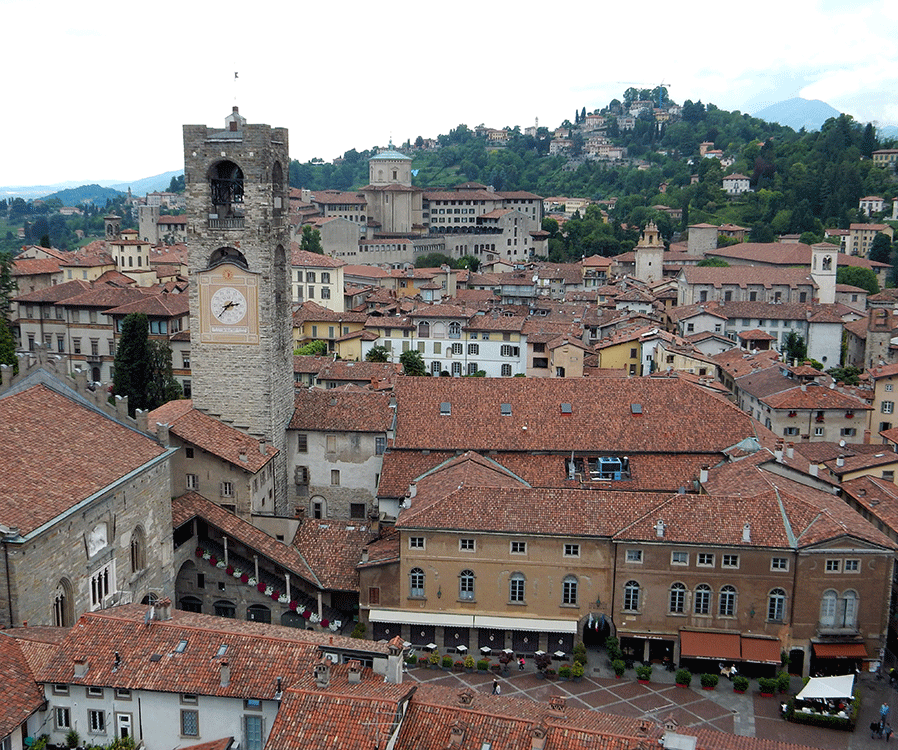
Postcard from Bergamo, Italy: Bidding Italy ciao, for now

These parting shots from the historic hilltop town of Bergamo represent the end delayed deliveries from this past summer’s trip….

Finally posting them would sadden me were it not for two facts: 1) We know we will return to Italy. 2) We already have launched this spring’s two-month sojourn.

Expect postcards from Valencia, Spain, in the near future.

Postcard from Bergamo, Italy: Final meals in Italy

The porcini man. We never learned his name. He slices fresh porcini throughout the day, places them in boxes at the door of the store and lets the distinctive woodsy scent announce to the locals the arrival of their supply.

The seductive ploy worked on us. We would sautee what for us was a luxurious mushroom with some of his rich dried tomatoes for a light supper. We visited him almost everyday.

Okay, not everyday for his porcini. His wine beckoned us to cross his threshold. He had the best prices and selection in the high, walled section of Bergamo. We could have bought wine down below, but it would have been a long haul back up the hill. And he was less than a block away from us on the narrow main street of the Alta Citta. A truffle store was a block away the other direction, but we limited our intake to shavings applied in restaurants.

There was a dangerous shop nearby that I tried to avoid. A storefront with two full windows of licorice candies. That business model would never fly in the United States.

Although there is nothing in my blood, I must have been born with Italian taste buds. The Italians seem to love the flavor of anise, and their licorice is the real thing. I crave the intense flavor but worry about the impact on my blood pressure. The memory of staying up half the night in a wide-awake state after a waiter in Ferrara left a full bottle of licorice liqueur on the table for me to self-serve reminds me to temper my intake. I asked the Mister – who absolutely has no hankering for licorice – to restrict me to a pastille or two a day.

While we continued to enjoy the traditional pumpkin-filled pasta, risotto, grilled vegetables and pizza we became accustomed to during our sojourn in Italy, our favorite restaurant in Bergamo was outside the walls in the city below. Monna Lisa successfully and subtly marries the flavors of fresh products and traditions of Lombardy tinged with accents from its owners’ native turfs – she hailed from Sicily and he from India. Results might include sea bass and ginger ravioli in a delicate mint and pea cream sauce; lentils dhal with smoked herring and coriander; or purple potato flan with gorgonzola and hazelnuts. So worth the hike down and the climb back up to the Alta Citta.

And, am embarrassed to admit, during our eighth week in Italy, a brand, new hamburger spot – Goss Grill – opened up almost across the street from us. We were among the first customers, ordering one to go to split hidden away in our apartment. It truly was as good as any American hamburger, yet tinged with an Italian accent of grilled eggplant and sun-dried tomato on top.

The subversive hamburger diversion should not be misconstrued to mean we do not continue to bow at the altar of alta cucina. Everywhere we go, we seek out Italian food after a week or so of immersion in any other cuisine.

It’s embedded in our taste buds.