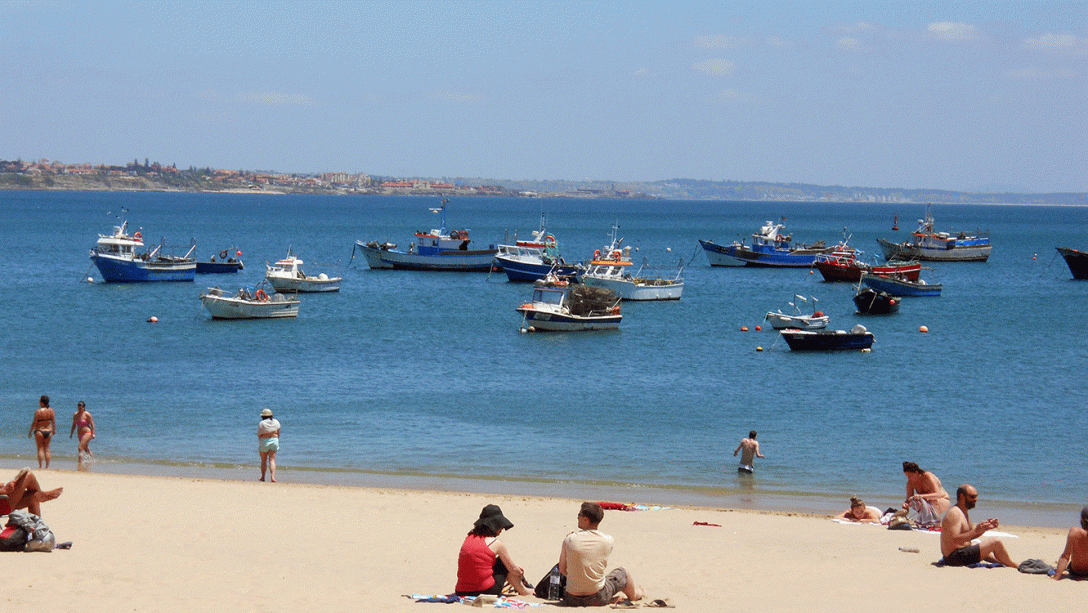
Postcard from Cascais, Portugal: Postage-stamp-size beach was perfect for parasol set

Cascais is a once extremely fashionable resort. Its proximity to Lisbon made it a welcome retreat for city-dwellers in the summer.

The old resort houses are not mere cabanas, but elegant. Many built during the twilight of the Portuguese monarchy, including an 1890 one by an Irishman, O’Neill – easy to spot among the photos because of a shamrocked ceiling.

This slideshow requires JavaScript.

Small beaches were not an issue back then. Tans were not in vogue; parasols were. Vacations were about promenades along esplanades.

But the resort still is a magnet; it’s only a $3 train ride from Lisbon, about 40 minutes. And it’s nothing but relaxing. A great place for an afternoon stroll with cooling breezes off the Atlantic and a stop at Gin and Moules for exactly what the name advertises.


Postcard from Lisboa, Portugal: Sardines and the Saint

Somehow the sardine has been elevated to a level almost of the saint himself, Saint Anthony that is.

Outside of Portugal, he might be known as Saint Anthony of Padua. But, here in Lisboa, he is their hometown boy. He was born right here. A saint of heroic proportions, so much so that his Feast Day, June 13, is glorified by a full month of celebrations.

People have been prepping for the party ever since our arrival in Lisboa. Festoons are flung across streets. Banners hang and bleachers are set up along the broad, tree-lined Avenida da Liberdade, ready for a parade on June 12. Neighborhood groups gather and parade across town to his church on various evenings. And, in Alfama, booths come alive nightly, plying passersby with jiggers of the strong cherry ginjinha, jugs of sangria, beer, fried things and, of course, grilled sardines.

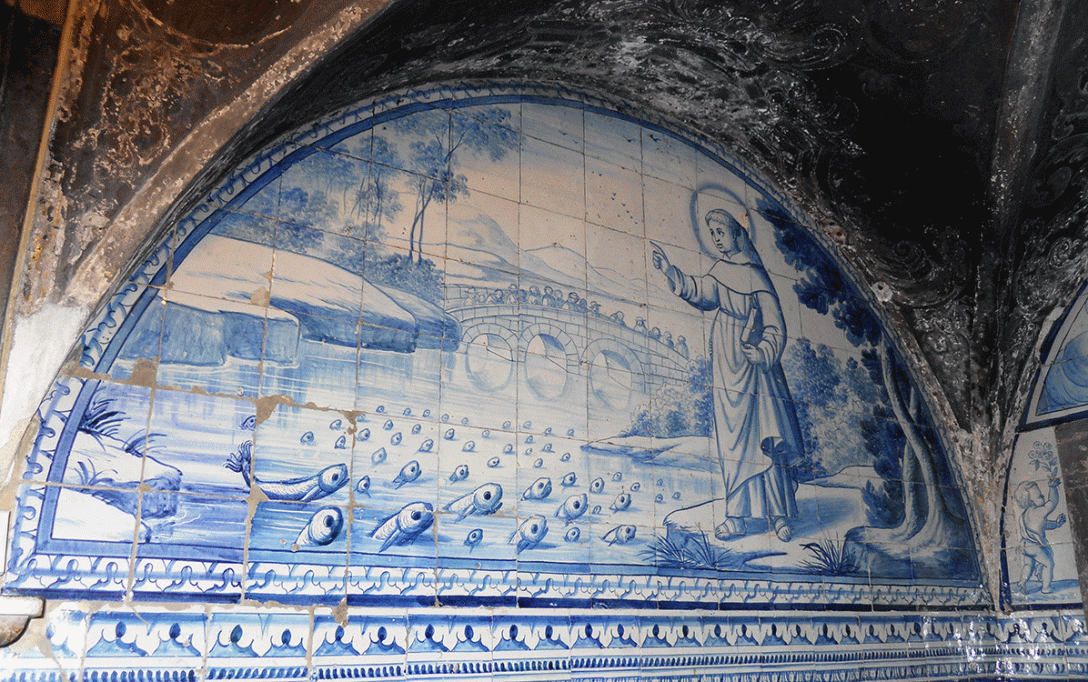
Sardines seem synonymous with the celebration, with artist-designed sardines featured on the banners of the umbrella group, Festas de Lisboa. This might stem from one of the numerous miracles attributed to Saint Anthony. Perhaps tiring of preaching to skeptics, he turned to the water and starting praising the glory of the fish who all rose enraptured to the surface, listening until he completed his sermon.

Surely, the attentive ones must have been sardines because it makes everything so convenient. Because this is their prime season. Along the coast, colorful fishing trawlers head out at night with nets to encircle the schools of sardines to bring back fresh to the docks by morning. By noon, they sizzle on grills everywhere throughout the country, the smoke and smell scenting the air heavily on some streets.

These freshly caught ones seem unrelated to the strong-tasting, oily canned sardines I remember from childhood. The fine bones of small ones thrown on the grill can be easily chomped upon, but the plump larger ones that you must filet are prized for their moist, sweet meat.

This slideshow requires JavaScript.

Being here on June 13th is sort of a pilgrimage, because, although named in his honor, San Antonio, Texas, pretty much ignores his day. Even his mission, the Alamo, no longer is known by his name. Frank Jennings tried to get a meaningful Founders’ Day going, and Rolando Briseno attempted to create artistic pageantry in honor of San Antonio’s patron saint.

But nothing stuck.

Yet….


Postcard from Lisboa, Portugal: Too Many Tiles and a Few Juicy Royal Tidbits

The influence of the Moors and world exploration opening doors to the art forms of India and the Orient are evident in the tile designs augmenting architecture throughout Portugal. The photographs here are from Museu Nacional do Azulejo, the National Tile Museum.

The home of the tiles is the Convent and Church of Madre de Deus, founded in 1509 by Queen Dona Leonor (1458-1525). The gilded church and large collection of reliquaries containing remnants of saints seem fit for a queen, and the queen did indeed spend her retirement years there praying for the poor and presumably for the souls of deceased members of the royal family who played parts in the lethal jockeying for political power and rights to the throne.

This slideshow requires JavaScript.

Tile overload? Sorry, I have no power to resist them.

But, here, pause to take in some of the court conniving surrounding the family of Queen Leonor.

Leonor was only 12 years old when she wed Prince Joao (John) (1455-1495). She became queen consort when her husband rose to the throne as King John II in 1481.

Perhaps wisely so, King John II perceived many plots and conspiracies swirling about during the early years of his reign, and relatives of his wife were among the prime suspects. The King had her sister’s husband executed for treason and personally plunged in the sword ending the life of her older brother. The Bishop of Evora was imprisoned, where he succumbed to poison.

Their son Alonso (1475-1491) married into the royal family of neighboring Castille. Unfortunately, his in-laws, King Ferdinand II and Queen Isabella, only had one feeble and frail son. They viewed Alonso’s marriage into the family as a potential threat to the sovereignty of Spain. Prince Alonso died under suspicious circumstances while out riding, contributing yet one more thorn to the relationship between the countries sharing the Iberian Peninsula.

This left the crown of Portugal without an heir apparent, and King John II lobbied hard to propel his illegitimate son into that role. Queen Leonor did not welcome those efforts and even appealed to the Pope for intervention.

King John II died unexpectedly early at only 40 years of age, quite possibly the victim of one of the poisonous plots he feared. The crown passed on to the Queen’s brother, Manuel I (1469-1521), as explorations were launching Portugal’s golden age.