Postcard from Palermo, Sicily: Artists color bombed-out and new walls

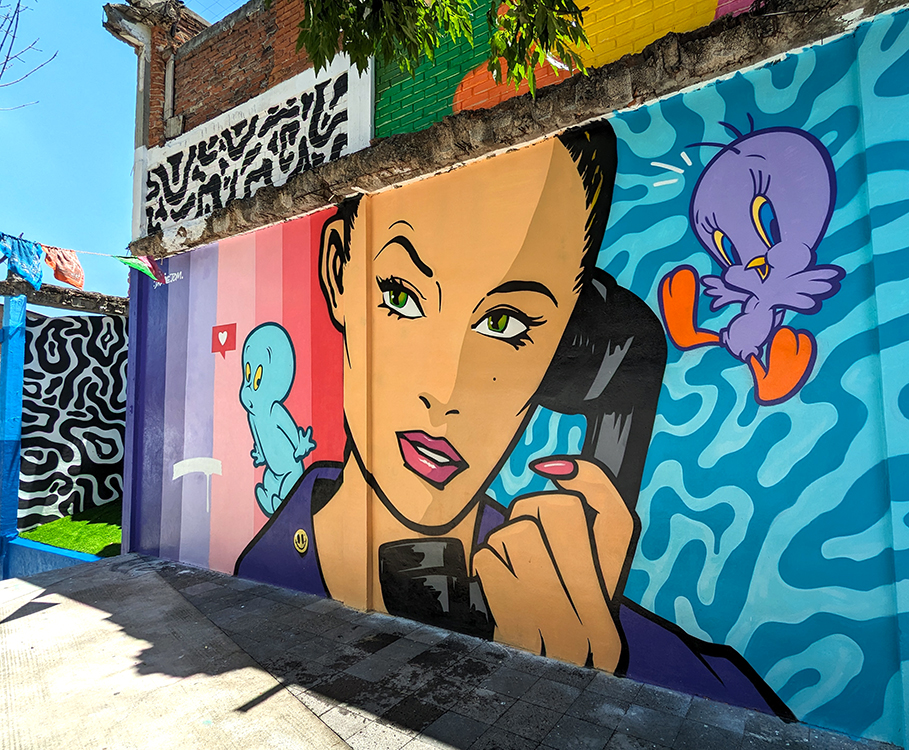
Sadly, World War II bombers left a wake of damaged buildings behind them in Palermo, many still not renovated. Blank walls, even crumbling ones, are magnets for street art.

Some of these photos from our explorations are authorized works; some are enormous murals attempting to humanize housing projects; and others are found in random spots within the city’s labyrinth of narrow streets.

Continue reading “Postcard from Palermo, Sicily: Artists color bombed-out and new walls”

Postcard from Morelia, Mexico: Crash history course in Michoacan

Above: Portion of “Defenders of National Integrity, Cuauhtemoc and History,” Alfredo Zalce, 1952, Museo Regional Michoacano Nicolas Leon Calderon

A Spanish Baroque house built in the 1700s is home to the Michoacan Regional Museum Dr. Nicolas Leon Calderon. With the oldest artifacts in the museum dating from more than 1000 years BC, the collection chronicles the history of and life in the state of Michoacan until hundreds of years after the dramatic impact of the Spanish Conquest.

Oh, Emperor Maximilian I (1832-1867) is said to have slept here (I believe this a more reliable claim than that of owners of almost every old house in central Virginia boasting “George Washington slept here.”). The home belonged to Francisca Roman de Malo and her husband when Maximilian stayed there in 1864 at the beginning of his brief reign. Francisca served as lady-in-waiting to Empress Carlota (1840-1927).

Continue reading “Postcard from Morelia, Mexico: Crash history course in Michoacan”

Postcard from Oaxaca, Mexico: ‘Nobodies’ and enslaved awaken walls

Above: A haunting image of a tightly bound slave on his side at the bottom of a wall is one of many works emerging from the Colectivo Subterraneos.

A prior post introduced Oaxaca’s Colectivo Subterraneos along with its series of “Los Nadies” on a pink-walled house in Barrio de Xochimilco, but these figures have popped up throughout the historic center of the city.

Unlike the scrambled mix-and-match style of the figures on the pink structure, most of these “Nobodies” are privileged enough to have retained their own original bodies. Prints of slaves also plaster buildings, images so powerful that Gord Goble described them in Penticon Now as both beautiful and terrifying portrayals of “man’s inhumanity to man.”

Continue reading “Postcard from Oaxaca, Mexico: ‘Nobodies’ and enslaved awaken walls”