Postcard from Valladolid, Spain: Plateresque architecture competes with sculpture within

Above, Isabelline Plateresque details surround the courtyard of Colegio de San Gregorio in the complex serving as Museo Nacional de Escultura.

The National Sculpture Museum is housed in three historic landmarks clustered together in one block in Valladolid.

With the nationalization of convents and monasteries in 1836, the government of Spain seized a wealth of artistic treasures in need of housing. Many of those from the region of Castile first went on display in Valladolid in 1842 in the Colegio de Santa Cruz. In 1933, the collection was designated a national one and was moved to the Colegio de San Gregorio.

The exterior of the 15th-century building is characterized by intricate sculptural reliefs in the Isabelline Plateresque style. The gorgeous façade demonstrates a complete lack of a uniform theme – resulting in a fascinating hodgepodge of biblical and secular components with an abundance of putti and floral and vine-like flourishes intertwined among them.

Continue reading “Postcard from Valladolid, Spain: Plateresque architecture competes with sculpture within”
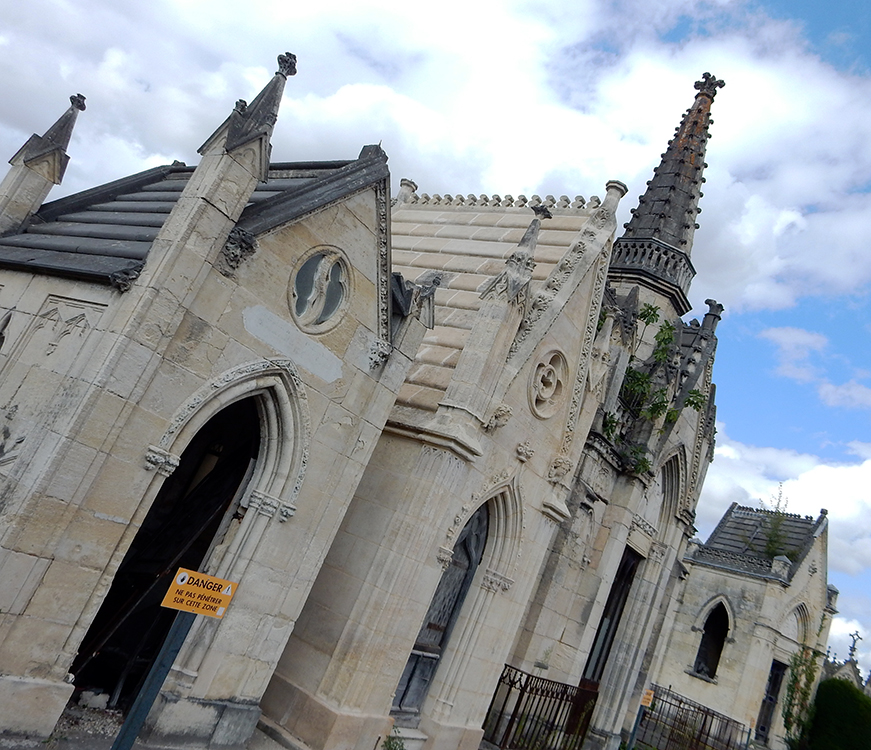
Postcard from Bordeaux, France: Pathways lined with petite houses for the dead

Founded in the 17th century, the Chartreuse Cemetery is the oldest above-ground cemetery in Bordeaux. Little stone chapels appear to have been the preferred permanent dwellings for the affluent of the city.

Continue reading “Postcard from Bordeaux, France: Pathways lined with petite houses for the dead”

Postcard from Sevilla, Spain: The celebrated potters of Triana

“Saints Justa and Rufina” (detail above) by Francisco de Goya hangs in the Cathedral of Seville.

The most revered potters of Seville made their living in the area known as Triana in the third century – Santa Justa and Santa Rufina. During a festival, the sisters purportedly refused to sell any of their wares for use in pagan celebrations. In anger, those who had been refused service broke all of the pair’s ceramics. And, in the spirit of an eye for an eye, the sisters retaliated by smashing a statue of Venus.

The city’s prefect imprisoned the sisters and demanded they renounce their Christian beliefs. They refused, so their deprivation of food and water and various stages of torture began. Barefoot marches, the rack, hooks. Their faith remained steadfast.

Justa finally starved to death, and still Rufina refused to surrender to the prefect’s demands. Rufina was cast into the public amphitheater with a lion, but the fierce lion supposedly demurred attacking and purred at her instead. The frustrated prefect finally resorted to beheading, a method that proved effective at ending Rufina’s life.

With clay from nearby Isla de Cartuja, the Triana neighborhood on the left bank of the river remained Seville’s center for ceramics and azulejos for centuries. In 2014, the former Ceramica Santa Ana factory reopened as the Centro Ceramica Triana. The museum traces the regional history of tiles from the earliest known examples through the 20th-century.