Postcard from Malaga, Spain: Cuisine anchored by seafood

El Pimpi Bodega Bar

El Pimpi Bodega Bar is an institution in Malaga. Although it was not founded until 1971, the buildings and décor are much older. Enormous wooden wine kegs line the hallway of the entrance.

Historically, los pimpis were the young men who would head to the docks to help unload cruise ships and then freelance their services as informal tour guides for the newly arrived tourists. El Pimpi has numerous dining rooms and a bright patio, but unfortunately it feels as though pimpis just led an entire boatload of tourists there. Definitely worth visiting though. Somehow we found a slow time, like early on a Monday evening, to belly up to the bar for a glass of wine and a tapa-sized order of croquetas. Both were perfect.

But on to seafood. And where to find the freshest? Head to a market. El Mercado Atarazanas is reputed to have the best. Tourists and locals in equal numbers compete for high tops with stools outside the market. The first time we landed at was a relative newcomer, Happy Fish, the name of which worried us. Too close to “happy meals.” But, fortunately, that was not the case. We felt reassured by the fact we were brought a bottle of wine that coincidentally bore the name of our favorite restaurant almost anywhere – La Biznaga in Oaxaca. On two other occasions we snagged space at the longer established Bar Mercado Atarazanas.

Both delivered great fresh seafood. We dove into platters of boquerones fritos (fried fresh white anchovies), chiles padron, fried eggplant, tortillitas de camarones (shrimp fritters). By our third trip to Mercado Atarazanas and after almost two months of opportunities, we finally got up the courage to take the plunge. We ordered an Andalucian delicacy we had been avoiding – ortiguillas de mar frito.

In the sea, these anemones use their long swaying tenacles to sting and entrap fish. Green algae filters through their somewhat translucent bodies. Restaurants serve them battered and fried. Hey, anything is good fried, right? Ortiguillas come close to a fried oyster in texture, but an oyster with a belly-full of blackish green algae. That makes them sound horrible, which they weren’t. Just a tad challenging for us. We did make it through about two-thirds of the way through our media racion (no tapa-size available). Box checked. More boquerones, please.

The market seafood stalls are packed, but locals have an escape spot away from the maddening crowd – La Peregrina. Not always easy to snag a table, but there is more elbow room. The place is somewhat sterile compared to the bustling market, but loved that women seemed to rule the open kitchen. All the same dishes can be found here. The grilled pulpo was perfect, but the pincho (skewer) of red tuna blew us away. You cannot tell from the photo, but it was seared on the outside and rare in the center – wonderful.

By all inside appearances, La Taberna de Cervantes appeared a perfect place to delve into traditional dishes, and our food was fine. But our waiter totally ruined it for us. Menus in the Andalucia region often feature three sizes of servings – tapas (light appetizers), media racion and full racion (full size). Our waiter, acting like a greedy pimpi trying to take advantage of tourists just off the boat, kept trying to upsize us, saying we needed raciones of everything. Oh, and better wine. And the “background music” was a commercial radio station playing tired cheesy tunes. Not a good experience, but, who knows, the “parent” restaurant does get good reviews….

El Gastronauta really should not be lumped together with these more traditional places, but, in order to restrict Malaga to two food posts, I needed a volunteer. Reservations are recommended in this small, narrow casual restaurant popular with a young crowd of locals. Vegetable sides are a bit more creative than many places, and on weekends the kitchen turns out a variety of quite respectable paellas.

More food later….

Postcard from Ronda, Spain: Best croquetas and pizza award?

croquetas at Gastrobar Deja Vu

Ronda’s hilltop setting is drop-dead gorgeous (photos to come in next post). Unfortunately, that means it is no secret. Hordes of day-trippers from Seville or Malaga descend upon it. Tourists have taken over the old town to the point of forcing most locals to abandon it to live in somewhat “newer” neighborhoods down below.

So most of the restaurants in the historic center cater to tourists, with little need to worry about repeat business. Normally, in places we stay only a couple of days, I do not post separate restaurant reviews.

At this point in time, we had been in Spain about seven weeks. But here, in petite Ronda, we were shocked to find two “bests” in a pair of restaurants. The best croquetas, in our admittedly amateur opinion, and the best pizza we had found in Spain so far.

Gastrobar Deja Vu presented an assortment of croquetas. I think there were squid ink, traditional jamon and two more varieties. The presentation with numerous sauces and salad greens was handsome, and the croquetas were incredibly good. And we tried them twice to make certain.

Everything we had at Deja Vu surpassed expectations, from gorgeous salads to a bison burger. Perfectly cooked salmon with an imaginative combination of vegetables. Remember Fruit Roll-Ups? Deja Vu employed a beet version to wrap up a truffled-up barley risotto like a enchilada. The understated dessert described as a “brownie” consisted of rich chocolate multiple ways. And we enjoyed the hospitably-offered finish of Licor de Hierbas.

And pizza? We cannot blame Spain for not living up to our unrealistic expectations for that. If we want pizza, we should go to Naples (where I am now typing this). But here, in little Ronda, we encountered the first one to appeal to us on that trip. Prepared by an Italian on the main tourist row of restaurants, the pizza at Il Forno a Legna hit the spot.

Postcard from Cadiz, Spain: Port city grants chefs license to play

The peninsula restricts available square footage immensely, so some of our favorite spots for eating out in Cadiz were tiny. We actually resorted to reservations so we were not continually shoved out of the local favorites into the tourist zone.

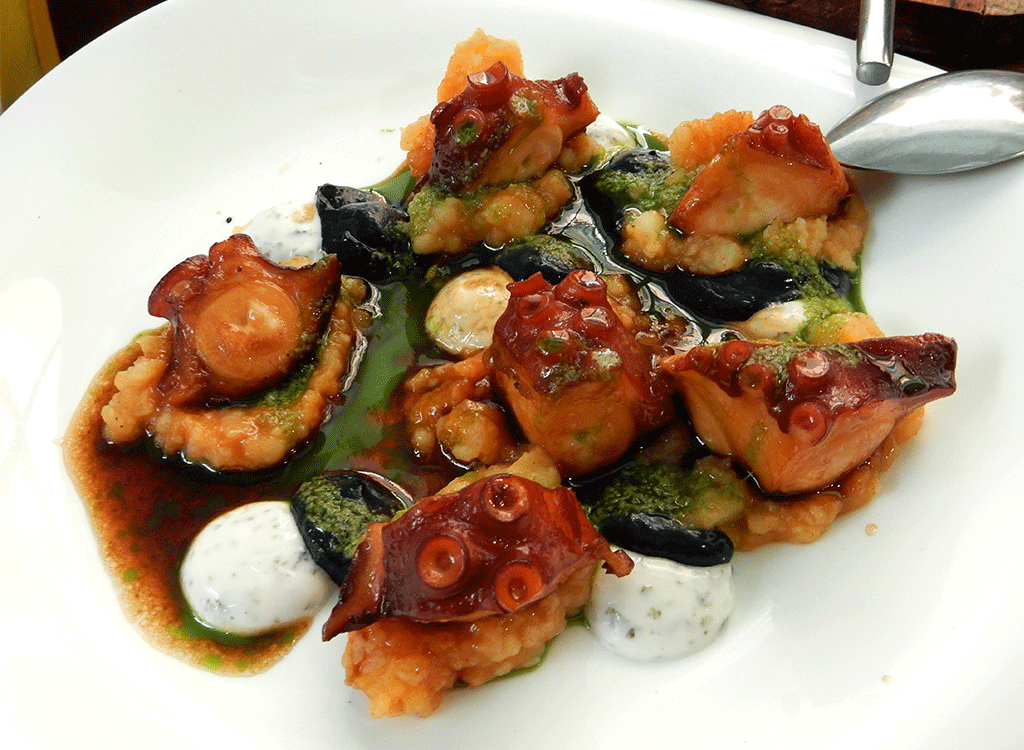
With the grilled pulpo above as Exhibit A, La Candela Tapas Bar became our favorite spot. The housemade croquetas of the day always were great, but, aside from that traditional preparation, the kitchen liberated itself to play. Presentation of dishes always surprised, from the unusual duck “ravioli” to a green tea tiramisu in an espresso pot. The shrimp and mango ceviche was refreshing, and the loaded-up board of roasted vegetables was particularly welcome.

We never go long without pizza and had not found any to our liking in Sevilla. But coNfusione Pizza & Bar offered the Italian accent we had been craving in a spot even smaller than La Candela. Again, there seemed a port-city freedom at play in the kitchen. Freshly caught red tuna flavorfully found its way into lasagna, and salmon reclined seductively atop a house squid-ink bread.

Fortunately, the tables at Sonambulo occupied a larger patch of real estate on Plaza de Candelaria, so we were able to get seated there without reservations. The fried asparagus are not to be skipped, and the salads, including an heirloom tomato one with anchovies, were varied. The wild mushroom tost was ideal for sharing.

The Mister satisfied his once-a-month desire for a hamburger at Ultramar & Nos. Fresh red tuna found its way into a sashimi-type dish for me.

Balandro Restaurante has a tapas side that was packed with locals standing six-deep at its bar, so we settled into the restaurant side. Tortillitas de camarones, mussels with spinach and lasagna with lobster sauce all were flavorful, but the restaurant side seemed a bit stuffy even though it offered a view of the water.

Reservationless at the popular spot we wanted to try, one day we found ourselves with no choice but a restaurant row targeted by hoards disgorged from cruise ships. Pleasantly surprised amidst the sea of tourists, we found the seafood arroz caldoso at Bar La Dorado quite tasty.

Our overall recommendation for Cadiz, however, is to call in a reservation.