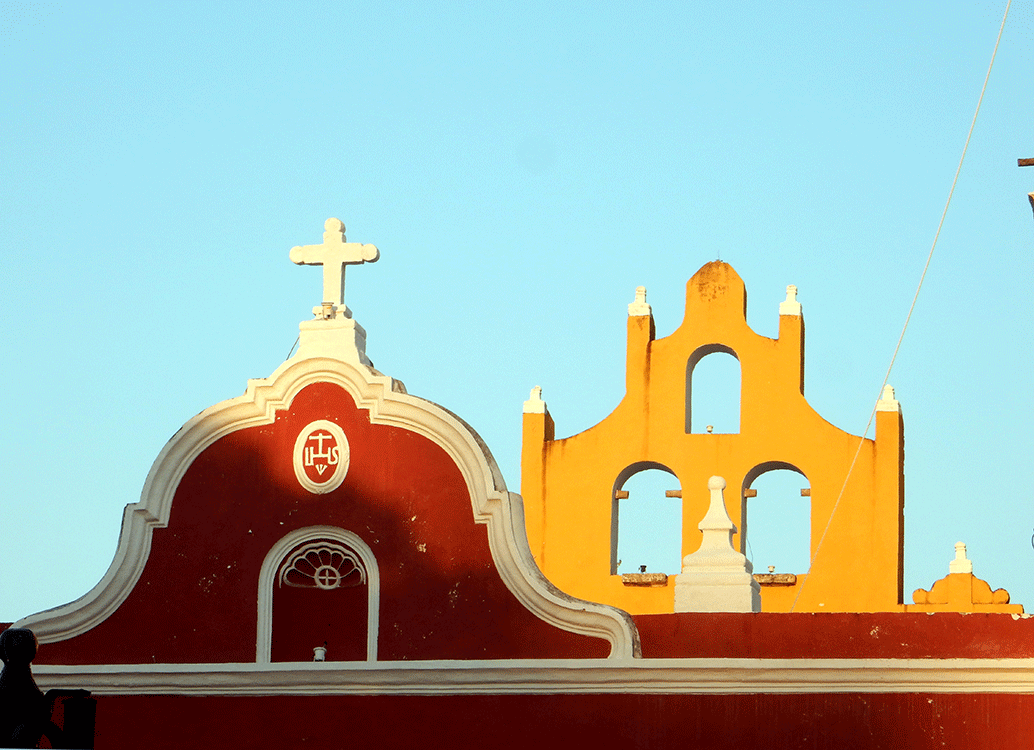
Postcard from Campeche, Mexico: A glimpse of her churches

The simple profiles of some of the colonial churches serving different neighborhoods in Campeche City resemble Missions Espada and San Juan Capistrano in San Antonio, but peeking inside reveals ornate and colorful surprises.

The Black Christ on the crucifix in Iglesia San Roman is heavily visited by the faithful who credit the figure imported from Italy in 1575 with a multitude of miracles. The festival in honor of the figure is one of Campeche’s largest, aside from the far less reverent celebration of Carnaval.

We were in Campeche on February 2, El Dia de La Candelaria or Candlemas in English. Celebrated to commemorate the day Jesus was presented at the Temple in Jerusalem, El Dia de La Candelaria is the final day of the extended Christmas season in Mexico. During the evening mass, the pews of Iglesia de San Francisco were filled with parishioners accompanied by the figures of Jesus Nino dressed in new finery waiting to be blessed. So wished we could have taken photos of ninos. Numerous families had their doors wide open to their living rooms to welcome friends and neighbors to view their nativity scenes and eat tamales provided by those who found the baby in their slices of roscas de reyes, kings’ cakes, on January 6.
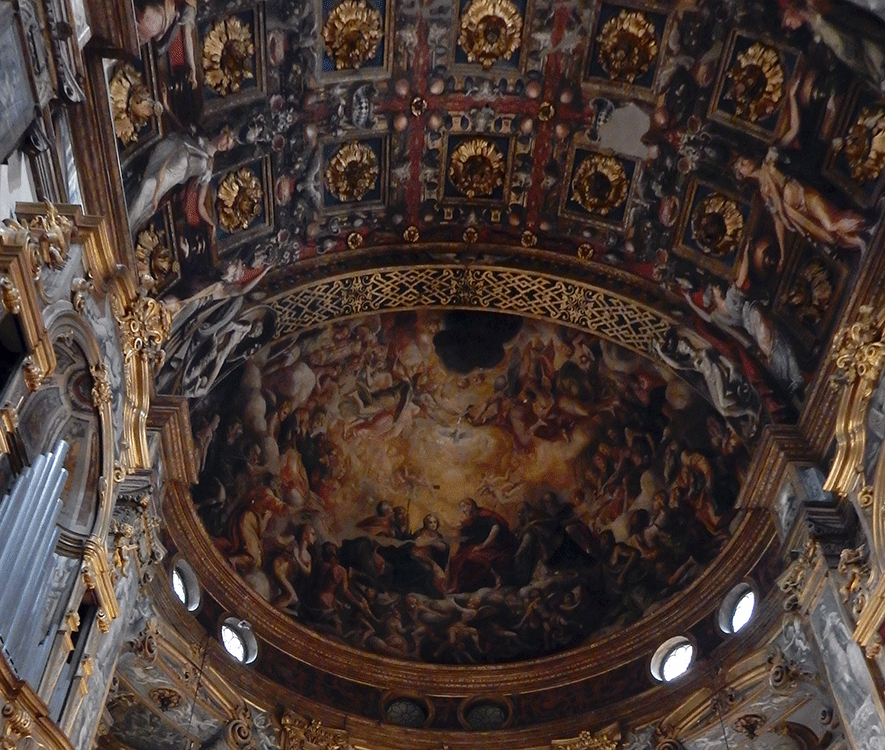
Postcard from Parma, Italy: Peeking into a few more churches

In addition to the Duomo and the Baptistery, quite a few other churches are squeezed into the historical heart of Parma.

A few of these photos are of the collection housed in the museum of the diocese.


Postcard from Puebla, Mexico: Mexico’s first charro bestows blessings on travelers

At first glance, he doesn’t look very good. But you have to know the backstory. He didn’t die yesterday.

Blessed Sebastian of Aparicio was 98 when he died and was buried, briefly, for six months. And that was more than four centuries ago.

Blessed Sebastian of Aparicio is among the group of saints, or in his case almost-saints, whose bodies have withstood the normal ravages of time. God chose to leave their bodies incorrupt, or intact, and they remain on display for the faithful.

While San Sebastian de Aparicio seems handsome for a 500-year-old man, in his youth his beauty caused great problems for him. He was so “comely,” according to the website Roman Catholic Saints, “wicked women frequently set snares for his purity.” The pious 31-year-old finally fled the lascivious ladies of Spain and settled in Puebla.

Blessed Sebastian de Aparicio began making ploughs and wagons for the primitive farmers he found there, and he plowed fields at no charge. So produce could be moved around the country, he set about building roads. This included a 466-mile stretch connecting Zacatecas, where there happened to be a lot of silver, to Mexico City. His farming, ranching and transportation endeavors made him wealthy.

Taking pity upon a young girl whose parents could afford to pay no dowry, Sebastian finally married at age 60. After her death at a young age, he entered a second “virginal marriage,” according to American Catholic. (Try to avoid falling prey to skepticism at this point.)

Finding himself a widower again, he distributed his worldly goods to the poor, funded a convent and entered the Franciscan order at age 72.

He died in 1600, and miracles attributed to him began to multiply and accumulate. He was beatified in 1787, but he’s still on the waitlist for sainthood after all this time.

If you are traveling through Puebla, you should make a pilgrimage to his shrine in the Church of San Francisco, particularly if you are from Texas. Although Blessed San Sebastian de Aparacio might not be canonized, he’s regarded as particularly helpful in granting miracles to travelers and was Mexico’s, which included Texas, first cowboy.