Postcard from Burgos, Spain: A ‘work of angels’

Above: Santiago, Saint James, stands guard under the eight-pointed star of the Spanish Renaissance lantern dome, cimborrio, of the Cathedral of Saint Mary of Burgos.

It seems more like the work of angels than of men.”

King Philip II of Spain (1527-1598)

King Philip II’s glowing description of the gleaming white dome that crowns the intersection of the horizontal arms of a cross with the main nave in the Cathedral of Saint Mary of Burgos seems appropriate. Designed by Juan de Vallejo and Francisco de Colonia, the octagonal dome was completed in 1568 to replace an earlier lantern, less than 50 years old, that collapsed rather spectacularly in 1539. The Latin inscription above Santiago at the base of the dome translates to: “In the midst of your temple I will praise you and give glory to your name because you do wonders.”

As the exterior of the Cathedral makes obvious, the interior’s tall golden altarpieces, soaring domes, choir, chapels and cloisters are overwhelming in scale.

Continue reading “Postcard from Burgos, Spain: A ‘work of angels’”
Postcard from Zaragoza, Spain: Competing patron saints and cathedrals, plus some miracles

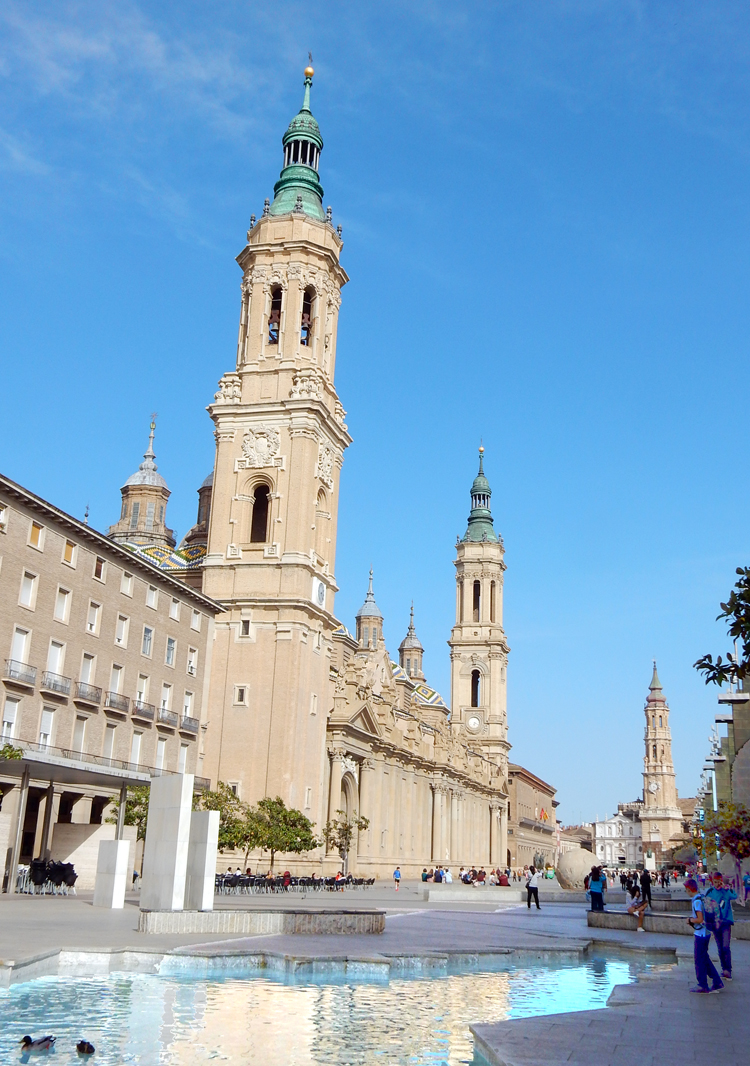
Above: La Basilica de Nuestra Senora del Pilar is on the left while La Seo de Zaragoza anchors the far end of the plaza.

Although conquered by The Battler, Alfonso I (1073-1134), the Moorish rulers of Zaragoza left rich architectural contributions in their wake. The main mosque was an impressive one, so The Battler opted for adaptive reuse, making alterations for Christian purposes and consecrating the new church in the name of San Salvador in 1121.

The Battler’s predilection for war unfortunately extended to his life with his wife, with no heirs produced from the contentious marriage. Leapfrogging over the resulting confusion following Alfonso I’s death, Ramon Berenguer (1114-1162), the Count of Barcelona, was betrothed to one-year-old Petronilla of Aragon (1136-1173) in 1137. The toddler’s father, known as Ramiro II (1086-1157), transferred the rule of the kingdom of Aragon to his new son-in-law so he could retire to a normally peaceful monastic life. As this post is not really about Ramiro the Monk, we will not dwell on his priestly qualifications that include the legend of his beheading of a dozen nobles who opposed him and using the head of their leader as the clapper for the bell of Huesca.

Demonstrating his dedication to the marriage-acquired territory of Aragon, Ramon had much of Zaragoza’s mosque/Catholic church razed to begin construction of a Romanesque replacement in 1140. This church became the home for coronations of Aragonese kings, and, with the papal appointment of an archbishop of Zaragoza in 1318, a cathedral.

Continue reading “Postcard from Zaragoza, Spain: Competing patron saints and cathedrals, plus some miracles”

Postcard from Zaragoza, Spain: Mandatum novum do vobis….

Maundy Thursday. A holy day of obligation when I was little, but certainly not a holiday universally celebrated in Virginia Beach.

Maundy is derived from the above Latin. Yes, I am of such an early vintage that Mass was still conducted in Latin. That doesn’t mean I understood it. I thought novum do vobis has something to do with Nabisco vanilla wafers, which would have been a welcome substitute for the dry hosts adhered to the roof of your mouth at the Communion rail.

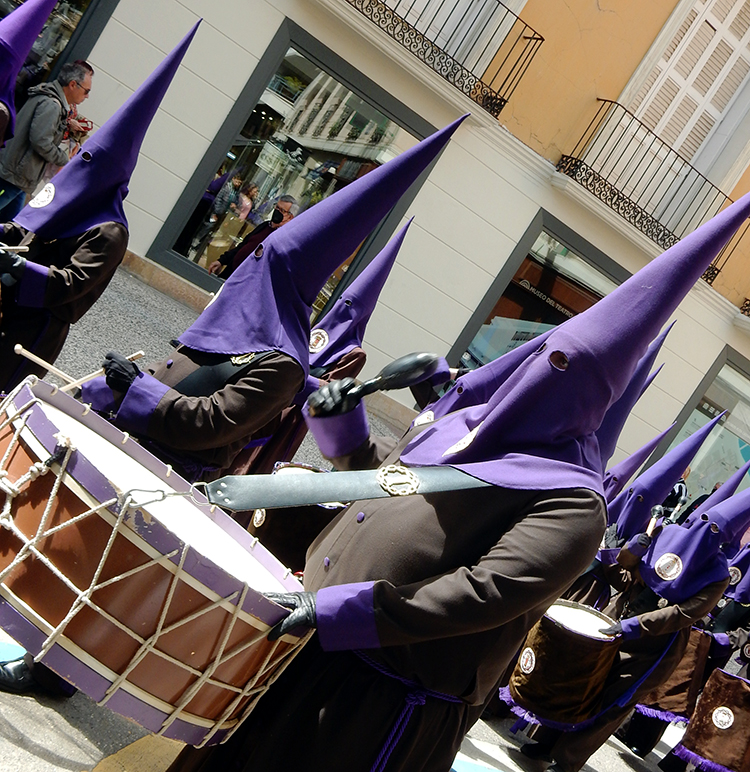
But here in Zaragoza, where we landed on Wednesday, Holy Thursday is big, the launch into a four-day holiday weekend. Thursday is commemorated as the day of the Last Supper, when Jesus informed his apostles one amongst them was about to betray him.

Continue reading “Postcard from Zaragoza, Spain: Mandatum novum do vobis….”