
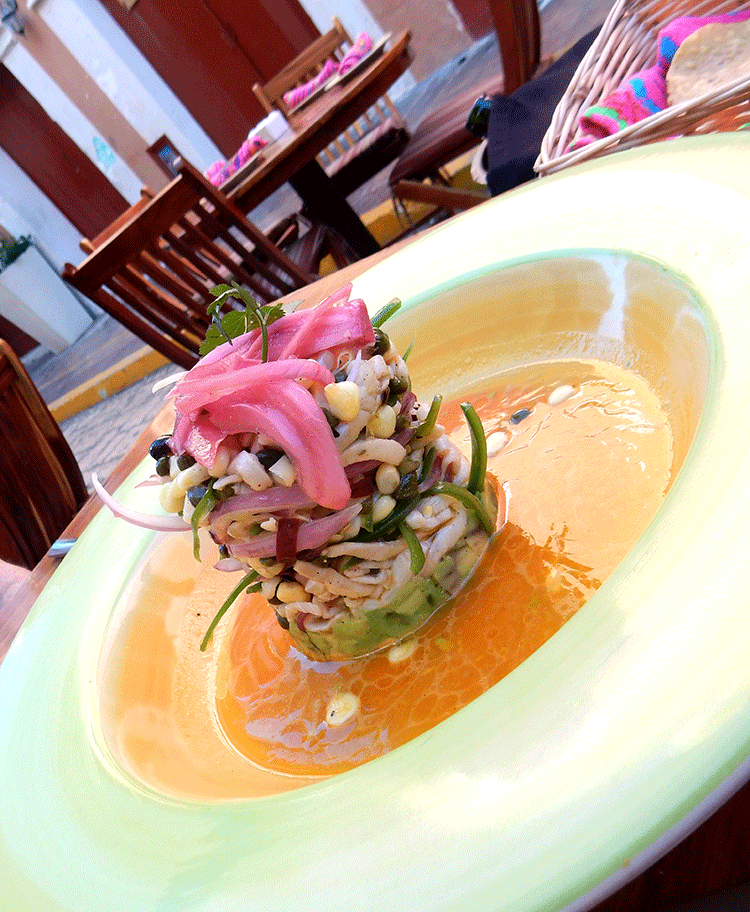
For anyone giving up meat for Lent, Campeche City would be an ideal place to spend the 40 days. Seafood is inexpensive and abundant. Finding fresh ceviche is no problem, and the huge shrimp are wonderful. A local favorite preparation is coconut shrimp, but menus offered many other options. Likewise, pulpo was prepared in vastly varying recipes.
My absolute favorite seafood dish was the stacked salpicon de mero (a fish confusingly translated sometimes as grouper and sometimes as Chilean sea bass) offered at La Parrilla Colonial. Our top vote-getter for shrimp was a grilled wheel of shrimp topped with a cheese and spinach sauce served at Bavit 59. Other standouts included the cubes of ahi tuna topped with avocado at Bavit 59; camarones de coco and tostadas topped with pulpo al achiote at Restaurante Don Gustavo; and the achiote tuna tacos at La Parrilla Colonial.
And then there is dogfish. Americans have been slow on the uptake to eat dogfish, even though the small shark is commonplace from Maine to Florida. Fishermen harvesting them on the East Coast ship them off to England. The English apparently do not possess the same degree of seafood snobbery and gobble them up in pubs frying them for fish and chips. This lack of a market in the United States probably is a good thing because it takes a long time for these spiny dogfish to make babies; their gestation period is 18 to 24 months.
In Campeche, however, dogfish or cazon, is celebrated and used in numerous traditional dishes. Pan de cazon resembles stacked enchiladas. Black refried beans are spread on multiple layers of corn tortillas, topped with stewed, shredded dogfish and then covered with a tomato sauce prior to baking. Another centuries-old recipe features chiles xcatic, a regional yellow pepper, filled with stewed cazon. Although flavorful, we were not bowled over by either of these complex preparations. But this was not because of the flavor of dogfish. The cazon dish most to our liking was the simplest one – fresh dogfish tacos. We enjoyed these as an appetizer at Los Delfines, one of a strip of casual seafood palapa restaurants clustered together on one end of the malecon, a concrete boardwalk stretching miles along the bayfront.


We did eat meat several times. The Mister was smitten by the chicken with chaya, Mayan tree spinach, at La Parrilla Colonial. In addition to an elevated preparation of cochinita pibil, the kitchen turns out a flavorful taco al pastor for less than $1. Luan Restaurante Café offers a remarkably good milanesa telera, similar to a bolillo, but the cafe’s hours varied wildly. We broke away from regional specialties several times to enjoy Italian food at Scattola 59.
Both Luan and Scattola 59 endeared themselves to us because they carried multiple bottles of reasonably priced red wine. Some of the best restaurants in town made us feel as though they were conning tourists, as in us. They regularly claimed to be out of wines we ordered, with the only ones available as substitutes priced $5 or even $10 more. This touristy treatment made it hard to feel at home in the place we were staying for three weeks. A waiter at a boutique hotel should not be expected to beg customers to post positive reviews on TripAdvisor. And, in addition to upselling wine at another restaurant, the Mister had to endure a 15-minute parade of expensive Tequila offerings before finally being served the one he originally requested, strangely presented perched in a Johnnie Walker glass.
Aside from warning you to beware of or prepare to endure those peeves, we’d recommend any of the mentioned restaurants. The food in Campeche is distinctively different – in a good way – from any other place we have been in Mexico. Sure wish I’d encounter salpicon de mero in San Antonio.


 Postcards from Barton Springs