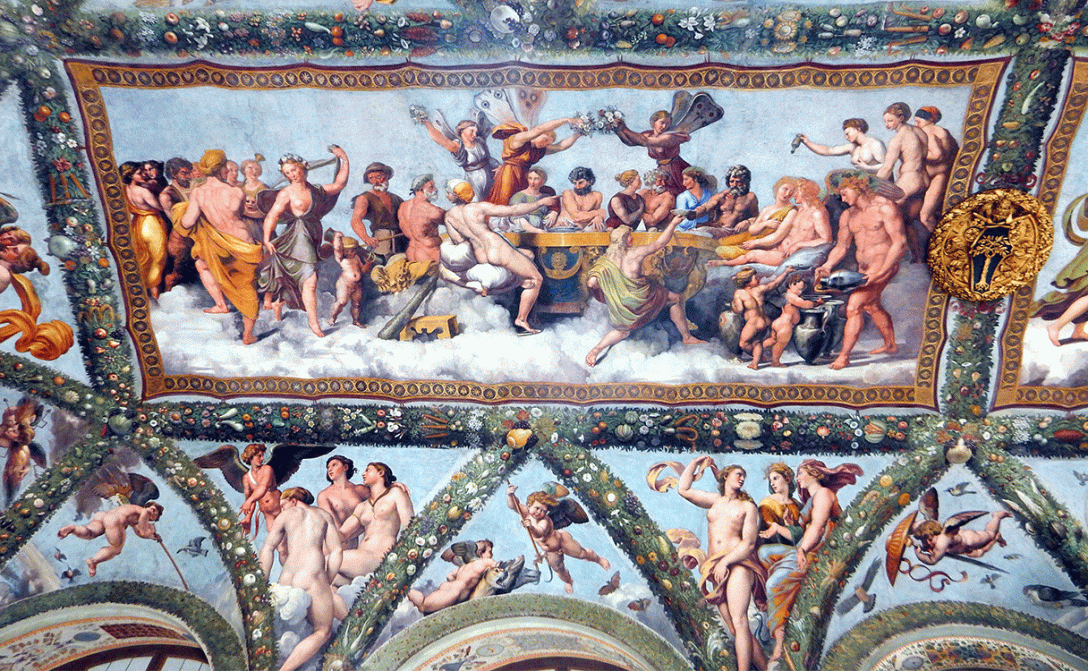
“Cupid and Psyche,” ceiling fresco by Rafael (1483-1520) in the loggia of Villa Farnesina
April has been dry in Rome, meaning, for a pair of flaneurs, it approached perfection.
One would think flowers feel differently about it. Yet bright pink blossoms defiantly cover the trunk of a tree maimed by an errant trimmer, and tiny flowers force their way through seemingly inhospitable cracks and crevices of ancient walls.
May Day arrives with showers, so no telling what blossoms will spring forth tomorrow.
Perhaps, instead of wandering afar, these boulevardiers need to devote part of the drizzly holiday admiring the greening of the thirsty plants around the patio, toasting the workers’ day off with a refreshing spring dose of Campari and tonic.
The façade of a Gothic palace disguised by numerous layers of ostentatious additions of Baroque, Rococo, Neoclassical and maybe even Oriental decorations through the centuries houses the National Museum of Ceramics and Decorative Arts in Valencia. A prominent location and the sheer audacity of its exterior ornamentation attract crowds to the museum. Aside from a set of china with fanciful animals that I loved, the museum overall resembles a beautifully iced flavorless cake. This sounds harsh, but, if time is limited, we would recommend a trip to the under-visited House Museum José Benlliure instead.
The palace of Saint Pius V above the Turia River provides huge galleries for displaying several centuries of Spanish art, beginning with a collection of huge Gothic retablos. El Museo de Bellas Artes includes works by Velazquez, Goya, Sorolla and Valencian hometown favorites, the Ribaltas.
Casa de las Rocas
Museo de Bellas Artes
Centre Cultural La Nau, installing “Those Who Stay”
National Museum of Ceramics and Decorative Arts
Casa de las Rocas
Museo de Bellas Artes, “Retablo de San Miguel Arcangel, Jaume Mateu, 1400s
Museo de Bellas Artes
National Museum of Ceramics and Decorative Arts
Casa de las Rocas
Casa de las Rocas
Museo de Bellas Artes
Casa de las Rocas
Museo de Bellas Artes, detail of “Retablo of San Miguel”
National Museum of Ceramics and Decorative Arts
Museo de Bellas Artes as viewed from Turia Gardens
Centre Cultural La Nau, installing “Those Who Stay”
National Museum of Ceramics and Decorative Arts
Casa de las Rocas
National Museum of Ceramics and Decorative Arts
Museo de Bellas Artes
Centro Cultural Bancaja, Julian Opie exhibition
National Museum of Ceramics and Decorative Arts
Sixty days after Easter, the doors of the Corpus Christi Museum swing open so the rocas, massive wooden floats about 500 years old, can be rolled out for the annual parades celebrating the feast day. Horses haul the floats over the cobblestones, the faithful bear heavy statues atop their shoulders and gigantes, 16-foot figures representing Catholics from around the world, are part of the religious fanfare. As our timing was off for the event, we visited the carriage house, Casa de las Rocas, built in the 1400s specifically to house the floats. The parade-in-a-box leaves no spare space, but the jammed together festival props provide a sense of the ancient enduring traditions.
We also left three days before the opening of PhotOn Festival, the International Festival of Photojournalism spread mounted in several venues in Valencia. When we entered the cloisters of Centro Cultural La Nau, workers were installing large prints by Joseph Eid and Natalia Sancha for “Those Who Stay.”
While the original founding bank might have floundered when the real estate bubble burst, a palace of art remains. The spacious galleries of the Centro Cultural Bancaja are operated by a nonprofit foundation. Portraits by British artist Julian Opie were featured. We found them somewhat hypnotic despite their pared down, cartoonish lines and a peculiar flatness. Several of the large illuminated portraits of individuals featured subtle movements. The hands of a watch might move once a minute, or dot-like eyes might blink about as often as you do.
Opie’s video below made me feel as though I was relaxing at a café watching a parade of people passing by on their way to work – a kind of boulevardier spirit we cultivate while traveling.





 Postcards from Barton Springs