The hopeful arm stretching out the driver’s side window
failed to snatch the satchel clutched tightly to her chest.
No food for the table of the native;
unrecoupable words saved for the writing gringa.
*Apologies for this format, so awkwardly written by one unaccustomed to verse. Blame it on poet Ellen Bass. Emerging under the spell of her reading during the Writers’ Conference in San Miguel de Allende, prose seemed prosaic. But the awkward prose to which followers are accustomed will resume after sleeping off her influence.
Empress Carlota and Emperor Maximilian of Mexico, circa 1864, from the Lusher Collection and included in exhibit at the Witte Museum February 1 through March 30
City of Mexico, Thursday, Jan. 10, 3 p.m., 1867 – Yesterday morning Col. Paulino Gomez Lanadrid, commanding 700 reinforcements of Imperial troops sent to succor the besieged garrison at Cuernavaca, was killed near that place during an attack by a body of Liberals, who were lying in ambuscade….
More than 500 families, mostly Mochos and French, will leave here on the 20th with 4,000 French troops….
Maximilian is waiting for the last French soldier to leave. The shadow of the last of the expeditionary corps will not be lost sight of by the Archduke, who is now residing in a humble house between here and the Castle of Chapultepec.
And so, Maximilian, the falling emperor of Mexico, awaited his fate.
“Execution of Emperor Maximilian of Mexico” by Edouard Manet, 1868 (not part of exhibit at the Witte)
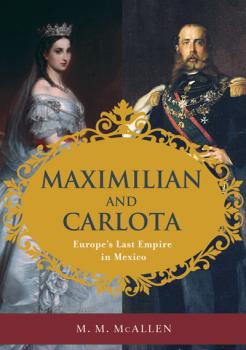
The French installation of the Archduke Maximilian and his Belgian-born wife Charlotte to reign over the politically unstable Mexico of 1864 was bound not to end well. But the story is a rich one of international intrigue on both sides of the Atlantic.
As Trinity University Press prepares to release Maximilian and Carlota: Europe’s Last Empire in Mexico by Mary Margaret McAllen, the Witte Museum is opening a companion exhibit, “Maximilian and Carlota: Last Empire in Mexico,” focusing on the fascinating lives of the ill-fated royal couple. The exhibit of portraits, photographs and artifacts opens on February 1, while the author will read from her book and be available to sign copies during a reception from 4 to 6 p.m. on Saturday, February 8, at The Twig Book Shop.
Fell in love a few year’s ago with C.M. Mayo’s masterful novel, The Last Prince of the Mexico Empire, focusing on a child caught up in the political turmoil – Principe Agustin de Iturbide y Green. A Library Journal review in 2009 perhaps summarizes the complexities involved most succinctly:
Once upon a time, there was a little half-American boy who briefly became heir to the Mexican throne—until his distraught parents sued the doomed Emperor Maximilian for his return.
I highly recommend Mayo’s book, and am looking forward to reading McAllen’s. And if these and the exhibit leave you thirsting for even more glimpses into the lives of Maximilian and Carlota, Mayo maintains an ongoing blog Maximilian ~ Carlota, described as “resources for researchers of the tumultuous period of Mexican history known as the Second Empire, or ‘French Intervention.'”
I’m hoping one of the two authors will suddenly contact me with a sliver of information (a very unlikely record to stumble upon, so am certainly not holding my breath) about a San Antonio connection to the royal rulers. Among the Austro-Hungarians enlisted to serve in support of their reign in Mexico was Baron George Ritter von Tomasini (1818-1912). As the Second Empire of Mexico collapsed, Tomasini and his wife made their way to New Orleans and to San Antonio by 1872. Here, they joined the community of dairy farmers at the Coker Settlement, about which I am writing a book for the Coker Cemetery Association. Geographically, the heart of the Tomasini farm was located where the cluster of shops and restaurants known as The Alley on Bitters are found today.
February 3, 2014, Update: Read Steve Bennett’s review of McAllen’s book in the San Antonio Express-News
March 19, 2014, Update: David Martin Davies will moderate a discussion with McAllen from 10 to 10:45 a.m. in the Story Room on the 3rd floor of the Central Library during the San Antonio Book Festival on Saturday, April 5.
January 5, 2016, Update: C.M. Mayo has posted a podcast of a conversation with McAllen recorded in The Twig in October 2015.
You, one of the few who actually reads this blog, have failed me. As usual, the subject matter of the most-read posts is all over the map, providing me no guidance of where to head.
Except guns at the Alamo. And I really prefer not to write about guns. The popularity of those posts rose because they were circulated widely among those who want to brandish arms publicly, so much that I felt compelled to move away from the window while typing so not to serve as an easy target.




 Postcards from Barton Springs