Postcard from Siracusa, Sicily: Protector of eyes and the quill

Above: Santa Lucia holy card superimposed over silver milagros displayed in Cattedrale della Nativita di Maria Santissima
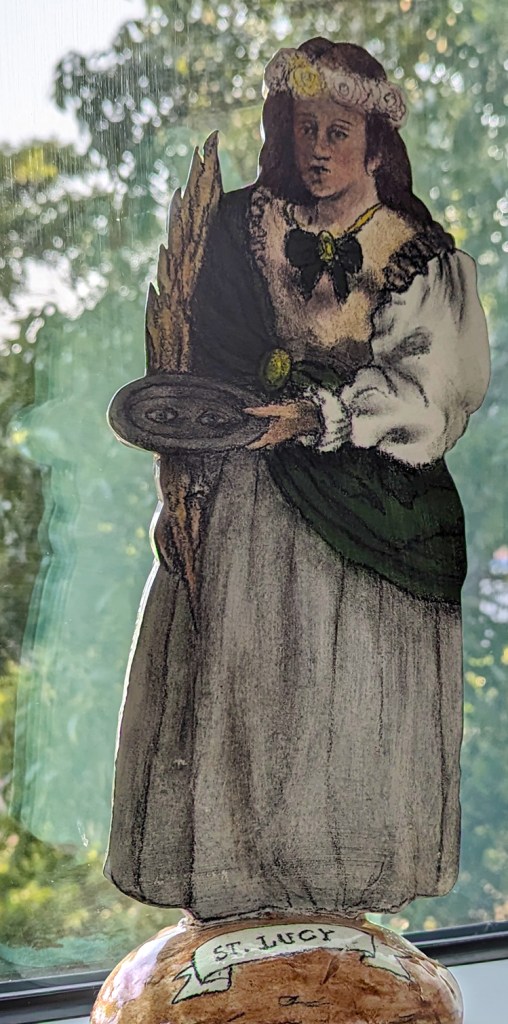
She stands guard on the windowsill by my desk as I write. As the patron of eyesight and authors, Saint Lucy (283-384) has long been a favorite of mine. Both near-sighted and far-sighted, I’ve worn glasses since the second grade. And certainly my writing needs all the help it can get.

Having lost sight in my right eye a year ago, it seemed serendipitous that one of the spots the Mister planned on staying, Siracusa, turned out to be her hometown. A church dedicated to the saint, Chiesa di Santa Lucia alla Badia, was a block away from our rental – a proximity presenting an opportunity to soak up some of Santa Lucia’s goodwill to protect the left.

Continue reading “Postcard from Siracusa, Sicily: Protector of eyes and the quill”
Postcard from Valladolid, Spain: Iglesias and a maligned queen

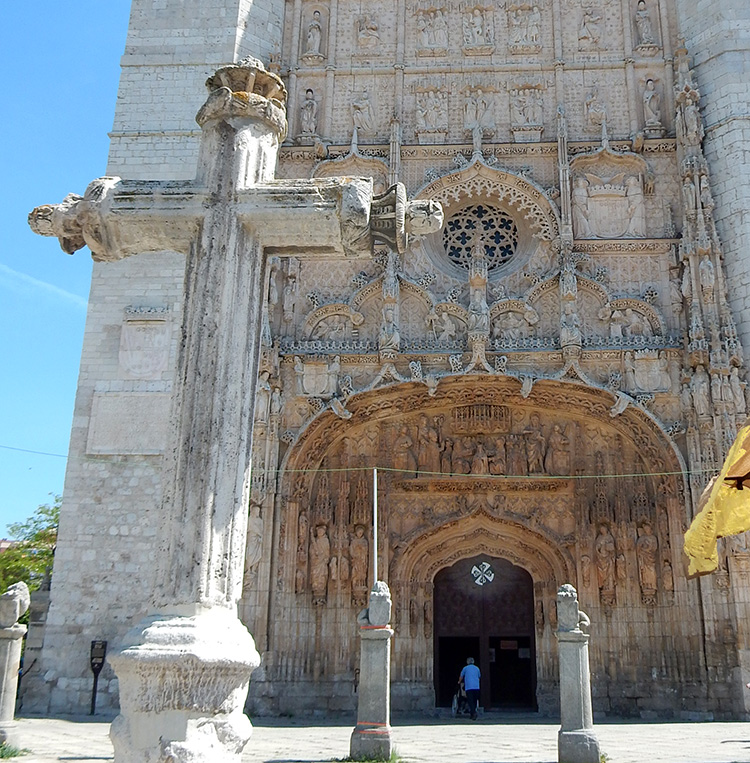
Above, Iglesia de San Pablo

Valladolid was flourishing in the 15th century when Isabella I, Queen of Castile, married King Ferdinand of Aragon in the city – an elopement with private ceremonies, as they were second cousins. With the city a favored spot for the Catholic royal family members to hold court, Pope Clement VIII elevated it to a bishopric, the center of an archdiocese.

Bolstered by this recognition, city fathers launched efforts to build a suitable cathedral, the largest in Europe. Architect Juan de Herrera (1530-1597) was commissioned for the design of Nuestra Senora de la Asuncion. Despite Herrera’s death, completion appeared possible with the official establishment of Valladolid as the capital of Spain by King Philip III (1578-1621) in 1601.

The rosy future dissipated as a royal advisor standing to personally benefit through his real estate holdings persuaded Philip of the need to move the capital back to Madrid in 1606. The cathedral budget was slashed – about 60 percent.

Continue reading “Postcard from Valladolid, Spain: Iglesias and a maligned queen”

Postcard from Valladolid, Spain: Plateresque architecture competes with sculpture within

Above, Isabelline Plateresque details surround the courtyard of Colegio de San Gregorio in the complex serving as Museo Nacional de Escultura.

The National Sculpture Museum is housed in three historic landmarks clustered together in one block in Valladolid.

With the nationalization of convents and monasteries in 1836, the government of Spain seized a wealth of artistic treasures in need of housing. Many of those from the region of Castile first went on display in Valladolid in 1842 in the Colegio de Santa Cruz. In 1933, the collection was designated a national one and was moved to the Colegio de San Gregorio.

The exterior of the 15th-century building is characterized by intricate sculptural reliefs in the Isabelline Plateresque style. The gorgeous façade demonstrates a complete lack of a uniform theme – resulting in a fascinating hodgepodge of biblical and secular components with an abundance of putti and floral and vine-like flourishes intertwined among them.

Continue reading “Postcard from Valladolid, Spain: Plateresque architecture competes with sculpture within”