Remembering everyday people: Our rural heritage merits attention

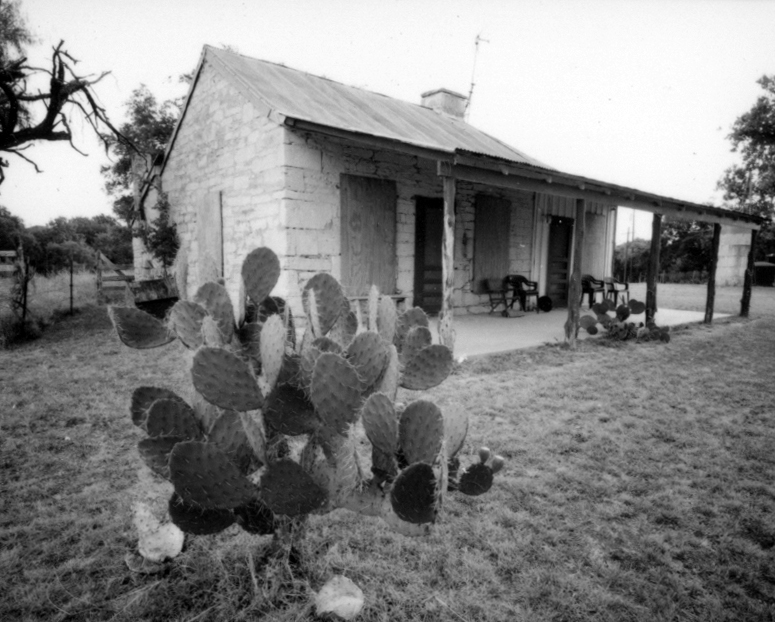
Photograph of the old rock house on the Voelcker Farm taken by Dudley Harris for "Last Farm Standing on Buttermilk Hill"
Photograph of the old rock house on the Voelcker Farm taken by Dudley Harris from “Last Farm Standing on Buttermilk Hill”

Max and Minnie Tomerlin Voelcker loved and fiercely protected their land from encroaching, encircling development swallowing up neighboring farms. The towering trees shading walkers in Phil Hardberger Park result from their stewardship.

Max and Minnie were not well-known in San Antonio, unless you were a frustrated real estate developer trying to court them. They were just plain, ordinary people. Like most of us.

Photograph by Dudley Harris of the Voelcker Dairy barn for "Last Farm Standing on Buttermilk Hill"
Photograph by Dudley Harris of the Voelcker Dairy barn from “Last Farm Standing on Buttermilk Hill”

What the retired dairy farmers never would have envisioned is that their old farm would end up safeguarded by the city that endangered it. The city’s Office of Historic Preservation has submitted a nomination to include the farmstead on the National Register of Historic Places, according to Preservation News:

The Max and Minnie Voelcker Dairy Farm, located in San Antonio’s Phil Hardberger Park, was nominated to the National Register of Historic Places this past spring. The farmstead exemplifies a turn-of-the-century agricultural landscape with preserved late nineteenth and early twentieth century buildings. The State Board of Review met on May 17, 2014, in Austin to review the application.  The Office of Historic Preservation (OHP) received a matching $10,000 Certified Local Government Grant to hire a consultant to prepare the nomination. The nomination assessment was prepared by Brandy Harris, M. Kelley Russell, Lila Knight, Ryan Fennell, Nesta Anderson, and Karissa Basse. The $10,000 grant was matched in-kind by the OHP through the execution of a survey in the West Sector Plan area of the city.  OHP staff members involved in the survey included Adriana Ziga, Kay Hindes, and OHP volunteer Brenda Laureano.  The nomination will now move forward to the National Park Service.

last-farm-coverI never met Max and Minnie but was offered the opportunity to delve into their lives deeply when retained by the Max and Minnie Tomerlin Voelcker Fund to tell their story. The resulting book, Last Farm Standing on Buttermilk Hill, in turn led me to even more concentrated involvement in the history of the dairy farms that surrounded the Voelcker Farm on San Antonio’s near north side.

As I struggle to uncover bits and pieces of the lives of their neighbors from the Coker Settlement resting beside them in the Coker Cemetery and weave them together into a new book for the Coker Cemetery Association, I am grateful for that introduction to Max and Minnie. Getting to know them and digging into the past of the Coker Settlement has given me incredible respect for the tough-skinned early residents farming on the outskirts of San Antonio.

Life was hard for those pioneering farmers, and it’s wonderful the Voelcker Farmstead has been spared as testimony of the city’s vanishing rural heritage.

deer
Coker Cemetery

Picturing the City’s Past Just Got Easier

sacs-libraryTucked away on the top floor of the Anton Wulff House, the headquarters of the San Antonio Conservation Society, is a library. This library is stuffed with all things San Antonio – 3,900 books, historic maps, oral histories, 13,000 photographs – tracing the city’s past.

Although the library is only open 24 hours a week, this valuable resource has thrown open its doors to researchers everywhere. Not only is the collection catalog online so researchers know what is available, but 475 of the library’s historical photographs have been scanned in for viewing. These are photos difficult to share even in person because they require white-glove treatment for preservation purposes.

The society’s entire Raba Collection has been digitalized. Taken or reproduced by Bohemian-born photographer Ernst W. Raba (1874-1951), these images document the physical attributes of the city, and some of its citizens, between the 1850s and 1930s. Additional rare images now available online focus on events, from everyday scenes to historic ones.

birdsellers

According to Librarian Beth Standiford in the Conservation Society’s newsletter, The Preservation Advocate, this first step toward making the library’s collection more accessible was made possible with Capital Club funds. These gifts are provided by “friends” and include recent large donations from H-E-B; GLI Distributing, Inc.; Valero Energy Foundation; Jabby Lowe; Ann Griffith Ash; Kathleen and Curtis Gunn, Jr.; The Steve and Marty Hixon Family Foundation; Karen and Tim Hixon; The Joan and Herb Kelleher Charitable Foundation; Patsy Pittman Light; and JoAnn Boone and Rio San Antonio Cruises.

The Capital Club allowed the society to hire intern Elizabeth Pople to scan these initial photographs, add them to the online catalog and improve descriptions of them. As additional funds are available, the library will enter these into the template for uploading to the University of North Texas’ Portal to Texas History to broaden access. Future plans also include using Virtual Exhibit software to create online photo exhibits and to begin digitizing the 1982 San Antonio Downtown Historic Resources Survey.

Part of the purpose of the San Antonio Conservation Society is:

…to keep the history of Texas legible and intact to educate the public, especially the youth of today and tomorrow with knowledge of our inherited regional values.

This project certainly fits the bill by making a giant leap in the number of people who can be made aware of the rich heritage of the city. Awareness of San Antonio’s historical assets leads to appreciation of them. If they are appreciated, they are preserved without question – no need to resort to expensive legal battles or to throw oneself in front of bulldozers Wanda-Ford-style.

As someone who spends much time digging through historical graveyards of all kinds, my hat’s off in gratitude to contributors to the Capital Club at all levels. Good friends can be hard to find, but here’s hoping the society finds additional generous ones to further these efforts.


Adding a Contemporary Backdrop to a Municipal Landmark

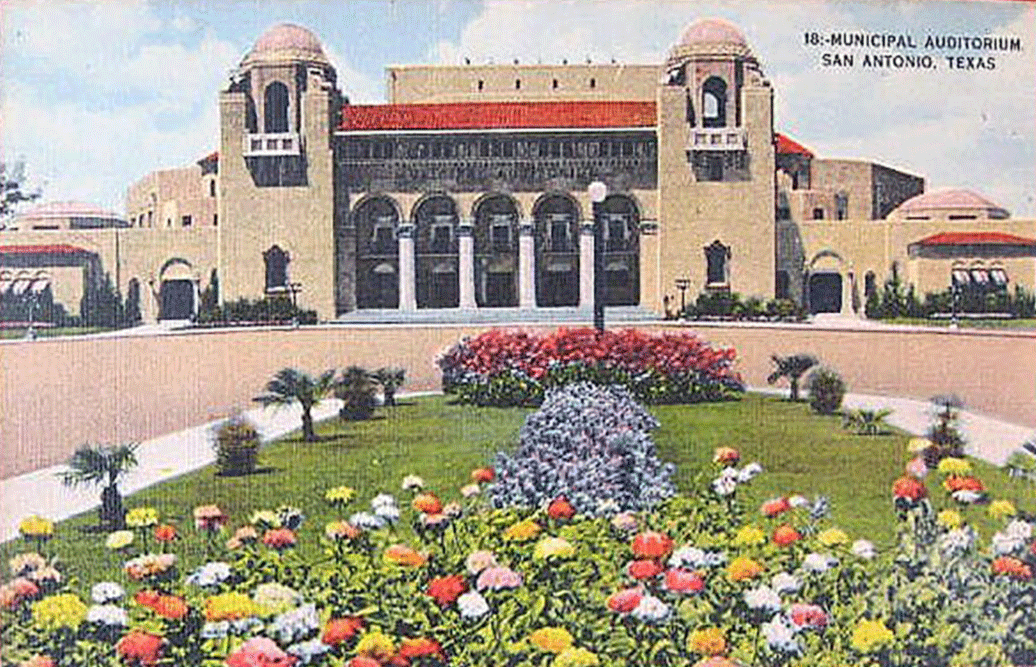
A flood control project eliminating some of the bends of the San Antonio River as it snaked through downtown created a new plot of land enabling the City of San Antonio to cobble together the real estate needed for the Municipal Auditorium, with a distinctive Spanish Colonial Revival profile designed by architects Atlee B. Ayres, Emmett Jackson and George Willis. The $1.2-million Municipal Auditorium opened, lit “from pillar to post” according to the San Antonio Express, on April 19, 1926, with the Texas Pioneers’ Ball:

The result is an auditorium which Mayor Tobin declares without reservation is the finest in the country. Every sort of modern, practicable device has been installed to make the building the last word in structures of its kind….

Since its doors opened, the Municipal Auditorium hosted a huge variety of events – high school graduations, political rallies, boxing matches, concerts, Elvis, Fiesta coronations and even “midget women’s” wrestling – meaning many San Antonians have strong sentimental attachments to it. Which translated to emotional opposition when architects returned with recommendations that demolition of almost all but the distinctive façade would be required to create a facility appropriate for theatrical and musical productions of today. Layered atop the normal historical concerns was sensitivity over its prominent River Walk location.

But the stunning, contemporary solutions presented by the architectural team of LMN of Seattle and Marmon Mok of San Antonio won over many and secured approval.

Was fortunate enough to take a tour guided by Steve Souter and Morgan Williams of Marmon Mok this past week, and the transformation is amazing. Wood paneling the color of a Stradivarius violin is combined with cutting-edge programmable lighting around the upper decks of seating.

This slideshow requires JavaScript.

When the Municipal Auditorium opened in 1926, the Express bragged about its seating; although it doesn’t sound as though fire codes on the number of people who could be stuffed into a room were quite as rigid as today:

The capacity of the auditorium is 6,000 persons who can be seated in the comfortable opera chairs. In event of an extra large attraction, more than 3,000 persons could be seated in extra chairs in the auditorium and on the stage. The stage alone can accommodate 500 people seated in chairs of 1,000 standing. The opera chairs in the auditorium alone represent an investment of $60,000. They are all extra large chairs, 20 inches across the seat. There are 18 oversize chairs for extra large persons. Such big people can find chairs that will accommodate them comfortably if they ask especially for them.

Seating on the ground floor in what will be the Tobin Center for the Performing Arts easily will top that, although not numerically. The main theatre will accommodate 1,750. The wooden ground floor in the photos represents a $12-million investment. But it’s a rather magical floor. Each segment contains seating on its flip side and can be individually rotated and/or elevated to allow for a multitude of configurations. Found a handy-dandy video of this online (Don’t be misled by the video heading; the operation of the Tobin seating will closely resemble that of this theatre in British Columbia.).

For a more intellectual analysis of the Tobin Center’s assets, turn to Mike Greenberg.

The first year’s bookings for the Tobin are as diverse as the Municipal Auditorium entertained and can be found here. The doors will swing open for the first events in September.

(Thanks for providing some of the interior shots, Janet and Allison.)