Postcard from Budapest, Hungary: Caravan of food trucks kept calling us

Normally our preference is to sit down in a restaurant and be waited upon, but the Karavan Street Food courtyard of food trucks drew us back several times. Trucks line two sides of tables canopied when needed. Unlike many food truck sites we’ve encountered in Austin and San Antonio, access is hospitably pedestrian only. You don’t feel as though you are standing in the middle of a parking lot, and everything seems clean, fresh and new – even the restrooms.

The food is not inexpensive by Budapest standards, but we could buy a reasonable bottle of respectable red wine to have with our lunch. Always a draw for us. In fact, without TABC to interfere, Karavan Bar offers full-bar service.

We cobbled our meals together from several trucks, but always included orders of the best sweet potato fries we have ever had anywhere. Surprisingly, these emerge from an Asian-themed truck, Samu-Rice, specializing in fillings sandwiched in between two rounds of sticky rice – like the chicken teriyaki roll seen below.

The rice rolls are not the only unusual, for us, bun-type offerings. The Mister’s favorite was the curried chickpea patty from Las Vegan’s (Hey, definitely better to have a misplaced apostrophe than for us to struggle to comprehend the same name written in Hungarian.). The Real Cheeseburger skips the meat patty, substituting it, for example, with a wedge of fried camembert topped with grilled eggplant.

There is no shortage of meat, though. The bread encasing the Langos burgers is fried first, without tasting greasy at all. We sampled a beef burger with red pepper and a pork one with red onion chutney, both with a generous serving of sheep cheese.

We were among the first customers for the opening of Rocket Ice, unfortunately near the end of our stay. Fresh ingredients are combined upon ordering and quick-frozen into ice cream using some mad-scientist-looking process employing nitrogen. The most extravagant combination, Berry’Zola with gorgonzola, blueberries, pears and walnuts, was amazingly good.

Our sampling missed several trucks, including Kobe Sausages, Vespa Rossa Pizza and Pasta, The Soup Truck featuring goulash served in bread bowls and Tortilla Street Pirog, an unusual fusion of Mexican wraps and Russian-style pierogis.

Oh, and chimney cakes. In addition to the truck at Karavan, we saw the pastry cooking over hot coals before being cream-filled at numerous festivals, yet never ordered one. Food trucks and serious booth set-ups are major ingredients of festivals, so I am including photos of the incredibly huge meat-filled sandwiches dished up at Rosalia 2017, a rose wine festival in the city park.

Postcard from Valencia, Spain: Opting for neighborhood comfort over anything near the Michelin trail

Having already posted about paella and our favorite restaurants, will mainly let photos do the talking for some other restaurants you might want to try if you are staying in Valencia for more than a few days.

Our neighborhood was so comfortably casual, and somehow we quickly developed almost a reverse snobbery when we ventured into tonier neighborhoods to eat. We had an excellent lunch at Seu Xerea during restaurant week, and the service was perfect. Pumpkin croquettes with blue cheese and curried meatballs were among our starters, and the Valencian rice with mussels and saffron was well executed. But, we ended up not returning because the restaurant was a bit more formal than our hood in Carmen and a bit pricier as well.

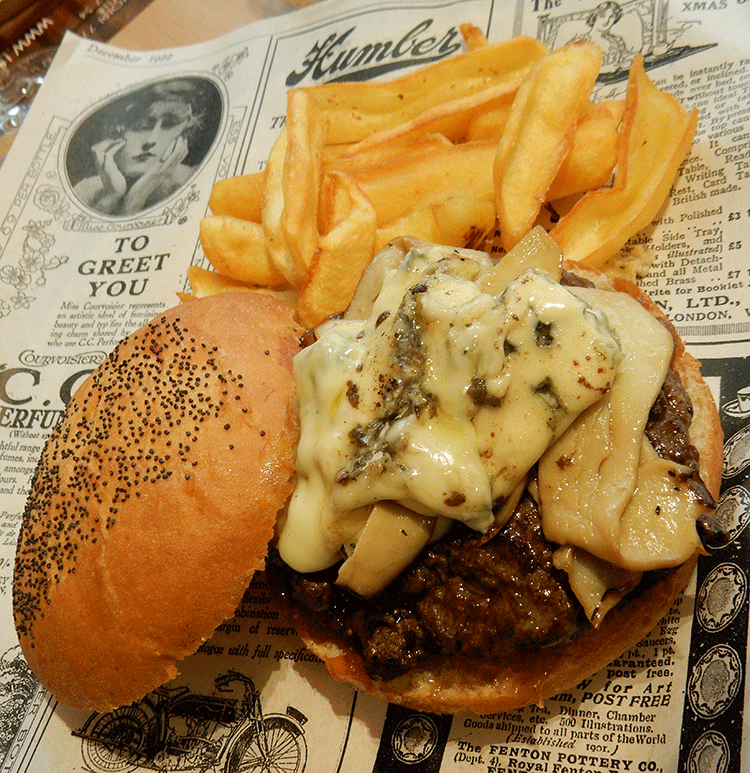
Hamburgers are everywhere in Valencia, as they are all over Europe, and Mar Cuatro Cocina Mediterranea presents an upscale opportunity to experience flavorful oxen burgers. But, again, we were out of our adopted neighborhood and the price crept up, particularly the wine, as a result. For great burgers in a more laidback setting closer to our apartment, we preferred the Martinez brothers’ popular Lamburguesa Urban Food.

For a total change of flavor, we recommend delving into Moroccan dishes at Restaurant Dukala. Both their chicken croquettes and pastilla – in this case the sweet and savory chicken mixture completely encased in flaky pastry – have loyal followers crowding into the restaurant on weekends.

Here are a few more places to consider exploring if the related food photos above seem appealing:

Postcard from Valencia, Spain: Honing in on our favorite lunch stops

The simple floorplan stenciled on the wall by the entrance gave me a clue I was going to like Refugio Restaurante. The kitchen is designated with “You are not here.” Off to a good start. But the name, “Refuge,” carries a deeper connotation for locals than my mere relief from cooking. The intimate restaurant is across from an underground bunker, Refugio, built to shelter up to 600 people during the Spanish Civil War when Valencia was bombed more than 400 times.

If you head to Valencia, these four spots were our favorites for repeat visits. These photos are all from multi-course lunches, with three courses for two people with a bottle of wine plus tip running about the same as we pay for a pre-tip bottle of wine in a restaurant in San Antonio. Kind of like free food, and we rarely recovered enough from these ample lunches to want anything to eat in the evening. Before I start, though, we had expected and unexpected paella and rice dishes at all of these. For those photos, go back to an earlier post.

Refugio bills itself as offering contemporary fusion food, and the kitchen obviously loves playing with food. Aside for variations on the Mister’s go-to moist dark brownies for dessert, the daily menu selections never seem to be repeated. Even better than deserts were the wonderful vegetable flans, whether pumpkin, asparagus or corn. The fish and langostino suquet was magical, and both seafood and meats, including duck and ox, always were cooked perfectly.

Namua Gastronomic almost escaped our notice. Fairly new, there were few reviews online, which meant it was not as full as the more established Refugio. Namua became the end-of-our-stay favorite. An amuse-bouche always started the meal. Heirloom tomatoes atop a fish puree was refreshing, and panko-crusted cod arrived nesting in a dark rich sauce of tomatoes and tuna. The chef deftly turned out fried foods, such as appetizers of sardines or artichokes, and sometimes turned to classics from other regions, such as the judiones de la granja, the giant beans and sausage we first encountered in Segovia.

Lunches at Viva Mascaraque were a little more extended affairs, with an amuse bouche – a light melon soup on one day – arriving before three courses of appetizers, a main course and dessert. For the main course, we often were seduced by the paellas. Chef Mascaraque was head chef at the Hotel Ritz in Madrid and at the Spanish restaurant at Harrods in London; yet this restaurant was still almost as comfortably casual as the two above and only a few dollars more. As I clicked on the website, I did notice Viva Mascaraque now offers a shorter weekday menu eliminating two of the appetizer courses for about 13 Euros.

While the first three restaurants were all in the Carmen neighborhood, Mythos Tapas y Mas was on a shady tree-lined street in Canovas. The lunch menus did not vary as much from day to day, but the sea bass was wonderful and it was hard to resist the baby beans in a lacy thin crepe basket. And sitting outside on the quiet street was well worth the walk.

Definitely missing the personal implication of that Refugio sign now that we are back in San Antonio.