cover designed by Andréa Caillouet; cover photo courtesy of Virginia Heimer Ohlenbusch
Birthing a book can be a long process, but to say the gestation period for Haunting the Graveyard: Unearthing the Story of the Coker Settlement has proved elephantine is no exaggeration. A female elephant’s pregnancy only lasts two years. This birth has taken much longer.
But labor has been induced, and the hefty 400-page baby will be delivered at 5 p.m. for a signing/reading celebration at The Twig Book Shop at the Pearl on Tuesday, September 10.
A lady’s handbag was my first introduction to the Coker Settlement more than a decade ago. As I sat on the carpet of a conference room on the 30th floor of a downtown office building surrounded by stacks of ephemera-filled boxes, the purse was the first thing to catch my eye. So I opened it. The pocketbook belonged to Minnie Tomerlin Voelcker (1904-2000).
 My nosiness was at the invitation of attorney Banks Smith, a trustee of the Max and Minnie Tomerlin Voelcker Fund. I continued digging through those boxes for some time, uncovering the couple’s relationships with the dairy farmers clustered around them. That led to the 2010 birth of Haunting the Graveyard’s older sibling – Last Farm Standing on Buttermilk Hill: Voelcker Roots Run Deep in Hardberger Park.
Many of those who lived around the Coker Settlement, including Minnie and Max, remained neighbors after their deaths. They were buried in intimate groupings under the spreading live oaks of the Coker Cemetery. The trustees of the Coker Cemetery Association approached me to write a prequel/sequel of sorts to Last Farm to chronicle the lives of more of these early residents.
I revisited the cemetery. Inconspicuously tucked away north of Loop 410 and in the shadow of Wurzbach Parkway, it appeared so peaceful. The Coker Cemetery contains the graves of more than 600 people, but I assumed I already was well acquainted with them from my work on the first book. So my answer was yes.
 I failed to heed the obvious warning signs – several Texas Ranger and Texas Historical markers indicating this turf is fertile with tales. At first their “voices” were mere whispered tidbits here and there. As I poked through mountains of information and interviewed their descendants, more and more of the occupants of those graves seemed to be shouting at me to include them. I heeded the call of as many as possible while trying to remain sane.
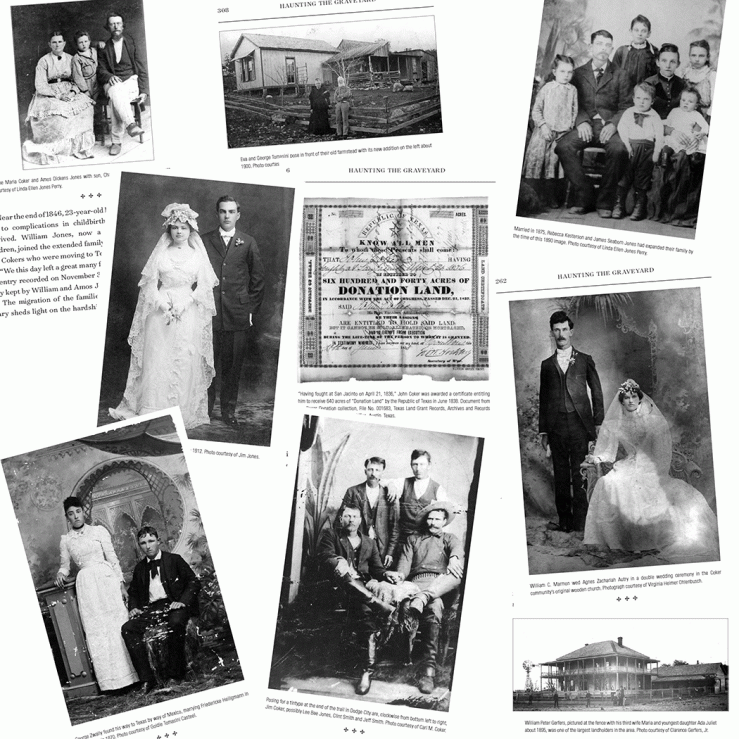
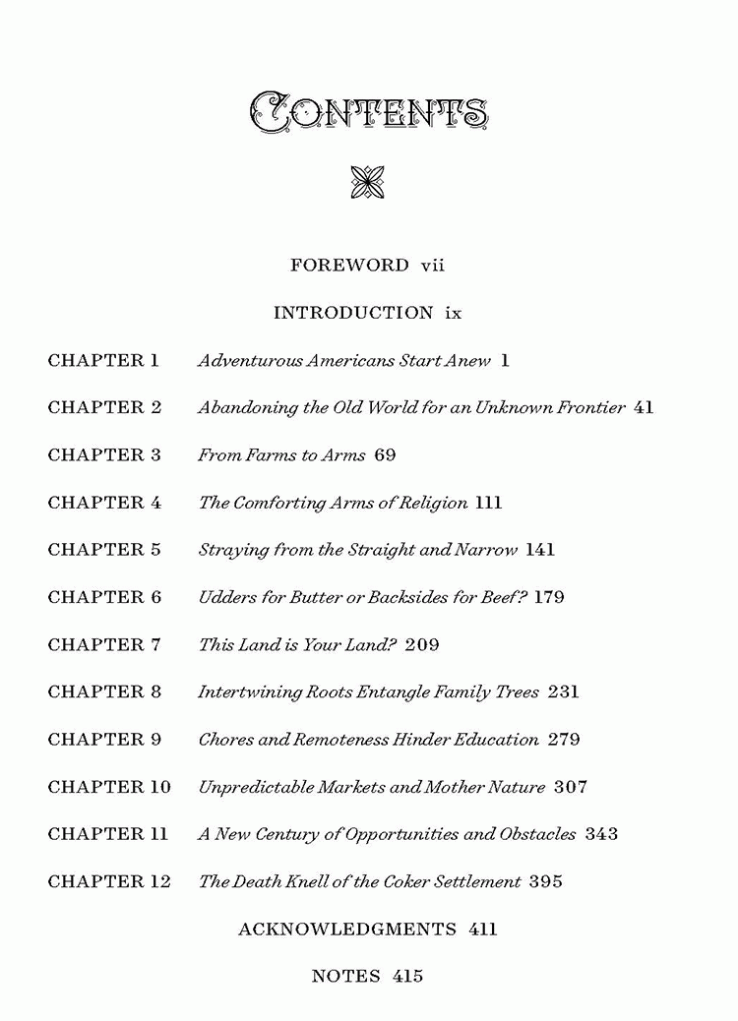 So in the near future, expect an invitation to make their acquaintance.* You will encounter some heart-breaking tragedies, a bit of mayhem and even an unsolved murder as their lives unfold in Haunting the Graveyard. Whether focused on the good or skeletons that popped out of the closet, the stories are shared with love for the entire community of farmers I have come to know over the past decade.
 *In addition to availability at The Twig Book Shop at the signing, pre-publication orders are being accepted now at Material Media Press.
August 4, 2019, Update: An interactive companion index of people inhabiting the pages of this book helps readers understand how they relate to the family patriarch, Joseph Coker (1799-1881). The list can be accessed now for those who want to know if any information about their particular relatives can be found inside. To check the list, click here: http://cokercemetery.com/pdfs/coker_settlement_index.pdf.
Here is a shorter glimpse of surnames mentioned:




 Postcards from Barton Springs