Postcard from Porto: Elevating Street Art

We appear on a pilgrimage to follow celebrations of street art – Oaxaca this past fall and Colonia Guadalupe in San Miguel de Allende in February – but it’s purely coincidence.

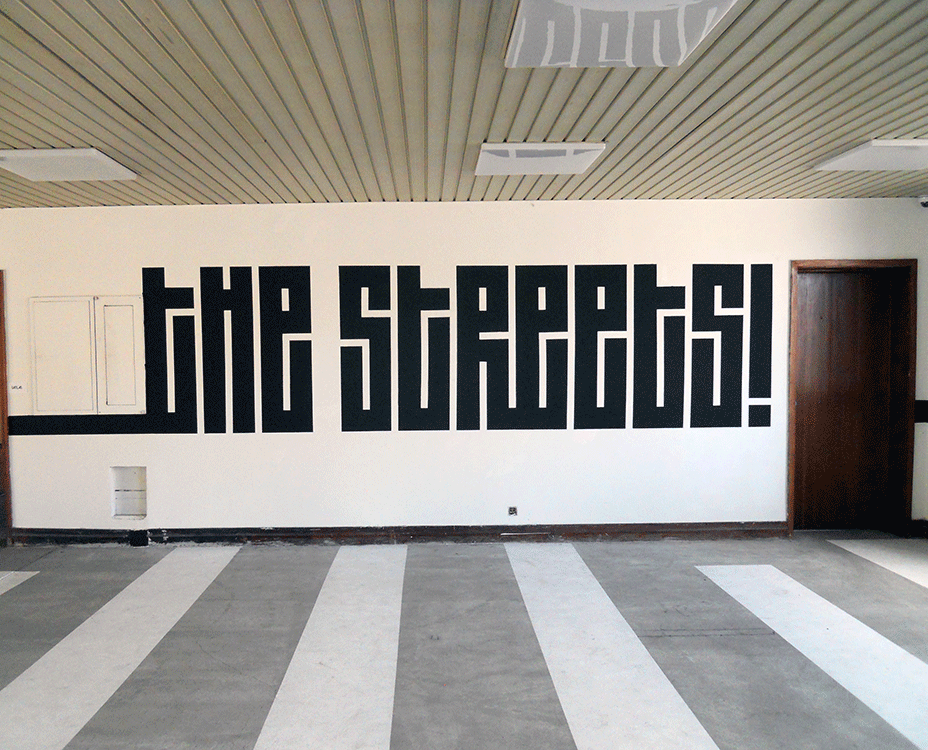
Porto’s City Council multiplied those projects multifold by commissioning art for the streets and spread throughout seven floors of a surprisingly vacant building on the elegant and broad Avenida dos Aliados. According to the brochure for Street Art Axa Porto, the indoor/outdoor exhibition running from April 30 to June 1 is:

designed to pay homage to urban art, namely street art made in Porto. The combination of Porto-born artists and great international names will certainly highlight Porto and its renowned street artists, as far as national and international street art is concerned marking a beginning for other City Council’s projects related with this kind of artistic expression.

This slideshow requires JavaScript.

We haven’t encountered many of the official outdoor projects, but we are operating with a map identifying only about every 10th street of Porto. Navigation is tricky in the historic center. While I might wander in circles for an hour seeking a specific dining destination, striking out for street art with the same enthusiasm is not in me. Seven flights of stairs and seven floors of graffiti and street art temporarily have quenched thirst for the art form. More old-school tiles, please.


Postcards from San Miguel de Allende: Redirecting Grafitti Artists, Part Four

Part One, Part Two and Part Three

Some people see the arroyo of Obraje running through San Miguel de Allende as a squalid ditch, a place to dump household garbage when one fails to heed the bell of the municipal trucks collecting trash. It diverts floodwaters away from Colonia Guadalupe during the rainy season, but during the much longer dry season it serves as a shortcut for many, including children attending one of several schools bordering the arroyo. The area, well below street level, also is a magnet for those engaged in drug deals or other dangerous liaisons. And those armed with spray paint.

Former San Antonian Colleen Sorenson looks at the ditch and sees something different. She sees Paseo del Rio or pathways like those along the Mission Reach of the San Antonio River. The graffiti-covered walls of buildings backing up to the arroyo represent additional blank canvases for more constructive artistic expression. Muros en Blanco, ecologically concerned residents of San Miguel de Allende and city officials began meeting, and change is happening.

This slideshow requires JavaScript.

Bulldozers were clearing away debris in February, when these photos were taken.

According to an article by Antonio de Jesus Aguado in Attencion San Miguel, Edgar Bautista, head of the city’s Urban Development Department, said:

“The perspective is touristic…,” and it fulfills the development goals of the Millenium, the priorities of which are security, health and education. The idea is to turn the arroyo into a patio-garden within the city, a tourism corridor, “in other words, a park that would generate a new ecosystem as important as Parque Juarez.”

Colleen was working on another arts festival, but, in addition to the mural projects lining the arroyo, the event would involve the schools in Colonia Guadalupe and carry strong environmental messages to foster a spirit of community stewardship.

Looking forward to seeing the transformation next time we return….


Postcard from San Miguel de Allende: Redirecting Graffiti Artists, Part Three

Part One

Part Two

The murals completed during this past year as part of Muros en Blanco have altered the appearance of the neighborhood, increased the sense of shared community and possibly changed the lives of some of participating youths.

Tourists traditionally have remained in the Centro Historico of San Miguel de Allende or ventured only as far out as Fabrica la Aurora. Some of them now stroll into the heart of Colonia Guadalupe in search of the murals and studios of artists working in the neighborhood. The dining rooms of Via Organica are packed.

And, most importantly, there is an added layer of communal interaction among expats living there and Mexicans whose families have resided in Colonia Guadalupe for generations.

This slideshow requires JavaScript.

And more murals are on the way this month as part of the second festival. But this spring’s festival is about more than art. Part Four will be posted soon.