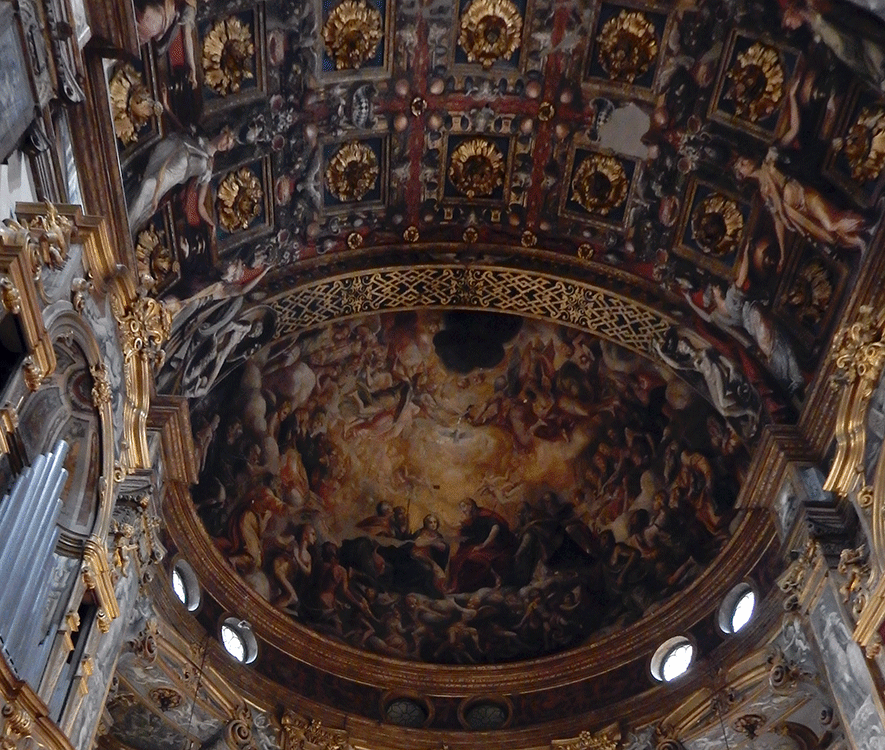
In addition to the Duomo and the Baptistery, quite a few other churches are squeezed into the historical heart of Parma.
A few of these photos are of the collection housed in the museum of the diocese.


Gayle Brennan Spencer – sending random thoughts to and from South Austin
In addition to the Duomo and the Baptistery, quite a few other churches are squeezed into the historical heart of Parma.
A few of these photos are of the collection housed in the museum of the diocese.
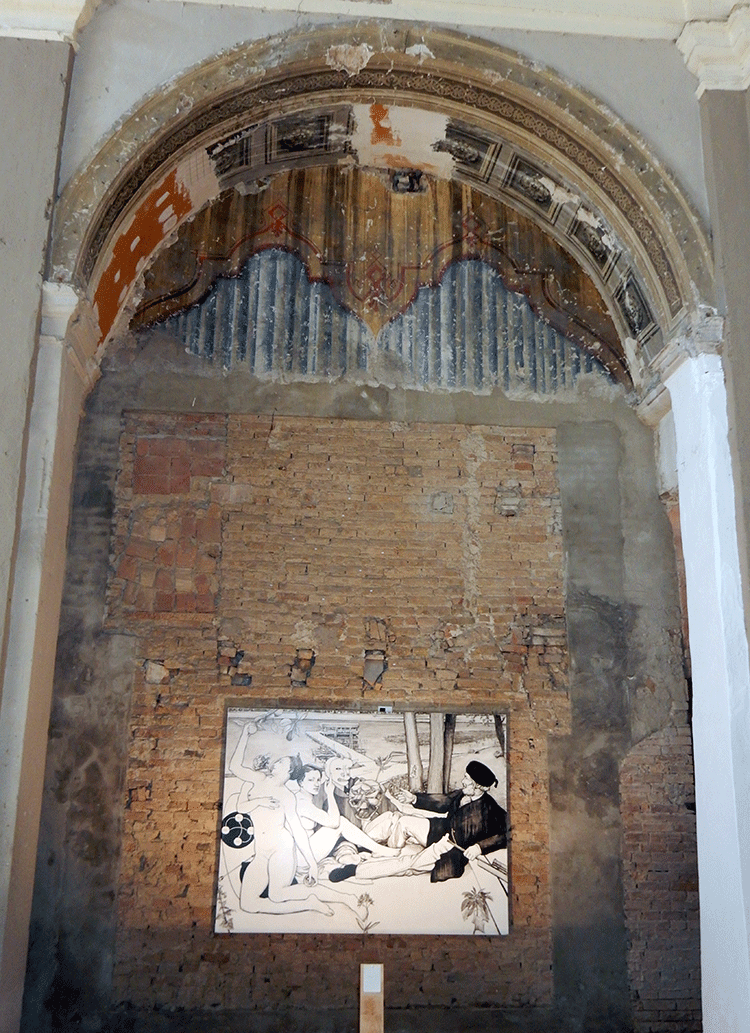
Beginning in early April, for 45 days contemporary art popped up in public spaces and unexpected places throughout the city as part of Parma 360. Although the event map listed 40 venues, we tended to stumble upon them rather randomly.
Man cannot live on art alone. In the midst of the art events, Parma hosted its three-day Street Food Festival with approximately two dozen food trucks and portable booths in Piazzale della Pilotta in the shadow of the Farnese Palace. Street food in Parma covers a broad sweep of flavors. In addition to burgers and brews, vendors offered some of the region’s finest hams, cheeses and wines.


Am still unsure whether the clever plays on the “do not enter” signs we encountered in our immediate neighborhood were part of Parma 360 or vigilante street art, but hope they remain past yesterday’s closing of the festival.

There is the Farnese Palace, too, and in it one of the dreariest spectacles of decay that ever was seen – a grand, old, gloomy theatre, mouldering away…. Such desolation as has fallen on this theatre, enhanced in the spectator’s fancy by its gay intention and design, now but worms can be familiar with. A hundred and ten years have passed, since any play was acted there…. If ever Ghosts act plays, they act them on this ghostly stage.
Pictures from Italy by Charles Dickens, 1846
Cosimo II de Medici (1590-1621) was going to be passing through town, and Ranuccio I Farnese (1569-1622), the duke of Parma and Piacenza, was eager to make a major impression. Ranuccio’s eagerness was enhanced by his desire to arrange a marriage between his son and one of Cosimo II’s daughters to fortify relations between the two families.
The huge Farnese Theatre was commissioned in 1618 in honor of the visit that actually failed to occur. But, never mind, the marriage did happen within a year or two anyway.
The massive theatre was made of wood with faux-marble plaster ornamentation. The theatre was used less than 10 times, only for lavish, expensive weddings and productions, including one during which the ground floor was flooded with water to make depiction of a naval battle more convincing. Following a grand finale in 1732, the stage indeed was abandoned for more than a century before the visit of Charles Dickens.


Allied bombing destroyed much of the Farnese Theatre in the spring of 1944. Even though it had not been in use for years, the decision was made in the 1950s to rebuild the theatre on the same grand scale as before.
Classical music resounds from concerts presented on the stage several times a month, much higher usage than the theatre ever experienced during its first three centuries.
 Postcards from Barton Springs