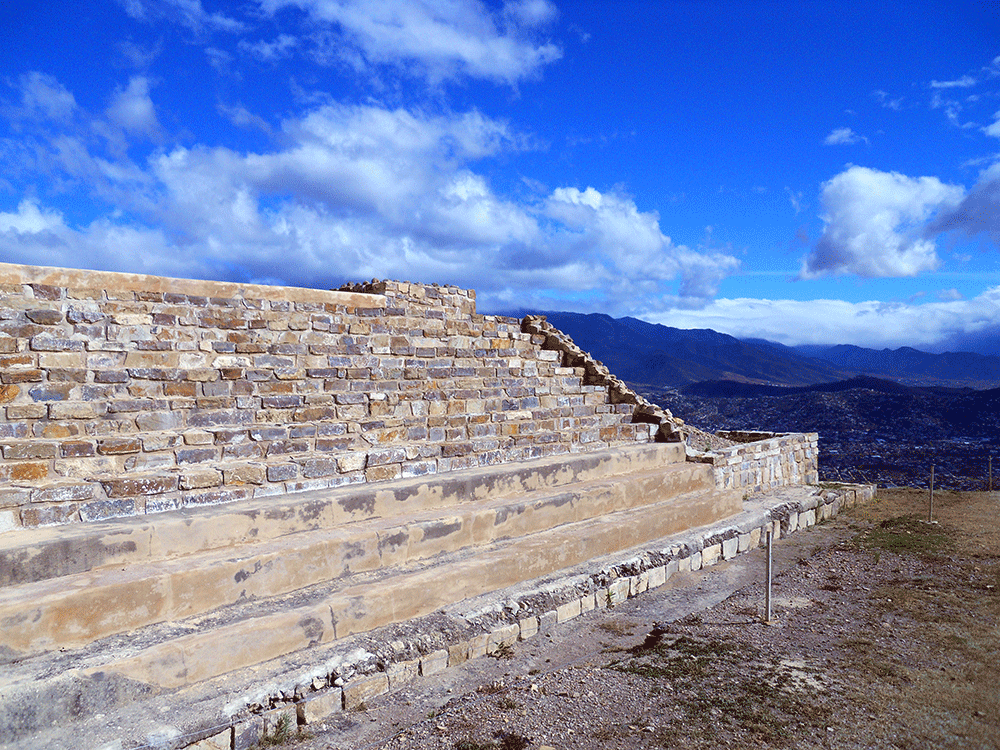
Postcard from Oaxaca, Mexico: Visiting a suburb of Monte Alban – Atzompa

Our cab pulling into the parking lot immediately below the ruins of Atzompa made a total of four cars. Not much of a crowd for the high season of tourism in Oaxaca, but, for some reason, the Zapotec ruins of Atzompa are not yet included on the visitor map handed out at the information booth in front of the Cathedral. Guidebooks are only now catching up with the opening of the site to the public two or so years ago.

As a result, venturing there reminded us of the first time we climbed a winding road to Monte Alban more than 30 years ago; we virtually had the entire site to ourselves. An archaeologist and helpers were working on the uppermost plaza of Atzompa, where photography currently is forbidden.

With construction begun around the year 650, Atzompa was a satellite suburb of Monte Alban. Its equally lofty location with commanding views stretching across both the valley of Oaxaca and that of Etla offered additional security for Monte Alban.

In addition to ceremonial ball courts, including the largest one found in the region of Monte Alban, the site has remains of residential quarters for members of the upper class. The terraced hillside created an opportunity for several intimate groupings of buildings around central plazas and courtyards. A quarry atop the hill provided a convenient supply of building materials.

Evidence suggests the city was abandoned around the year 900.

Atzompa is a mere 20 minutes by cab from the center of Oaxaca. The posted entry fee is 10 pesos, well under a single dollar. But the guard at the gate required only our names, no pesos.

Postcard from Oaxaca, Mexico: Bite the baby; throw the party

three-kingsThe pair of skinny Santas on stilts (I know; I don’t comprehend their significance either.) who roamed the plaza in front of the Cathedral around Christmas have been replaced by itinerant trios of kings soliciting tips for family photos. This troupe was the only one around bearing gifts for Baby Jesus accompanied by the beasts (well, sort of) originally transporting them to the manger in Bethlehem on January 6.

Epiphany was always a holy day of obligation when I was growing up, another command day at church which fell within several weeks of a multitude of visits to church. But we weren’t rewarded with cake.

In Mexico, Saint Nicholas traditionally does not arrive bearing gifts for children on Jesus’ birthday. Children have to wait until the day Jesus received his presents – gold, frankincense and myrrh – delivered in tribute to him by the three kings. So, on January 6 in Mexico, Mass is followed by presents and a party with cake – rosca de reyes.

Shannon Costello's rosca de reyes
Shannon Costello’s rosca de reyes

The staff at the Library of the University of Texas at San Antonio has translated, along with helpful baking tips, a traditional kings’ cake recipe from Panes de Levadura by Josefina Velazquez de Leon, part of the collection of Mexican cookbooks, La Cocina Historica.

Not everyone in Oaxaca appears to make these from scratch. Boxes of the rings of cake have been flying off shelves in bakeries all over town.

Hidden inside each is a little figure representing Baby Jesus. If the piece you receive contains the nino, your family has to host the next fiesta specifically for Jesus on the calendar, Candelaria on February 2, or prepare the homemade tamales for the party (Whoa! I prefer the no-strings-attached prize in Cracker Jacks).

Candelaria is when all the Baby Jesuses housed by the faithful in their homes receive new clothes. Then, dressed in appropriate finery, all the little statues are carried to church to be blessed.

Hmmm. What should Jesus wear? Is Oaxaca ready to follow the fashion trends being set in San Cristobal de las Casas? Happy Kings’ Day.

And, if the kings have any gifts in mind for me, of the ancient trio, I’d prefer the gold.

Postcard from Oaxaca, Mexico: Snapshots of Street Art

Stucco walls, mainly outside the historic center of Oaxaca, often become canvases for artists. These represent a few we have encountered during recent meanderings.