Postcard from Nice, France: Keep diving for pearls of flavor

A postage stamp depicting an open oyster with a blue background, labeled 'Les huîtres' and marked with a value of 0.50€ from La Poste 2004.

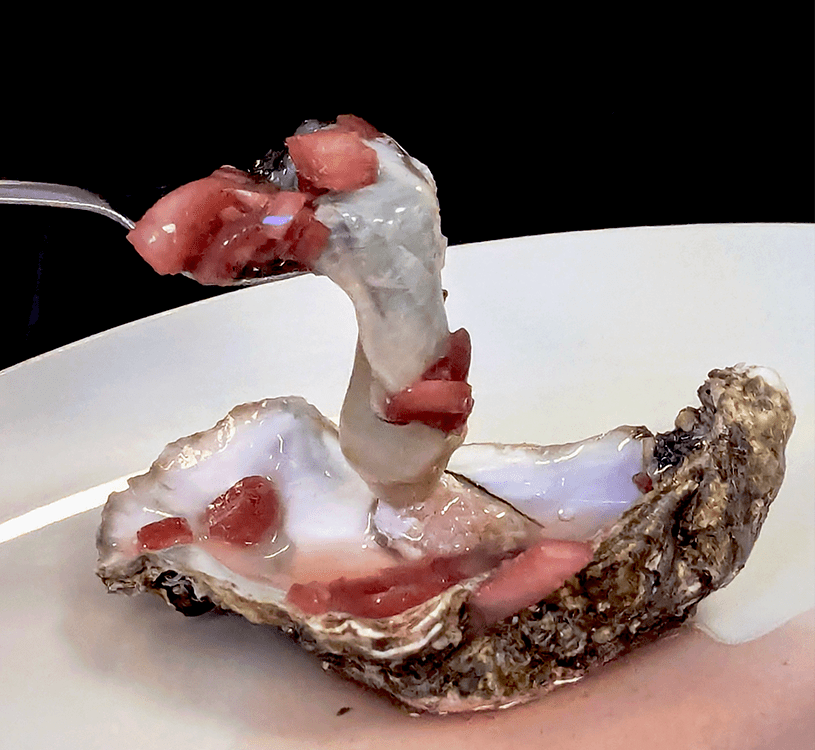
Above: A no. 2 oyster, probably a Charente Maritime, dressed with a dash of vinegar at Le Gambetta

And I had my first oyster. Now, this was a truly significant event. I remember it like I remember losing my virginity – and in many ways, more fondly….

I took it in my hand, tilted the shell back into my mouth as instructed by the now beaming Monsieur Saint-Jour and with one bite and a slurp, wolfed it down. It tasted of seawater…of brine and flesh…and somehow…of the future. Everything was different now. Everything. I’d not only survived – I’d enjoyed.”

Anthony Bourdain, Kitchen Confidential: Adventures in the Culinary Underbelly, 2000

Anthony Bourdain credits an oyster tasted in France when he was ten years old for propelling him toward a lifetime obsession with flavor. While this Virginia Beach native loves oysters now, it certainly was not love at first swallow. I didn’t learn to enjoy them un-fried or un-Rockefellowed until late in high school.

Continue reading “Postcard from Nice, France: Keep diving for pearls of flavor”
Postcard from Provence, France: Monumental cemeteries where Impressionists rest

Blue postage stamp featuring a scenic view of Nice, France, with trees and hills, inscribed with 'République Française' and 'CFA'.

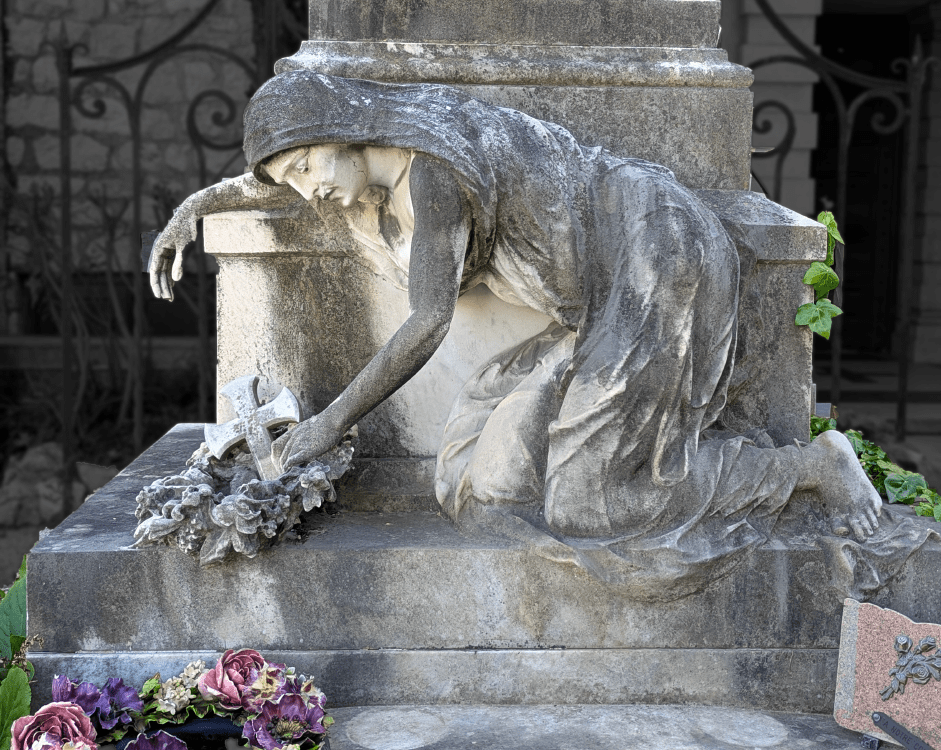
Above: Monument in Cimitiere du Chateau, Nice, France

A military citadel once crowned a hill overlooking the Bay of Nice. Bearing in mind that Nice did not become a permanent part of France until 1860, as part of one of the many wars fought during his reign, King Louis XIV (1638-1715) of France ordered the castle-fortress destroyed in 1706.

A portion of the grounds of the old citadel were opened as Cimetiere du Chateau in 1783. Instead of sentinels, monuments in the cemetery now occupy the most prominent vantage points for viewing the bay and surrounding countryside.

The cemetery* is an open space among the ruins, covered in winter with violets and daisies. It might make one in love with death, to think that one should be buried in so sweet a place.”

Preface to Adonais, Percy Bysshe Shelley, 1821

Continue reading “Postcard from Provence, France: Monumental cemeteries where Impressionists rest”