Postcard from Morelia, Mexico: Vamos a comer

Gaspacho. Spelling the word with an “s” and not a “z” makes a world of difference in Morelia. Cubes of refreshing fruit with no tomatoes in the mix. Traditional gaspacho stands are found everywhere in the heart of the city, with locals more than willing to line up at their favorite ones. Although customized for the individual, don’t miss out experiencing estilo Moreliano with its contrasting flavors of tangy lime juice, cotija cheese and chile layered into the combination of regional fruit. Beware. It’s highly addictive.

With that ideal breakfast out of the way, time to head out for more substantial repasts at restaurants listed alphabetically. By chance, these first three spots are a bit off the main tourist grid but are all a walkable distance from the center.

Continue reading “Postcard from Morelia, Mexico: Vamos a comer”
Postcard from Morelia, Mexico: A wedding cake turned inside out

Above: Santuario de la Virgen de Guadalupe

Desiring to appeal to the indigenous population, the Catholic Church hired native craftsmen to complete the Sanctuary of the Virgin of Guadalupe on the outskirts of Morelia more than three centuries ago. Dedicating it to the Virgin of Guadalupe indicates the desire to appeal to the indigenous population.

The 18th-century Baroque façade might be plain vanilla, but it’s like a wedding cake turned inside out. The interior serves up a bountiful bouquet of colorful icing doodads, an indigenous translation of Rococo. Stunning polychromed clay flowers cover the walls and ceilings. The spectacular glamming up of the sanctuary was not carried out until 1915.

Continue reading “Postcard from Morelia, Mexico: A wedding cake turned inside out”

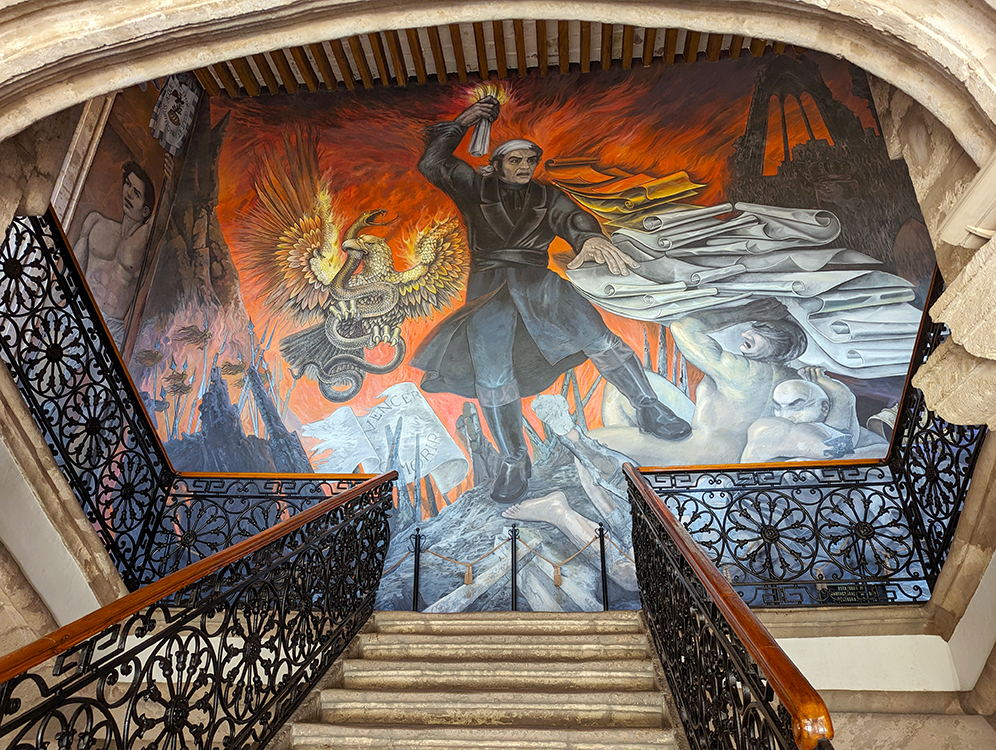
Postcard from Morelia, Mexico: Morelos’ call for justice echoes in this hall

Above: Portion of “Morelos y Justicia” mural, Agustin Cardenas Castro, El Antiguo Palacio de Justicia

Inflamed by the fervor of revolt, Jose Maria Morelos dominates the stairwell of the former governmental headquarters for the Spanish city originally known as Vallodolid on the central plaza of his namesake city. In 1812, the building was repurposed to serve as a mint producing copper coins and postage stamps.

A Belgium engineer hired in 1884 to convert the structure into Michoacan’s supreme court added French architectural detailing to the façade and interior. Particularly distinctive are the pinjante arches, floating double arches with no central support columns.

Continue reading “Postcard from Morelia, Mexico: Morelos’ call for justice echoes in this hall”