Postcard from Morelia, Mexico: Foreign beliefs transform both faith and art

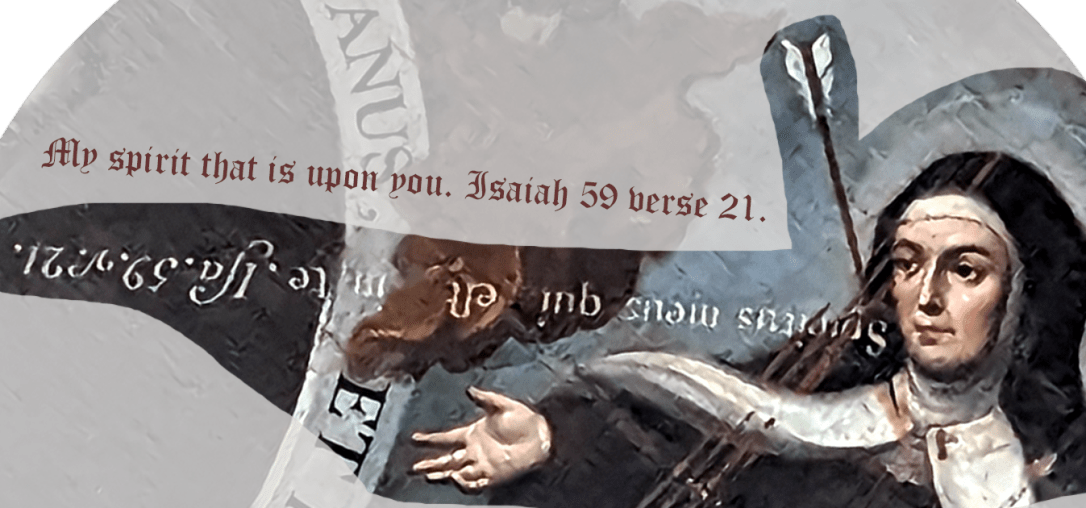
My spirit that is upon you,” Isaiah 59 verse 21, translation of one of the Latin phrases floating around the canvas of “El Obispo Juan de Palafox y Mendoza” by Miguel Cabrera

As in Europe, art served as a primary tool for friars to introduce the mysteries of Catholicism to those of other beliefs. Consequently, religious paintings from that period form the core of the collection of Museo de Arte Colonial. The works are displayed in a house of the Colonial period which was renovated in 1984.

Continue reading “Postcard from Morelia, Mexico: Foreign beliefs transform both faith and art”

Caste discrimination woven into Spanish Colonial art of the Americas

Above: “Virgin of the Tailors,” Cusco, Peru, circa 1750, on loan from Museo Pedro de Osma, Lima

Late-colonial New Spain was awash with conflicting energies: American-born Spaniards (Creoles), like their North American counterparts, felt a growing desire for independence, yet needed their identification with Europe to cement their sense of superiority over the racialized indigenous, African, and mixed-race lower classes….”

“Casta Painting and the Rhetorical Body,” Christa Olson, Rhetoric Society Quarterly, Fall 2009

And 18th-century fashion statements as recorded in paintings and sculpture became a tool to exhibit the claimed superiority of those with pure, or at least high, percentages of Spanish blood flowing through their veins. On display at the Blanton Museum of Art through January 8, Painted Cloth: Fashion and Ritual in Colonial Latin America focuses on the societal role of textiles in conveying class distinctions.

Continue reading “Caste discrimination woven into Spanish Colonial art of the Americas”