Postcard from Turin, Italy: Home to many a food “invention”

Some of the members of the House of Savoy you were introduced to in the prior post get credit for additions to Turin’s distinctive flavors. Grissini, thin crispy Italian breadsticks, were invented to meet special dietary needs of Vittorio Amadeo II (1666-1732). Perhaps most significant to Italians, Emanuele Filiberto (1553-1580) brought the first chocolate to Italy.

As in Spain, the earliest ways to consume chocolate imported from the New World were in a liquid form. This has survived through the centuries in Turin in the form of bicerin, a rich triple-layered beverage (more like a dessert to me) consisting of thick hot chocolate, espresso and foamy cream. Numerous major chocolate factories are found in the city. With hazelnuts the most popular nut, it is not surprising Nutella was created there. Vermouth and Campari originated in Turin; the city is home to the Slow Food movement; and the first Eataly opened there.

The region’s lean grass-fed beef, fassone, seems most popular when consumed ground and raw. Locals eat huge patties of the meat tartare. I was happy my sampling of it was restricted to a petite amuse bouche. Which is partially why I expected the area cuisine to be dominated by head-to-tail meat offerings.

Much to my pleasant surprise, Turin residents prize their locally grown vegetables. There were a remarkable number of vegetarian restaurants, such as the highly regarded somewhat pricey Soul Kitchen. But even our humble homey neighborhood restaurant, Trattoria Alla Locandina, offered several vegetable dishes, including grilled eggplant and fried zucchini blossoms filled with cheese.

Our go-to lunch spot in Turin, E Cucina Torino, was like a reunion with an old friend. We first encountered Chef Cesare Marretti’s concept of providing limited-menu fixed-price meals in Bologna three years ago. Expect locals to be lined up here for the 10-euro special: a starter; a choice of a meat, seafood or vegetarian entrée; a small dessert; a glass of wine; and an espresso. I found myself always falling for the vegetable platter which included a side salad, a mountain of fresh vegetables hiding a vegetable flan underneath and a ball of fresh mozzarella too massive for me to ever conquer. The Mister was more apt to explore the other options.

Then there is the featured photo above, perhaps my favorite dish in Turin: a layered vegetable tian with a gorgonzola and almond sauce at Ristrot Guviol. We encountered wonderful creations emerging from this kitchen. An impressive crab shell arrived atop a dish of spaghetto with crab and grape tomatoes. A ribbon of raw salmon made a bright stripe across a rich risotto, and there was a tagiolini with squid and a crown of mullet roe.

The food of the Piedmont region is without a doubt among the best in Italy.
Postcard from Bologna, Italy: Volunteering to eat at E’Cucina Leopardi everyday

At home or traveling, we tend to latch onto certain places and return to them over and over again. E’ Cucina Leopardi was our go-to place in Bologna. Our lunches there were so good, when we dined elsewhere we often wondered what the chef had dreamed up for lunch at Leopardi. And, whenever we got our checks after lunch elsewhere, we wondered why we had not eaten at Leopardi yet again.

A little off the touristy beaten path, Leopardi had a waiting line most days. Not because there are only a few tables; it is a large, cheerful, funky place with an open kitchen. Locals love it.

Okay, part of its appeal is the 10-Euro three-course lunch, with three courses meaning appetizer, first course, dessert, wine, espresso, no tax and no tip expected. Yes, there are several more expensive options and dinner is more, but we never ventured past the all-inclusive one-price-fits-us.

We’re not sure how Chef Cesare Marretti makes his magic work at this price point, but the dishes are amazingly good. A major part of it must be the limited lunch menu allowing bulk purchases of fresh seasonal ingredients. But, when it comes to flavors, there are no shortcuts taken.

While waitstaff is friendly, bear in mind there are only a few servers handling many more tables than a waiter in the United States could imagine. They have no time to linger with extensive translations and lists of ingredients. For a tourist not speaking Italian, this can make ordering challenging. There are no written menus. No choices are needed for the appetizer, but the main course requires selecting something vegetarian, maybe a meat-sauced pasta or something from the sea. We rarely understood completely what we were ordering, but we were never disappointed when the mystery was revealed on a plate in front of us.

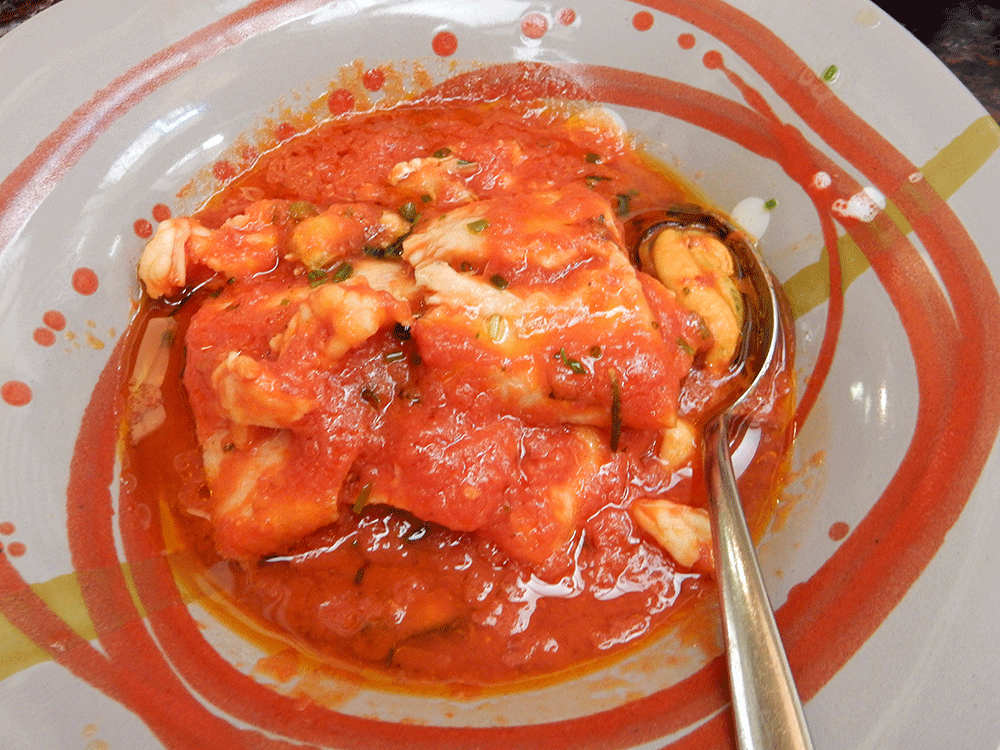
My favorite appetizer was a light carrot flan. One day, the kitchen was cracking open major wheels of aged parmesan and placing massive chunks of it on the first-course salad. Pastas were always perfect, but the kitchen truly shines in producing intensely flavored fish stews. Liberal use of wine and olive oil obviously plays a role, as seen in the video below. Regulars clearly favored the recurring offering of a small molten chocolate cake (somehow ending up camera-shy), but, as strawberries were in season, they also figured prominently in dessert offerings.

Surprisingly, given the crowds, customers are not rushed. Often they sit and chat long after their desserts and coffee are finished.

We almost felt as though we had stumbled upon some haute-cuisine government-subsidized food program. Not only were we contentedly wining and dining for under $11, we often emerged so stuffed we did not want even a salad for dinner at home that night. We found ourselves wondering, how can we afford not to live in Bologna?

Can’t imagine if Leopardi had not been part of our month in Bologna and am very happy we did not pick the month of August to stay there: Leopardi is closed for vacation until September 4.