Postcard from Campeche, Mexico: Sunday Night Sounds

Brrrrr…. The woman playing the guiro in the Campeche State Charanga Band, a brass band, one Sunday night in January expressed her surprise at how cold it was. Campeche is normally so temperate. This particular evening the temperature had plunged down to a frigid 65 degrees.

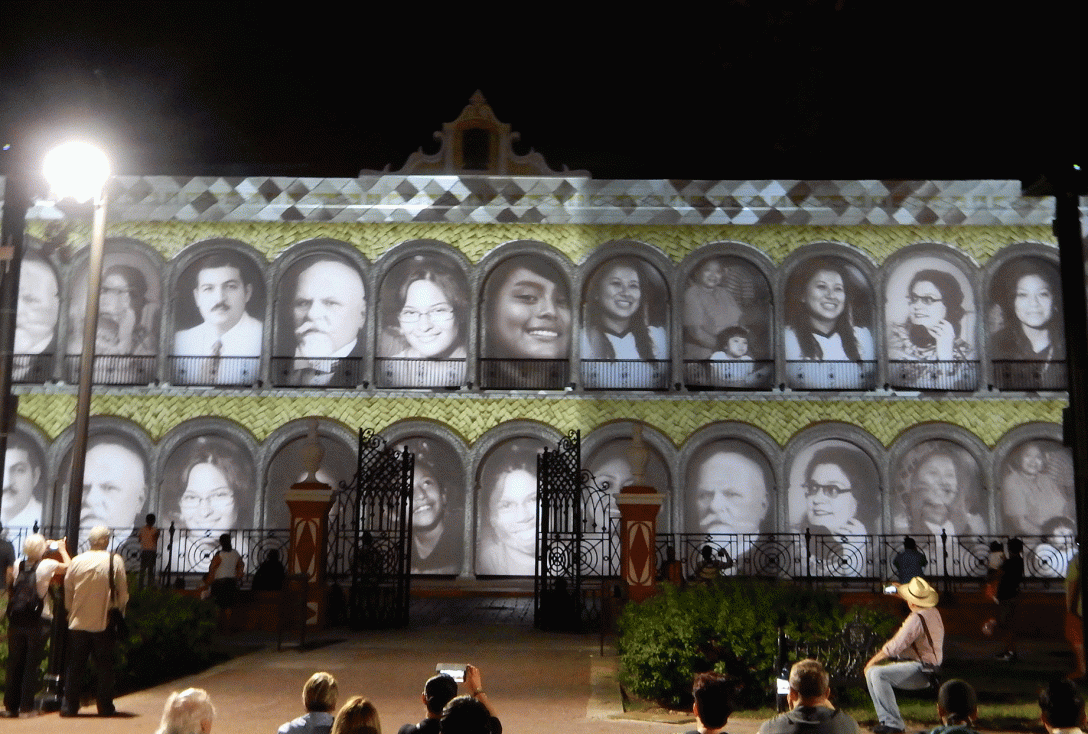
The mild climate means the Sunday night musical concerts on Campeche’s main plaza rarely need to be cancelled. We stopped by twice, once for a marimba concert and once for the charanga music. The lit cathedral serves as a majestic backdrop, and the concerts are followed by a sound and light show projected on the government building on one side of the plaza.

The surprising thing about the concerts was, unlike in most Mexican cities we have visited, no couples were dancing. Perhaps the Campechanos were saving their energy for their upcoming wild celebration of Carnaval.


Postcard from Campeche, Mexico: Are any two cornices alike?

The streets of the historic center of Campeche resemble ribbon-like rainbows, with lines of colorful houses directly abutting the sidewalks and one another. Although most structures are a single story or two high, their height is increased because interior ceilings soar at least 16 feet upward to keep warmer air hovering above.

Strolls are not boring because of the varying shades of stucco and the amazing number of distinctive patterns embellishing soffits and cornices. If any two facades sport the exact same ornamentation, we failed to spot the pair.

Postcard from Edzna, Campeche, Mexico: Wandering amidst ancient Mayan ruins without the crowds

As incredible as the extensive ruins of Chichen Itza in the Yucatan are, the experience of visiting them is somewhat spoiled. The site is overrun by hundreds of stalls of vendors and swarmed by busloads of tourists.

But there is another spot to visit the Mayan home of the Itza family – Edzna, less than an hour outside of Campeche. Edzna means the House of Itzas, so named because the Itzas lived here before setting up quarters at Chichen Itza. At Edzna, one has to wait around for a while for someone to walk into the camera frame to provide a sense of scale. There were maybe five cars in the parking area.

Construction on the site began around 600 B.C., with the ancient Mayan city expanding to close to ten square miles at its peak of power. The satellite image plucked from Google maps illustrates the small portion of that territory that has been excavated.

The site particularly is noteworthy for its sophisticated system for capturing, storing and distributing rainwater. Hieroglyphics at the foot of its main structure, Edifico de los Cinco Pisos, trace its construction to 652, but additions and alterations were made up until the 14th century. From the base to the top of its comb, similar to toppings at Palenque, the structure measures more than 100 feet high.

Although Edzna was occupied until the 15th century, it was not rediscovered until 1907. Excavation began in 1958, with much of the caretaking services in recent years provided by Guatemalan refugees under the watchful eyes of the resident iguanas.