Postcard from Palermo, Sicily: Putti play while Jesuits pray

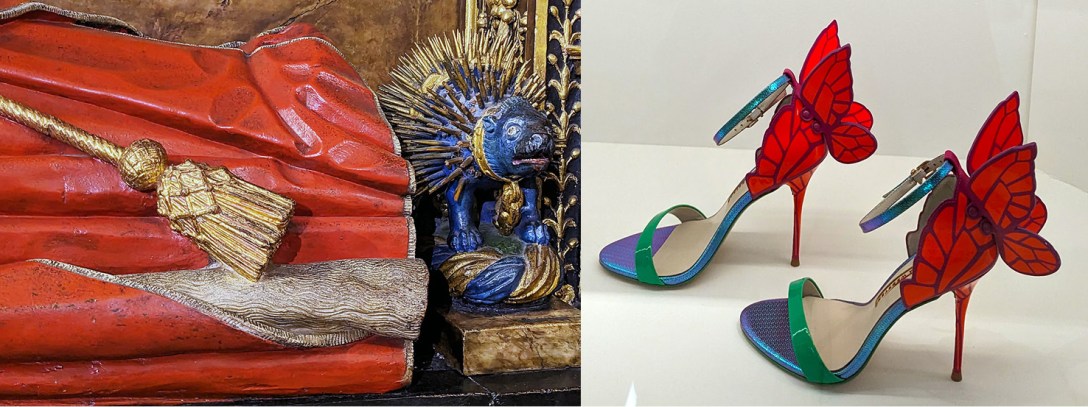
Above: Putti sculpted of marble in Chiesa del Gesu

Known as soldiers of God, Jesuits travel throughout the world to educate and evangelize the masses. They take a vow of poverty when they enter the order, which makes the extravagant beauty found in their churches particularly surprising.

The website of Chiesa del Gesu explains their evangelization efforts through art with words of Saint John of Damascus (676-749):

If a pagan comes and says, Show me your faith!” take him to church and show him the decoration with which it is adorned and explain to him the series of sacred pictures.

Continue reading “Postcard from Palermo, Sicily: Putti play while Jesuits pray”

Postcard from Morelia, Mexico: Crash history course in Michoacan

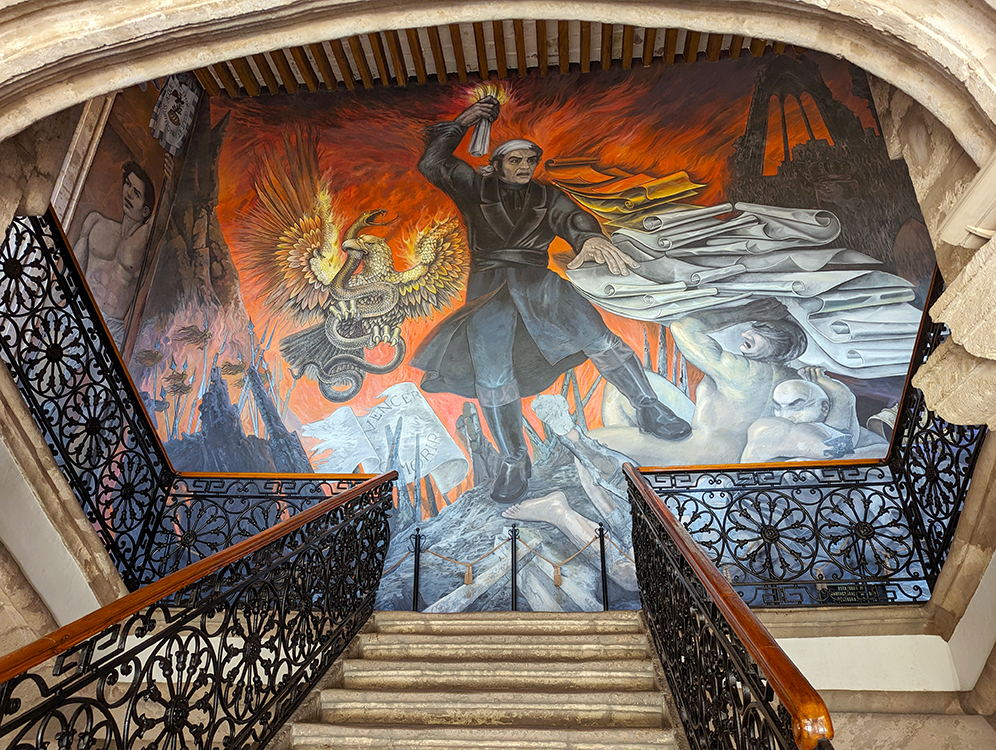
Above: Portion of “Defenders of National Integrity, Cuauhtemoc and History,” Alfredo Zalce, 1952, Museo Regional Michoacano Nicolas Leon Calderon

A Spanish Baroque house built in the 1700s is home to the Michoacan Regional Museum Dr. Nicolas Leon Calderon. With the oldest artifacts in the museum dating from more than 1000 years BC, the collection chronicles the history of and life in the state of Michoacan until hundreds of years after the dramatic impact of the Spanish Conquest.

Oh, Emperor Maximilian I (1832-1867) is said to have slept here (I believe this a more reliable claim than that of owners of almost every old house in central Virginia boasting “George Washington slept here.”). The home belonged to Francisca Roman de Malo and her husband when Maximilian stayed there in 1864 at the beginning of his brief reign. Francisca served as lady-in-waiting to Empress Carlota (1840-1927).

Continue reading “Postcard from Morelia, Mexico: Crash history course in Michoacan”

Postcard from Palermo, Sicily: Are the tales about nudes nunsense?

Above: A portion of Fontana Pretoria, nicknamed Fontana della Vergogna

Officially it’s called Fontana Pretoria, so-named because of its location in the plaza fronting the palazzo that houses City Hall. But its nickname is Fontana della Vergogna, or Fountain of Shame. But shame on whom?

Well, obviously this fountain would be branded as more than shameful, downright pornographic, by some in Florida where a school principal recently was forced to resign after a teacher held up an image of Michelangelo’s “David” as part of a Renaissance art lesson for sixth graders. But art of the Italian Renaissance, even religious art, is not known to be puritanical in nature.

Amongst the theories, spouted off by guides to the huddled groups they shepherd, is that the name first was muttered by offended neighboring nuns, who would slip out onto the plaza under the cover of darkness and apply modest garb to the most exposed statues. Some guides magnify the vigilante efforts undertaken by the Dominican sisters to include amputation of numerous limbs and offensive protrusions. The sisters naturally were upset after they were coerced into giving up a large portion of their property to accommodate the grandiose plaza for the government.

Continue reading “Postcard from Palermo, Sicily: Are the tales about nudes nunsense?”