Postcard from Bergamo, Italy: An unmerciful alarmclock

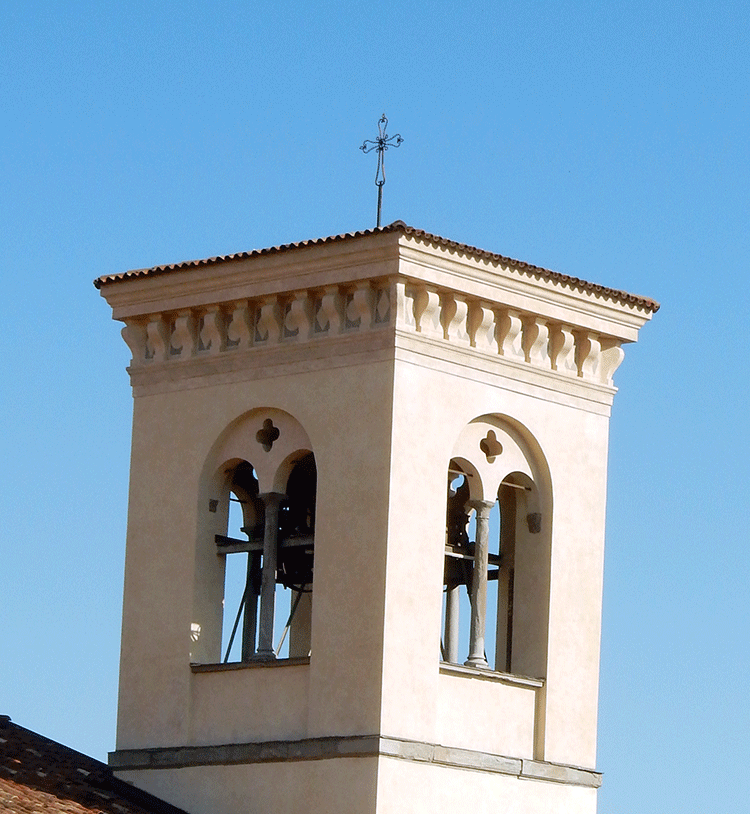
It went off every morning. Only one rooftop away from our fifth floor window in the apartment we rented in Bergamo, Italy, this past summer. There was no way to be lazy and sleep through the clanging bell because it sounded as though it was next to us in bed. Fortunately, it waited until daylight and didn’t feel compelled to let us know as each hour passed during the night.

A block away, the bell hanging in the 11th-century Torre del Campanone tolls 100 times at 10 p.m., a reminder of the strict curfew imposed by Germans in the town during World War II. But then, until morning, all is quiet.

The alarm clock is among the eccentricities encountered renting apartments versus staying in hotels. This rental was located on the fifth floor directly over the main pedestrian street passing through the Alta Citta. Restaurants were only a few steps away.

But on weekends or if tour buses had just unloaded passengers downhill, we had to be careful stepping into the street from our doorway so as not to get run over by the herd jamming the narrow street, much like the crowds on the River Walk at home. One of those play-me pianos below echoed of “Chopsticks” way too often but, sometimes, would attract really talented pianists to sit down for a spell.

The window provided a daily weather report, and the landscape seen from the windows on the flights of stairs at the rear made the climb easier. We also enjoyed birds-eye views of parishioners bearing saints on parade or wedding parties headed to or from one of the numerous churches. And the street was so narrow, we even made an Italian friend on the fifth floor across the street who traded blues guitar licks with the Mister one afternoon.

Love this inexpensive way of slowed-down travel….


Postcard from Campeche, Mexico: Are any two cornices alike?

The streets of the historic center of Campeche resemble ribbon-like rainbows, with lines of colorful houses directly abutting the sidewalks and one another. Although most structures are a single story or two high, their height is increased because interior ceilings soar at least 16 feet upward to keep warmer air hovering above.

Strolls are not boring because of the varying shades of stucco and the amazing number of distinctive patterns embellishing soffits and cornices. If any two facades sport the exact same ornamentation, we failed to spot the pair.

Postcard from Edzna, Campeche, Mexico: Wandering amidst ancient Mayan ruins without the crowds

As incredible as the extensive ruins of Chichen Itza in the Yucatan are, the experience of visiting them is somewhat spoiled. The site is overrun by hundreds of stalls of vendors and swarmed by busloads of tourists.

But there is another spot to visit the Mayan home of the Itza family – Edzna, less than an hour outside of Campeche. Edzna means the House of Itzas, so named because the Itzas lived here before setting up quarters at Chichen Itza. At Edzna, one has to wait around for a while for someone to walk into the camera frame to provide a sense of scale. There were maybe five cars in the parking area.

Construction on the site began around 600 B.C., with the ancient Mayan city expanding to close to ten square miles at its peak of power. The satellite image plucked from Google maps illustrates the small portion of that territory that has been excavated.

The site particularly is noteworthy for its sophisticated system for capturing, storing and distributing rainwater. Hieroglyphics at the foot of its main structure, Edifico de los Cinco Pisos, trace its construction to 652, but additions and alterations were made up until the 14th century. From the base to the top of its comb, similar to toppings at Palenque, the structure measures more than 100 feet high.

Although Edzna was occupied until the 15th century, it was not rediscovered until 1907. Excavation began in 1958, with much of the caretaking services in recent years provided by Guatemalan refugees under the watchful eyes of the resident iguanas.