
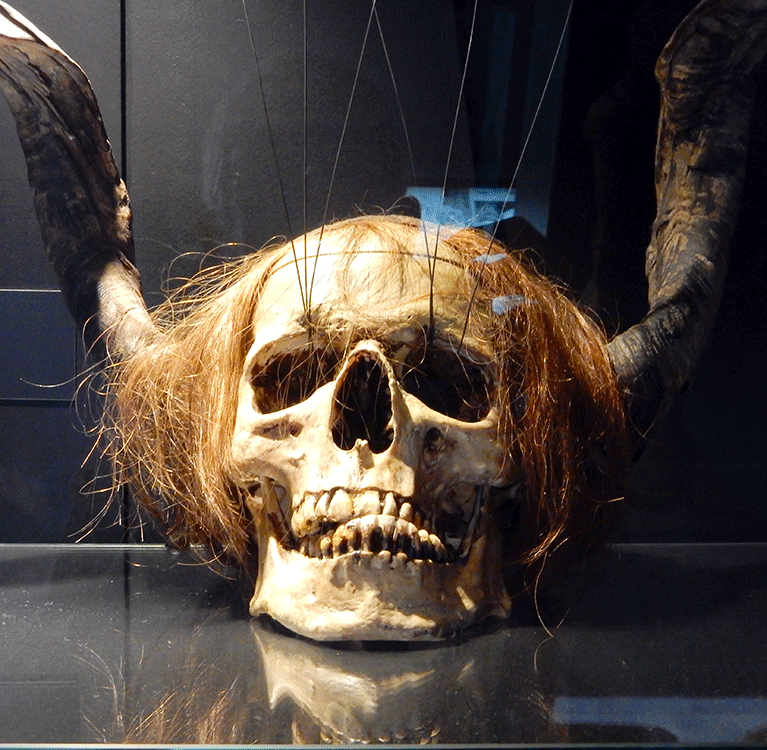
Kissara Lyre
The ghoulish lyre above is far from what I normally would choose to lead off this post about MIMMA, Museo Interactivo de la Musica Malaga. But it is high Halloween season. Impressively, the lyre is made from all-natural organic materials, hopefully found objects not freshly harvested for the crafting of the musical instrument.
MIMMA overall is far from fear-inspiring; it is melodic dream-inspiring. There is a learning lab for kids to experiment with sound. There are huge percussion instruments one can strike, and there is a room with play-me instruments, an invitation the Mister did not turn down.
While the Mister was distracted in a sound-proof room toying with electronic sound boards of some sort, I engaged with the interactive screens. Instead of wandering around gazing at obscure old instruments wondering at their sounds, you can tap the screen and listen to a recording of someone playing appropriate music on them. Mesmerizing.


Favorite instruments though were two 21st inventions by Ignacio Rodriguez Linares, both of which appear vintage. They present solutions for when the band or dancers fail to show. Carmen, a rather complex machine:
…has a series of levers that when activated, interpret Buleria percussion. It also includes the specific clapping accompanying this type of dance., as well as other typically used Buleria sounds, such as the rhythm and off beats, triples, calling, climax and conclusion, in addition to syncopation, 2, 4, and 6-beat bass, 3-beat sharps and 12-beat (clave) rhythms.
Then there are the cute petite stomping feet featured on his Melquiades Flamenco Beat Machine. This novelty allows musicians to select the appropriate rhythms for the seven most common Flamenco styles (Lajos – Kathleen Trenchard definitely needs this for Christmas).
Máquina flamenca “Carmen,” del inventor Ignacio Rodríguez Linares on Al Sur
But what photo would I have featured were it not Halloween? Nipper. The most important thing in the museum to me is Nipper.
With his brother’s part terrier mix dog, nicknamed for his annoying habit of nipping at the heels of any passersby, as his inspiration, Mark Henry Baraud painted the dog with his head cocked toward a Gramophone, listening to “his master’s voice.” The Gramophone Company paid the artist 100 pounds for it in 1898. Eventually the rights to the image made its way to RCA Victor.
While the Nipper in MIMMA appeared a little cold, it still felt like a reunion of sorts with my sleeping companion for several years. Some friends of my parents who owned an appliance store in Virginia Beach showed up one night for dinner when I was six years old with what would become my favorite stuffed animal, a three-foot high version.
Nipper joined George, a green monkey; Tony, the toucan; and little Lambs-Eat-Ivy to occupy a good 2/3 of my single bed. Despite the crowded sleeping arrangement, I never once let any of them fall off the bed. We had a mutual protection agreement. I kept them from the edge of the precipice above the alligator pit under the bed, and Nipper vigilantly prevented any alligators from scaling a bedpost. The alligator problem was Davy Crockett’s fault (Or my sister’s. It’s a long story).
Although alligators never got any of us, it was a tough assignment. Nipper sometimes suffered from leaking innards and had to undergo surgical repairs at the capable hands of my mother several times before his eventual retirement to the attic.
Back to the museum. We were ready to leave, when the nicest man asked us to stay for a Chopin piano recital in a small performance hall. Wine time was calling, but his invitation was so sincere. And there were only six of us in the audience. A rather intimate personal recital. It was beautiful.
Peering over the pianist’s shoulder, merely eyeing the number of notes on the sheet music was humbling, to say the least. There was no way I could have begun to follow the music enough to even have volunteered to serve as a page-turner.


 Postcards from Barton Springs