Postcard from Lisboa, Portugal: Endangered Artistry Underfoot

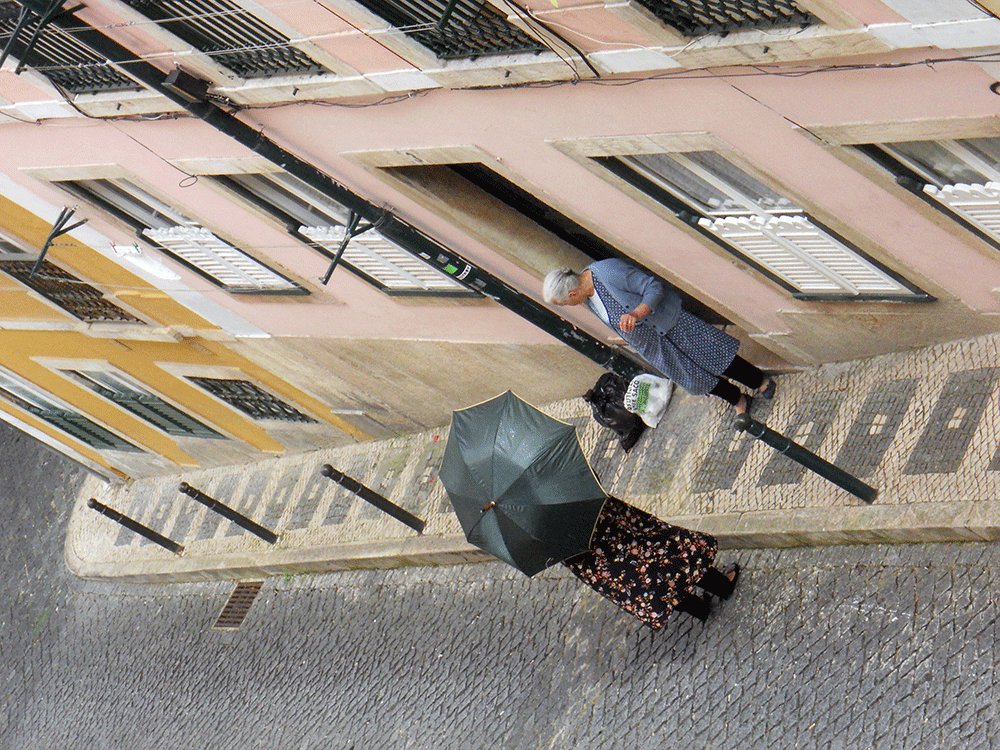
Polished as slick as marble by thousands of feet passing over them, the pleasing patterned sidewalks contribute greatly to the distinctive character of Lisboa.

I had thought that the slickness I felt underfoot was caused by the poor soles of my seemingly sensible shoes, worn down by miles logged on the River Walk at home and on the cobblestones and pavers of San Miguel de Allende and Oaxaca, Mexico. While the rubber nubs of my soles are disappearing under the balls of my feet, that is not the only reason for a little slippage.

The reason I didn’t experience the same feeling in Porto was not shoe-related. An article published online by the The Wall Street Journal on June 1, noted Porto’s black and white pavers are made from granite, which is not as slippery smooth as the five-inch squares of limestone and black basalt residents of Lisboa must navigate daily.

Patricia Kowsmann wrote in The Wall Street Journal article:

Along Rua do Carmo, which slopes gently through an affluent shopping district, pedestrians caught in the rain last week navigated the sidewalk by clinging to lampposts, the facades of buildings or each other. Some gave up and stepped into the street, paying little attention to passing cars.

Obviously, I’m not alone. Old soles on old souls are always on the verge of spills.

But these sidewalks are simply stunning.

This slideshow requires JavaScript.

As I periodically paused to snap photos, I had no idea the pavers could be an endangered species.

But Kowsmann reported elderly are in revolt, driven by their fears of falling. City officials now are authorized to replace sidewalks with more age-friendly materials when deemed appropriate. Although, are the city fathers’ concerns really with the aging population or the cost of continuing to hire craftsman to repair the existing mosaics?

Fortunately, Kowsmann says there has been some major backlash from preservationists and admirers of the artistry under their feet. As one man commented to Kowsmann, hopefully the city can simply rough the surface up a bit to prevent some of the spills.

It’s raining as I write this. Does this pair of seniors dare to brave the risk posed by the rain-slickened up or downhill routes to the closest stores or try to survive the evening safely holed up with one single bottle of wine?
http://online.wsj.com/articles/in-lisbon-some-residents-fear-citys-distinctive-sidewalks-1401675907?mod=WSJ_hp_EditorsPicks

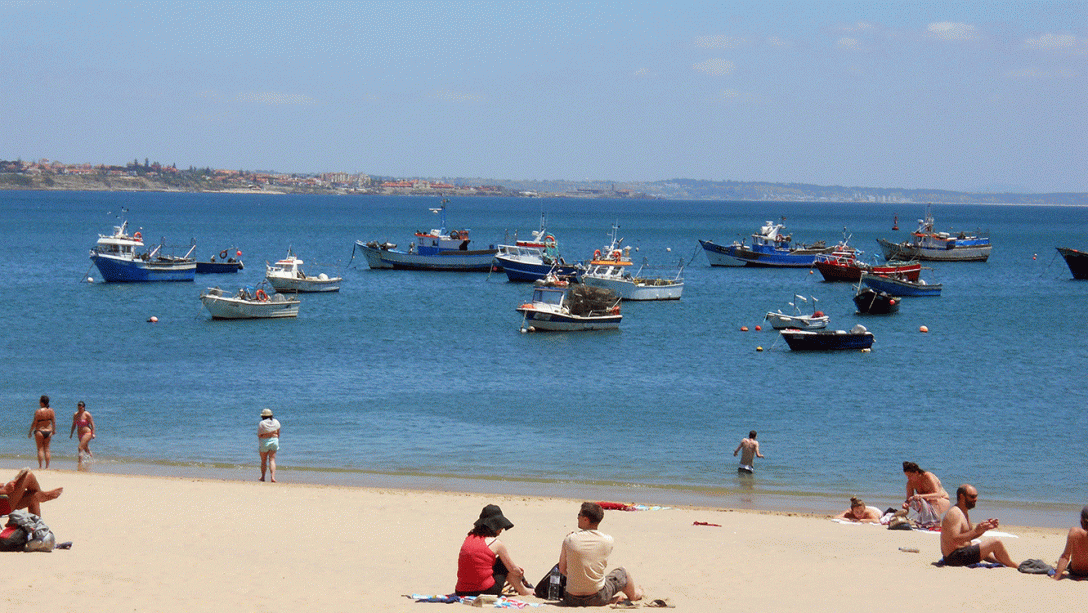
Postcard from Cascais, Portugal: Postage-stamp-size beach was perfect for parasol set

Cascais is a once extremely fashionable resort. Its proximity to Lisbon made it a welcome retreat for city-dwellers in the summer.

The old resort houses are not mere cabanas, but elegant. Many built during the twilight of the Portuguese monarchy, including an 1890 one by an Irishman, O’Neill – easy to spot among the photos because of a shamrocked ceiling.

This slideshow requires JavaScript.

Small beaches were not an issue back then. Tans were not in vogue; parasols were. Vacations were about promenades along esplanades.

But the resort still is a magnet; it’s only a $3 train ride from Lisbon, about 40 minutes. And it’s nothing but relaxing. A great place for an afternoon stroll with cooling breezes off the Atlantic and a stop at Gin and Moules for exactly what the name advertises.


Postcard from Lisboa, Portugal: Sardines and the Saint

Somehow the sardine has been elevated to a level almost of the saint himself, Saint Anthony that is.

Outside of Portugal, he might be known as Saint Anthony of Padua. But, here in Lisboa, he is their hometown boy. He was born right here. A saint of heroic proportions, so much so that his Feast Day, June 13, is glorified by a full month of celebrations.

People have been prepping for the party ever since our arrival in Lisboa. Festoons are flung across streets. Banners hang and bleachers are set up along the broad, tree-lined Avenida da Liberdade, ready for a parade on June 12. Neighborhood groups gather and parade across town to his church on various evenings. And, in Alfama, booths come alive nightly, plying passersby with jiggers of the strong cherry ginjinha, jugs of sangria, beer, fried things and, of course, grilled sardines.

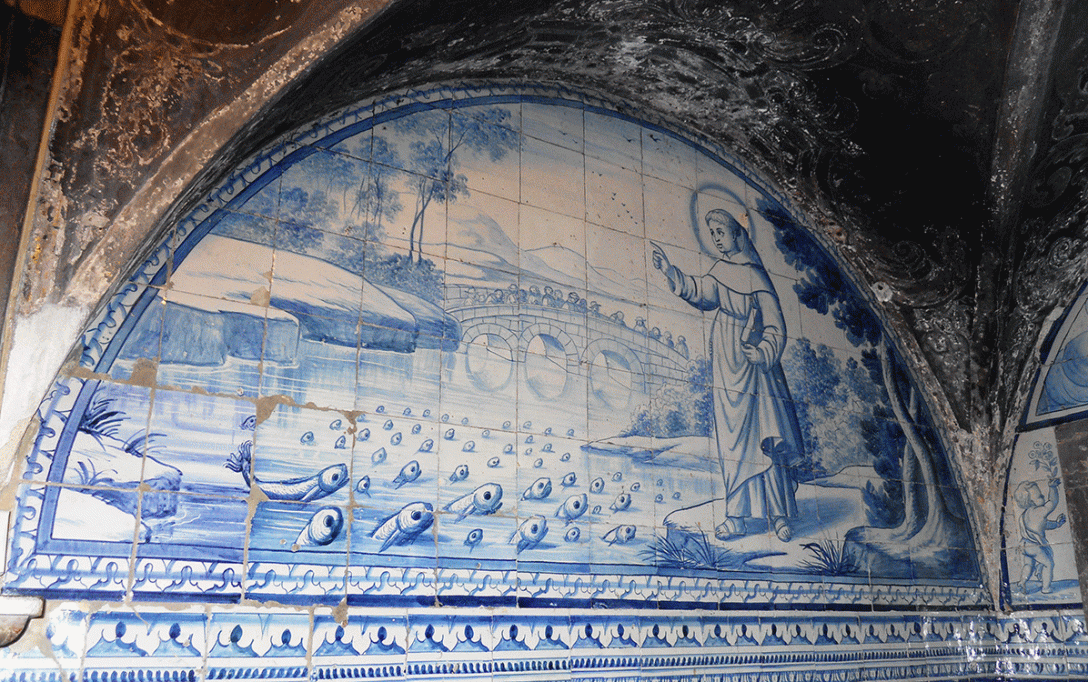
Sardines seem synonymous with the celebration, with artist-designed sardines featured on the banners of the umbrella group, Festas de Lisboa. This might stem from one of the numerous miracles attributed to Saint Anthony. Perhaps tiring of preaching to skeptics, he turned to the water and starting praising the glory of the fish who all rose enraptured to the surface, listening until he completed his sermon.

Surely, the attentive ones must have been sardines because it makes everything so convenient. Because this is their prime season. Along the coast, colorful fishing trawlers head out at night with nets to encircle the schools of sardines to bring back fresh to the docks by morning. By noon, they sizzle on grills everywhere throughout the country, the smoke and smell scenting the air heavily on some streets.

These freshly caught ones seem unrelated to the strong-tasting, oily canned sardines I remember from childhood. The fine bones of small ones thrown on the grill can be easily chomped upon, but the plump larger ones that you must filet are prized for their moist, sweet meat.

This slideshow requires JavaScript.

Being here on June 13th is sort of a pilgrimage, because, although named in his honor, San Antonio, Texas, pretty much ignores his day. Even his mission, the Alamo, no longer is known by his name. Frank Jennings tried to get a meaningful Founders’ Day going, and Rolando Briseno attempted to create artistic pageantry in honor of San Antonio’s patron saint.

But nothing stuck.

Yet….