
As a guiding principle, Kentridge embraces the notion of fortuna, which he describes as something other than cold statistical chance, yet something outside the range of rational control. In other words, we might understand this as a kind of directed happenstance, or the engineering of luck, wherein there is possibility and pre-determination. Fortuna alludes to a state of becoming wherein the work of art is endlessly under construction — even when encountered as a finished product by the viewer.
Lilian Tone, http://www.museoamparo.com
While we were in Puebla, a floor of Museo Amparo was devoted to “Fortuna,” a huge retrospective exhibition of work by William Kentridge. Born in Johannesburg, South Africa in 1955, the artist appears unsure of what he wanted to be when he grew up. Studying first politics and history, then theatre, then art until scrambling aspects of all of them into films.
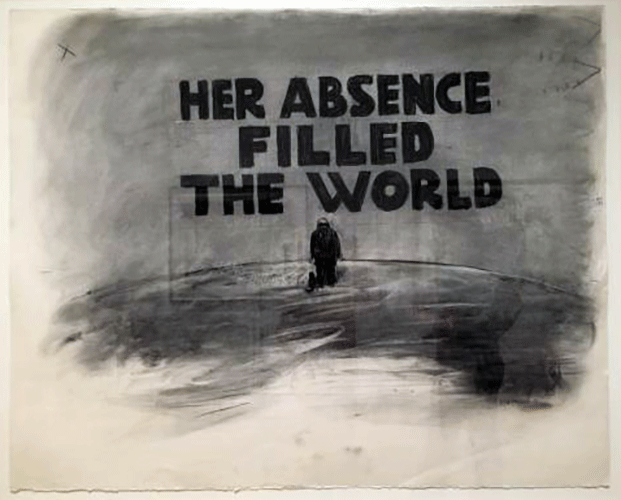
Kentridge’s charcoal works are as politically potent as those of Goya. His simple tribute after the death of his wife – “Her Absence Filled the World” – seems to unleash a gallery-filling howl of mourning.


We visited “Fortuna” twice, fascinated by Kentridge’s videos, sometimes incorporating his charcoal drawings in progress and/or the reverse and sometimes focusing on personal autobiographical interactions of him with himself. Life-size projections brought him pacing into the room with you (the Mister in the above photos), even though many were in black and white.
Below are two brief snippets plucked from the exhibition:
Really recommend making time for viewing this documentary, William Kentridge: How We Make Sense of the World. The thought process governing his artistic process is wonderful to watch unfold.


 Postcards from Barton Springs