Postcard from Ferrara, Italy: First tastes of Emilia Romagna

This smiling whole hog symbolically welcomed us to the wealth of the traditional foods of Emilia Romagna. He seemed comfortably perched atop the counter of a booth set up for Il Cibo e Chi lo Fa Mercato del Gusto Italiano set up for the weekend on a plaza adjacent to the Cathedral. Although he continued to shrink as slices of him sold throughout the day.

This region of Italy produces some of its best-known cheeses, meats and vinegar. Think of parmiggiano and numerous goat cheeses, cured thinly-sliced Parma ham and aged balsamic vinegar from Modena. Ferrara was an ideal place to dive into some of the regional classics.

Virtually no menu is without cappellacci di zucca, a plump pasta filled with spiced pumpkin puree. It is served primarily two ways, either al ragu, with meat, or in a butter and sage sauce. The best, and most artfully presented, version we encountered was al ragu at Cibo. The meat sauce was flavorful without overpowering the comforting pumpkin. Lebanese were lurking in the kitchen, though, and I broke from the traditional for a chance to order kibbeh, a meat dish I’d wanted to revisit ever since a nephew’s mother-in-law generously contributed it to a Thanksgiving dinner several years ago.

Our go-to pizzeria proved to be Pizzeria Ristorante Este Bar, but the kitchen at the always bustling restaurant is capable of more than a great pie. We had two incredibly good octopus dishes there. One was a rich regional version in which the extremely tender chunks of pulpo topped a bowl filled with pureed cannellini beans and crisped guanciale. Guanciale is cured pork cheek or jowl that is regarded as a much more tender and flavorful ingredient than the pancetta commonly used in dishes at home. Our favorite preparation of octopus here, though, was Sicilian in style, with chunks of potatoes.

Spaghetti here bears little resemblance to the American version of the pasta. Freshly made, it emerges from the kitchen in a thicker, squiggly, more satisfying form. The best we sampled was in a casual, off-the-beaten-path, neighborhood spot, diCibo, that a tourist probably only would find if trying to locate a self-service laundry mat. The perfectly cooked pasta was topped with a bountiful array of fresh seafood.

Both the lasagna and the risotto – aged parmesan makes everything taste better – were great at Trattoria da Noemi. We tried a pasta new for us, passatelli, at Osteria del Babbuino, where a nice blend of jazz is on the soundtrack. With a texture midway between regular pasta and gnocchi, passatelli is formed from bread crumbs, egg and parmesan and cooked in broth. Babbuino’s was offered alle cozze vivaci in crema di cannellini, with mussels in a sauce made from cannellini beans.

Salads in Ferrara tend to be generous but rather basic, so we drifted often to the healthiest other option, grilled vegetables. Sides of grilled eggplant, peppers and zucchini are found on menus almost everywhere, and we were happy to quickly throw salads together at our apartment from prewashed arugula and watercress readily available. I keep longing for watercress to be offered this way in grocery stores at home.

Many of the restaurants in Ferrara still follow the hospitable tradition of providing diners with a complimentary glass of house-made limoncello at the end of the meal. DiCibo instead gave us a refreshing orange version, arancello, and Babbuino offered a choice of limoncello and liquore di liquirizia, my downfall. The bottles were placed on the table with rather large glasses for us to self-administer our servings. A licorice-lover, I poured myself a conservative helping, leaving my glass at least one-quarter empty. Every sip of the deep black liqueur was luscious, but then bedtime came. I was totally wired for most of the sleepless night.

Think the Mister has placed liquore di liquirizia on my off-limits list.

Postcard from Oaxaca, Mexico: Final restaurant round-up

Rooftop restaurants in Oaxaca are so seductive because, aside from the churches, the scale of the architecture is low. The views are of the streetscape below and the colorful tile domes silhouetted against mountainous backdrops.

Mezquite Gastronomia y Destilado fits in that category, plus, the menu is appealing and mezcal cocktails are refreshing. The amuse bouche of elote esquisito leaves you wondering if you could simply order a huge bowl. The appetizer of chunky guacamole was way more than the two of us could finish, but so good we did try. An ahi tuna tostada was perfect for a warm afternoon, and the cochinita pibil sandwich is a hearty meal. Seafood topping linguini was fresh and plentiful, and the coconut flan dessert with a mezcal sauce disappeared quickly.

The open second floor of Tr3s 3istro overlooks the zocolo, perfect for people-watching. The noises from the enormous public square below can be overwhelming, but only for the jaded. Mexicans tend to sit in the back of the restaurant to avoid the noise, freeing up the ringside seats for those of us wanting to take in the ever-changing scene. The service at Tr3s is polished and professional, but, for some reason, we ordered two salmon dishes. The fillets were cooked perfectly, but seemed so boring in comparison to everything else we had been eating. Our fault, not the restaurant’s. Definitely think it is worth visiting and ordering something more Oaxacan. And, there’s the perk of that plaza perch.

Mexita Restaurante, on the other hand, is out of the main tourist zone. One of our favorite things about this Italian restaurant is that the chef makes his own red wine. The arugula salads are always fresh and come in three sizes; the smallest one is enough for two. The seafood topping one pizza was so good, but it completely turned the center of the pie to soup. The house pizza loaded with arugula and blanketed with prosciutto, though, was perfect.

El Destilado Tapas Bar and Restaurant is known for its multi-course dinners of small plates, which we did not have an opportunity to experience. The huge portion of ceviche we tried at lunch time at the mezcal bar was quite fresh and flavorful.

Pilar Cabrera of Restaurante La Olla has been offering cooking classes at Casa de los Sabores for years. We opted for simply getting waited on and fed at La Olla. Had not expected the chiles pasillas rellenos in tacos to be fried, but the deeply complex flavors of chiles pasillas stand up to batter much better than fresh poblanos. The fish was good, but the stars of the meal were tender, grilled pulpo tostadas.

El Morocco Restaurante provides a total change of pace. Caramelized onions topping many of the couscous dishes add a whole different dimension of flavor to them.

La Popular is indeed popular, but I got off to a bad start there. Part of its reputation rests upon it salads and vegetables, particularly grilled eggplant. None were listed on the blackboard. I asked if there were any salads, and the waitress simply said “no.” Vegetables? She again said “no” with no other explanation. So I moved onto other choices. The Mister raved about his torta, but the shrimp quesadillas were completely flavorless. The nicely provided condiments perked them up considerably, but, after so many extremely great rustic corn tortillas elsewhere, these were simply wimps. Right after our dishes were served, handsome salads started appearing at tables around us. When asked about them, the waitress said the kitchen did not offer them until 3 p.m. So, maybe give La Popular a try, but don’t go in at 2:45; wait until 3 p.m.

El Pochote Organic Market in the Xochimilco neighborhood was two blocks from our apartment in Oaxaca. The Friday and Saturday market is patronized more for its food booths than quantities of fresh produce. There are ample tables in the shade, but we tended to pick up tamales wrapped in banana leaves and chickpea-and-greens frittatas for later meals at home. On Fridays, El Pochote seems to attract mainly ex-pats, but Saturdays bring out local families. Shopping certainly is enhanced by the mezcal tastings offered by two of the market’s vendors.

Hope the earlier posts and this help you plan your agenda in Oaxaca.


Postcard from Oaxaca, Mexico: Two more dining destinations

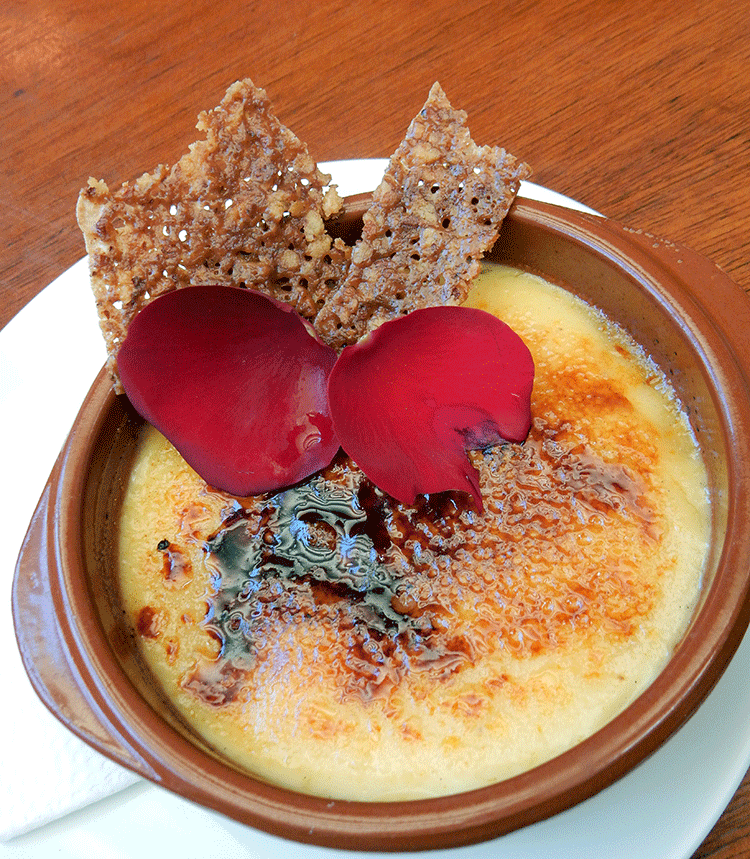
The enclosed patio of Los Danzantes is always a favorite, with top-notch service and a diverse menu. With the accompanying tortillas, the queso fundido appetizer with an abundance of huitlacoche, corn smut, is hearty enough to completely fill up two. The delicate tuna tartar tostadas are a more manageable starter for venturing farther down the menu. A giant leaf of hoja santa is filled with goat cheese and surrounded by a tangy sea of tomatillo sauce. Regional goat cheese flavors the creamy rice and fills a hearty serving of chicken with a huitlacoche sauce. The chocolate cascada releases warm, molten chocolate, and crème brulee is tinged with fragrant rosemary.

Many people head to El Olivo Gastropub for tapas, but we found their main seafood dishes are amazing, even after spending six weeks in Spain this past summer. The arroz negro, blackened with squid ink and fortified with an assortment of seafood and vegetables, was the Mister’s favorite dish during our month-long stay in Oaxaca. The pernod flavoring the shrimp dish had me hooked. The coffee ice cream with nut brittle tucked under it was both better and, amazingly, less expensive than the helados peddled on the Plaza Socrates in front of Soledad. The rooftop is fanned by breezes on even a warm afternoon.