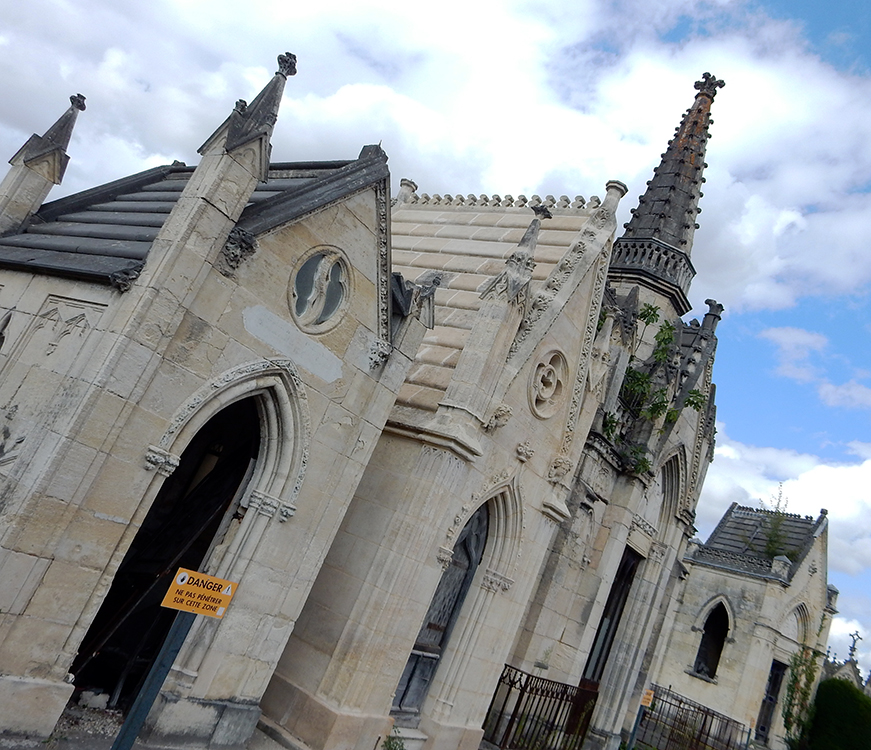
Founded in the 17th century, the Chartreuse Cemetery is the oldest above-ground cemetery in Bordeaux. Little stone chapels appear to have been the preferred permanent dwellings for the affluent of the city.
Continue reading “Postcard from Bordeaux, France: Pathways lined with petite houses for the dead”Author: postcardsfromsanantonio
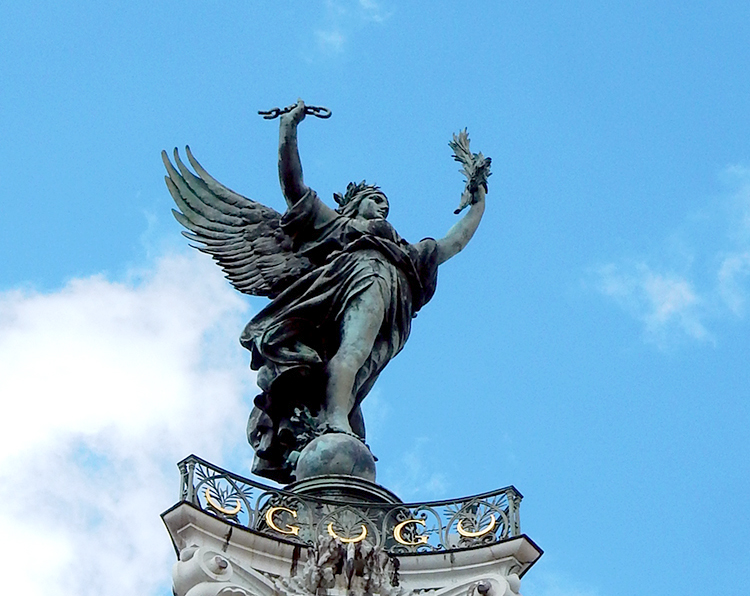
Postcard from Bordeaux, France: Lady Liberty breaks free of shackles on both sides of Atlantic
While the use of the guillotine symbolizes a reign of terror during the early days of the French Revolution, its usage was adapted in the late 1700s as a more humane way to carry out public executions. It was regarded as both efficient and fast, sparing the sentenced unnecessary pain. It is said that before it was sanctioned as the official executioner’s tool, King Louis XVI (1754-1793) suggested improving the design to utilize an angled straight blade instead of the original curved one. He himself, along with his queen, Marie Antoinette (1755-1793), benefitted from the enhanced efficiency when they were beheaded.
The tool became a hallmark of the political maneuverings carried out by one of the leaders of the revolution, Maximilien Robespierre (1758-1794). Robespierre definitely established himself as a kind of “if-you’re-not-with-me-you’re-against-me” kind of guy, placing those who found themselves in that category labeled as enemies of France. He was also adept at rallying the masses, the sans-culottes tradesmen in Paris, to protest against these enemies.
Continue reading “Postcard from Bordeaux, France: Lady Liberty breaks free of shackles on both sides of Atlantic”Postcard from Bordeaux, France: Saint Seurin saved the city, but Vikings later destroyed his church
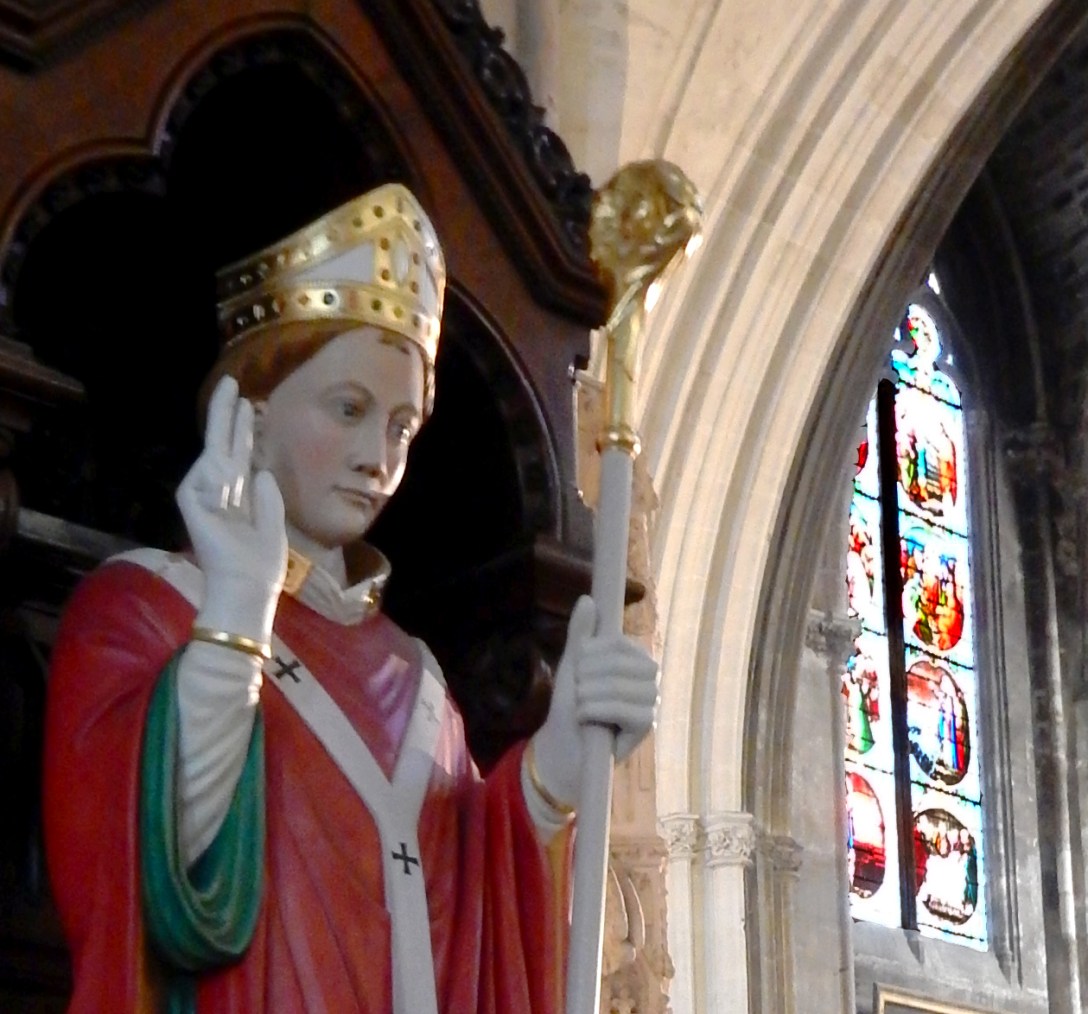
Above, statue of Saint Seurin of Bordeaux
With the withdrawal of Roman protection, Aquitaine became vulnerable to attacks by a host of others – the Vandals, the Goths, the Franks.
According to legends, as Saint Martin of Tours was dying in the year 397, he appeared in a vision to Seurin, a bishop engaged in fighting the spread of Arianism. Saint Martin directed Seurin to go to Bordeaux.
Bordeaux had no job openings for bishop, but, miraculously, the presiding bishop had a vision as well. The Lord directed him to welcome Seurin with open arms. So, the pair met, embraced and entered the church together; Seurin emerged with the title. The timing was fortuitous for the city’s residents, under attack by either Goths or Franks at the time, because Seurin was able to perform numerous miracles to successfully defend the city.
Continue reading “Postcard from Bordeaux, France: Saint Seurin saved the city, but Vikings later destroyed his church”