Postcard from Morelia, Mexico: Foreign beliefs transform both faith and art

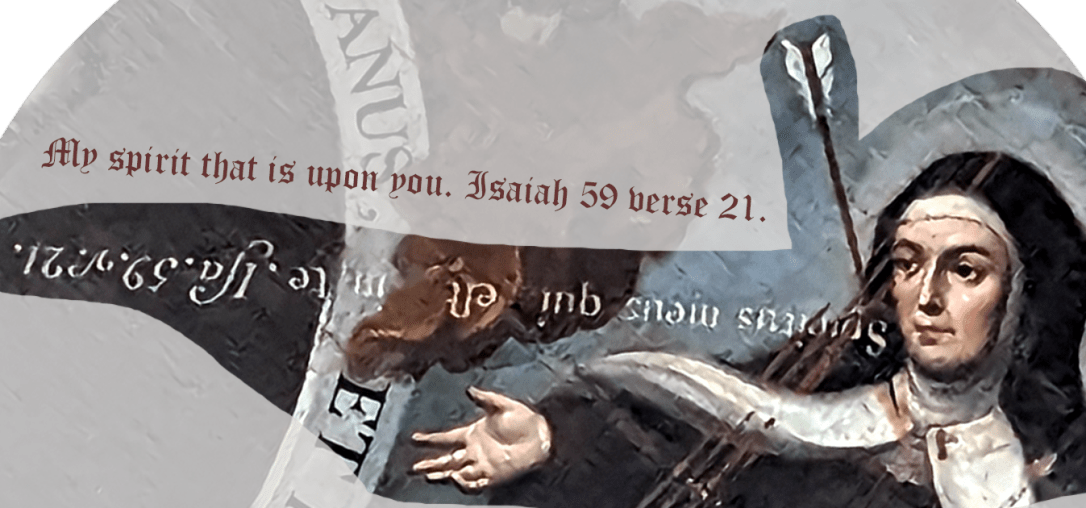
My spirit that is upon you,” Isaiah 59 verse 21, translation of one of the Latin phrases floating around the canvas of “El Obispo Juan de Palafox y Mendoza” by Miguel Cabrera

As in Europe, art served as a primary tool for friars to introduce the mysteries of Catholicism to those of other beliefs. Consequently, religious paintings from that period form the core of the collection of Museo de Arte Colonial. The works are displayed in a house of the Colonial period which was renovated in 1984.

Continue reading “Postcard from Morelia, Mexico: Foreign beliefs transform both faith and art”

Postcard from London, England: Women-splaining Guerrillas at the Tate

Above: “How To Enjoy the Battle of the Sexes,” The Guerrilla Girls, London’s Tate Modern

Flash back to 1984 and the International Survey of Recent Paintings and Sculpture at the Museum of Modern Art in New York City.

Women artists did the math: Out of 165 artists, a mere 13 were women. The Guerrilla Girls were born. They picketed MOMA. As “the conscience of the art world,” they’ve been battling gender inequality and racism entrenched in it ever since.

Why masks? The protesters’ anonymity achieved by guerrilla masks puts the spotlight on the issues instead of the individual women artists or their talents.

The Tate Modern currently has a large wall dedicated to Guerrilla Girls’ posters stridently illuminating gender and race gaps throughout the world.

Continue reading “Postcard from London, England: Women-splaining Guerrillas at the Tate”

Postcard from Palermo, Sicily: Putti play while Jesuits pray

Above: Putti sculpted of marble in Chiesa del Gesu

Known as soldiers of God, Jesuits travel throughout the world to educate and evangelize the masses. They take a vow of poverty when they enter the order, which makes the extravagant beauty found in their churches particularly surprising.

The website of Chiesa del Gesu explains their evangelization efforts through art with words of Saint John of Damascus (676-749):

If a pagan comes and says, Show me your faith!” take him to church and show him the decoration with which it is adorned and explain to him the series of sacred pictures.

Continue reading “Postcard from Palermo, Sicily: Putti play while Jesuits pray”