
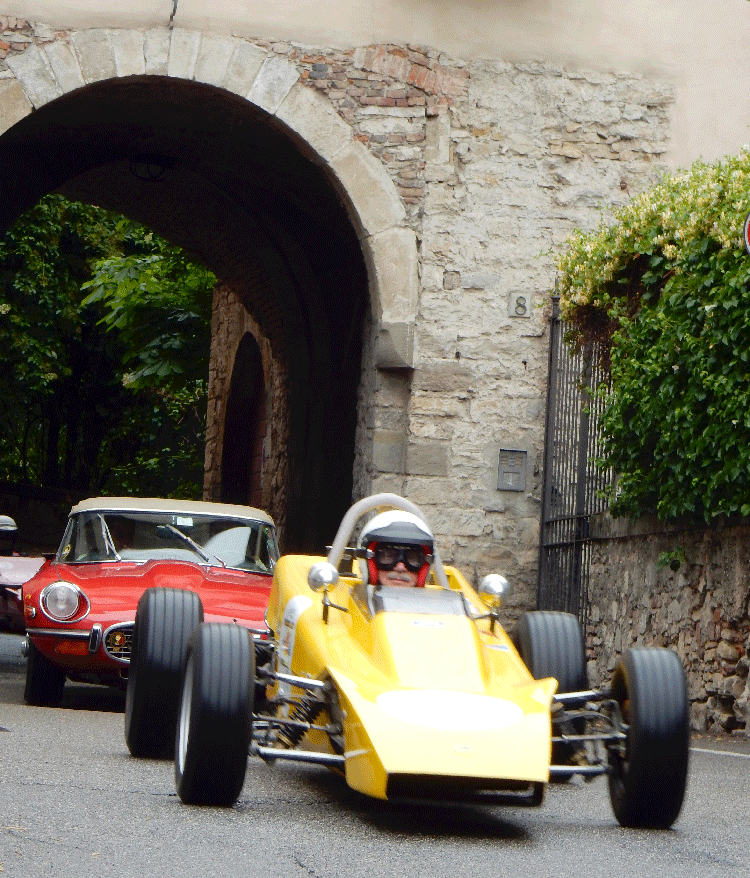
This is the first of a series of “postcards” almost lost in the shuffle of 2016; their delivery has been delayed by more than six months.
The first automobile race through the city’s gates and around the walls of Bergamo was held in May of 1935. Alfa Romeo, Maserati and Bugatti cars completed 70 laps on the winding narrow streets of the hilltop town to attain a distance of 150 miles.
In 2004, the city began hosting annual reenactments of that first event. I’m not much of a car-person, but even I could not resist the charm of these classic cars cruising circling the upper city. These beauties were among the participants on a drizzling day in May of 2016.


The main trophy awarded for pre-war classics at the Bergamo Historic Gran Prix Circuito dell Mura is named in honor of the hometown racing hero, Guilio Foresti (1888-1965). Foresti drove for virtually all of Italy’s famous carmakers. Fans of speed remember his 1927 efforts to break the British speed record of 174.88 miles per hour in Pendine Sands, Wales. He drove a Djelmo, a test car of Prince Dejaleddin. According to William Pearce on Old Machine Press:
On 26 November 1927, Foresti took the Djelmo out on the sands to make a few runs. As was typical, Foresti wore only goggles and no other protection. The Djelmo had exhibited a tendency to fishtail at high speeds. While travelling on the beach at around 150 mph (240 km/h), Foresti lost control. The Djelmo rolled several times, and Foresti was ejected from the racer. Miraculously, Foresti suffered only minor injuries and walked toward rescuers. The fact that he was ejected clear of the rolling Djelmo and into the soft sand probably saved his life. The Djelmo was destroyed. Prince Djelaleddin had lost interest in these speed projects: the Djelmo was never repaired and the twin-engine racer was never built.
Fortunately for amateur photographers, the classics in Bergamo’s Historic Gran Prix cruise at a much tamer speed. The main challenge appeared to be to keep these vintage vehicles in running condition.




 Postcards from Barton Springs