Silver from el Minero de Santiago Marfil afforded one of the Spanish elite settling in Mexico to purchase land above the Rio Guanajuato and oriented toward a church for a luxurious hacienda in the late 1700s.
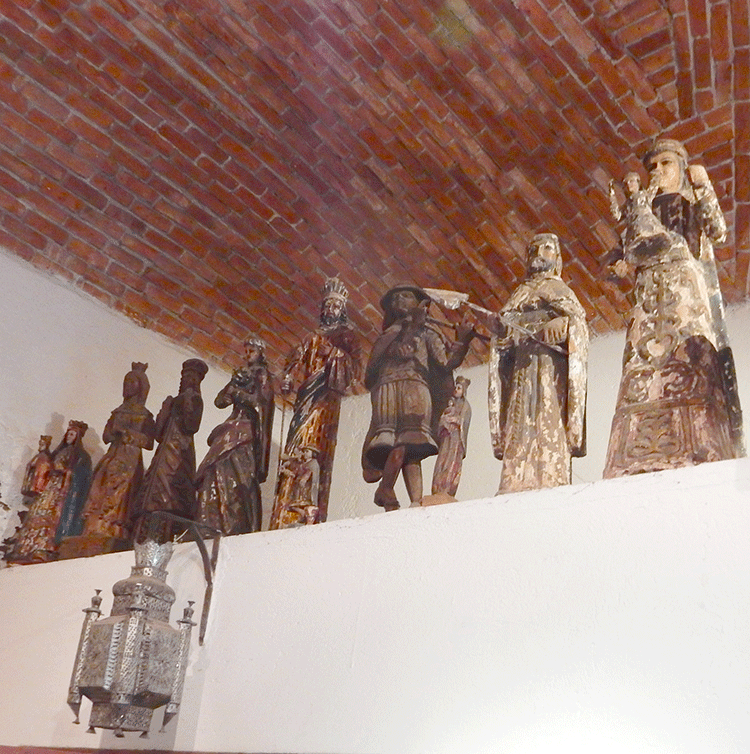
Centuries later in the 1960s when Canadian artist Gene Byron (1910-1987) and her husband Virgil Fernandez del Real purchased the ex-hacienda Santa Anna, Marfil was somewhat of a ghost town. The couple transformed the ancient buildings and grounds into a showcase for their collections of Colonial art and the results of their own artistic endeavors. In addition to her painting, Byron learned to craft handsome punched tin and copper pieces that are found throughout the house museum her husband opened to the public after her death.
The museum often hosts live classical or jazz concerts on Sundays in an intimate setting. During the week, wandering through the house with a docent often is a private tour.
There is a restaurant on site, but we visited on a Monday when it was closed. Although the road through no longer-sleepy Marfil has traffic speeding along, we walked along the narrow sidewalk to ascend to the colorful church perched above and then passed by the ancient statue-topped dam across the river on our way to score an incredible Italian feast at Piccato di Gola, fifteen minutes away at the other end of town.





 Postcards from Barton Springs