Postcard from Valladolid, Spain: Plateresque architecture competes with sculpture within

Above, Isabelline Plateresque details surround the courtyard of Colegio de San Gregorio in the complex serving as Museo Nacional de Escultura.

The National Sculpture Museum is housed in three historic landmarks clustered together in one block in Valladolid.

With the nationalization of convents and monasteries in 1836, the government of Spain seized a wealth of artistic treasures in need of housing. Many of those from the region of Castile first went on display in Valladolid in 1842 in the Colegio de Santa Cruz. In 1933, the collection was designated a national one and was moved to the Colegio de San Gregorio.

The exterior of the 15th-century building is characterized by intricate sculptural reliefs in the Isabelline Plateresque style. The gorgeous façade demonstrates a complete lack of a uniform theme – resulting in a fascinating hodgepodge of biblical and secular components with an abundance of putti and floral and vine-like flourishes intertwined among them.

Continue reading “Postcard from Valladolid, Spain: Plateresque architecture competes with sculpture within”
Postcard from Burgos, Spain: A ‘work of angels’

Above: Santiago, Saint James, stands guard under the eight-pointed star of the Spanish Renaissance lantern dome, cimborrio, of the Cathedral of Saint Mary of Burgos.

It seems more like the work of angels than of men.”

King Philip II of Spain (1527-1598)

King Philip II’s glowing description of the gleaming white dome that crowns the intersection of the horizontal arms of a cross with the main nave in the Cathedral of Saint Mary of Burgos seems appropriate. Designed by Juan de Vallejo and Francisco de Colonia, the octagonal dome was completed in 1568 to replace an earlier lantern, less than 50 years old, that collapsed rather spectacularly in 1539. The Latin inscription above Santiago at the base of the dome translates to: “In the midst of your temple I will praise you and give glory to your name because you do wonders.”

As the exterior of the Cathedral makes obvious, the interior’s tall golden altarpieces, soaring domes, choir, chapels and cloisters are overwhelming in scale.

Continue reading “Postcard from Burgos, Spain: A ‘work of angels’”

Postcard from Burgos, Spain: Cathedral a welcome sight for weary pilgrims

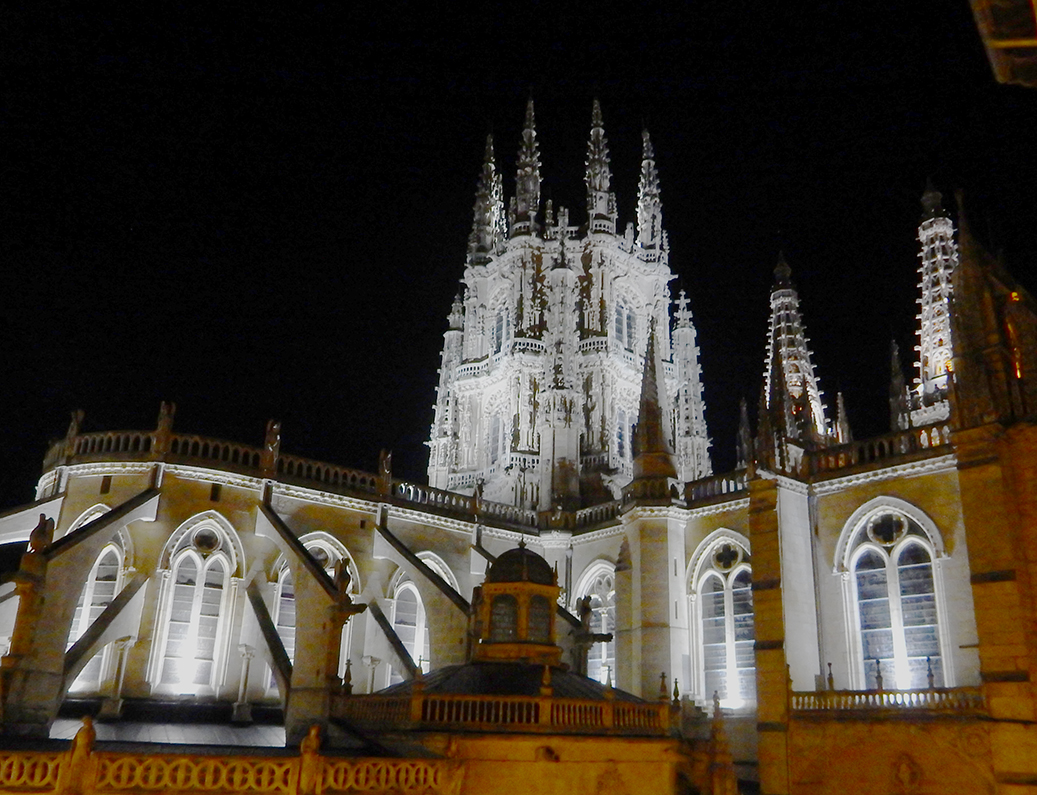
Above: Night-time view from our rental of the octagonal crossing lantern tower, or cimborrio, of the Cathedral of Saint Mary of Burgos, Santa Iglesia Basilica Catedral Metropolitana de Santa Maria de Burgos

Our Lady of Burgos was begun in the 13th century at the same time as the great cathedrals of the Ile-de-France and was completed in the 15th and 16th centuries. The entire history of Gothic art is summed up in its superb architecture and its unique collection of works of art, including paintings, choir stalls, reredos,* tombs and stained-glass windows.”

“Burgos Cathedral,” UNESCO World Heritage List
Continue reading “Postcard from Burgos, Spain: Cathedral a welcome sight for weary pilgrims”