Postcard from Porto: Elevating Street Art

We appear on a pilgrimage to follow celebrations of street art – Oaxaca this past fall and Colonia Guadalupe in San Miguel de Allende in February – but it’s purely coincidence.

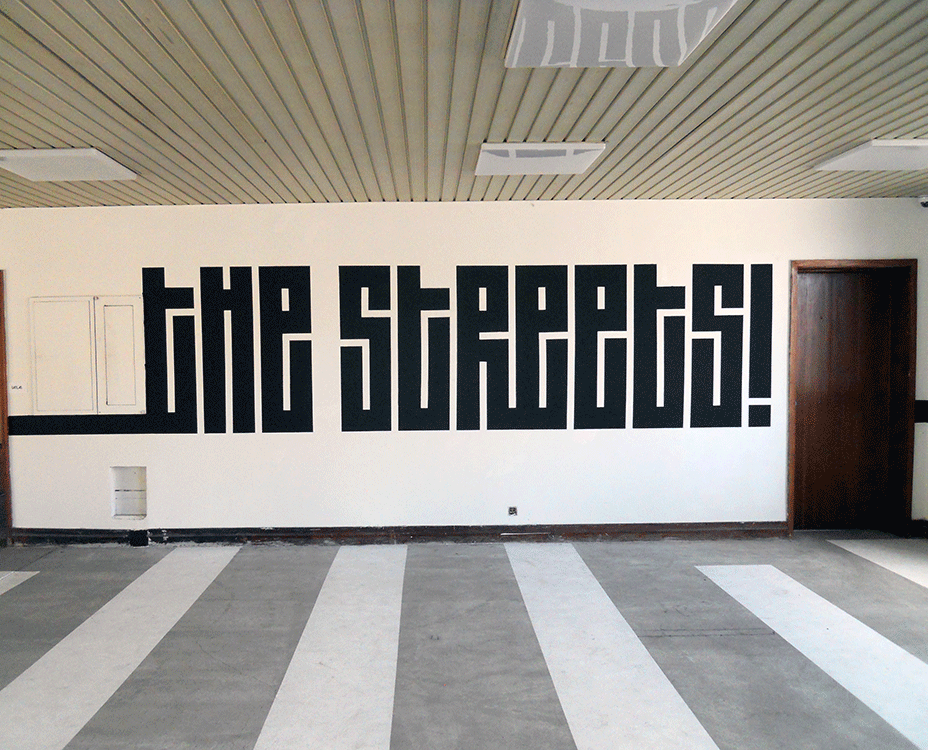
Porto’s City Council multiplied those projects multifold by commissioning art for the streets and spread throughout seven floors of a surprisingly vacant building on the elegant and broad Avenida dos Aliados. According to the brochure for Street Art Axa Porto, the indoor/outdoor exhibition running from April 30 to June 1 is:

designed to pay homage to urban art, namely street art made in Porto. The combination of Porto-born artists and great international names will certainly highlight Porto and its renowned street artists, as far as national and international street art is concerned marking a beginning for other City Council’s projects related with this kind of artistic expression.

This slideshow requires JavaScript.

We haven’t encountered many of the official outdoor projects, but we are operating with a map identifying only about every 10th street of Porto. Navigation is tricky in the historic center. While I might wander in circles for an hour seeking a specific dining destination, striking out for street art with the same enthusiasm is not in me. Seven flights of stairs and seven floors of graffiti and street art temporarily have quenched thirst for the art form. More old-school tiles, please.
 

Postcard from Porto: The artistry of clean clothes

Americans. So puritanical.

Not only is airing our dirty laundry frowned upon, we also seem opposed to airing our clean laundry. We banish the entire function to closeted quarters hidden from guests.

Dryers further protect our privacy, as though naked underthings are far too revealing. Forget preserving our resources by relying on wind-power instead of electricity. We’d never think of hanging wet clothes out to dry on the front porch. Subdivisions often forbid even backyard clotheslines.

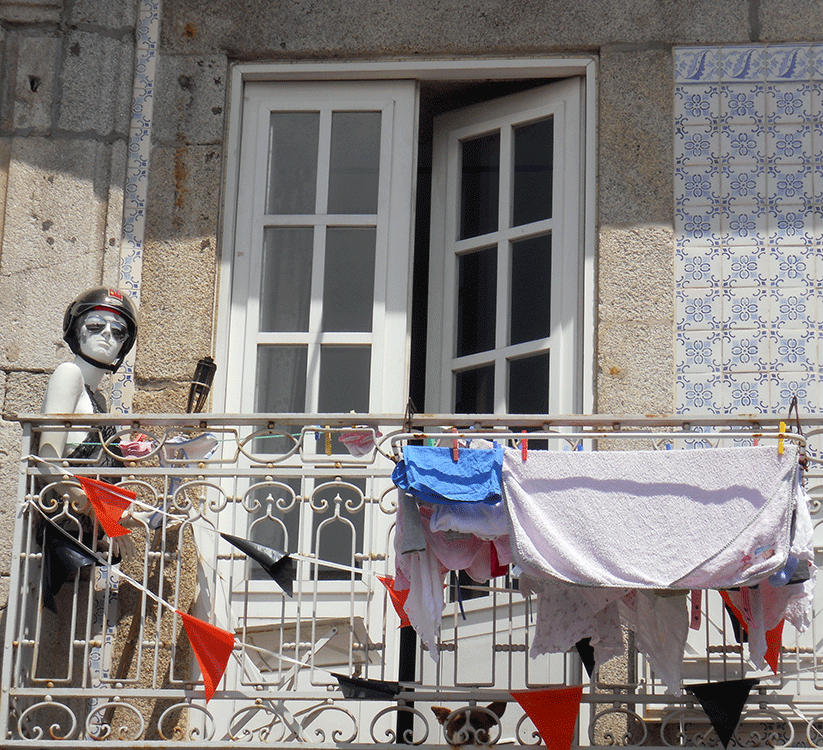
As a result, we are fascinated by the flagrant displays of clean clothes hung in full view in other countries. I try to refrain from framing photos of colorful wardrobes flapping in the breeze, but sometimes I slip into this silly form of voyeurism transforming the appearance of even drab building facades into changing kaleidoscopes of color on a daily basis.

This slideshow requires JavaScript.

Laundry hangs everywhere in Porto – over the heads of diners on a narrow street, flapping amidst festival flags on another, constant reminders that everyone puts their pants on the same way.

My favorites on morning walks along the banks of the Douro River are those artistically arranged for the entertainment of others – a mannequin for drying underwear or a pair of black undies pinned next to a tile saint.

Portenos are proud of their cleanliness. Only Americans treat laundry as though it were a dirty little secret.

Update Added on May 8, 2014: Oh, that we could add to the display, but, alas, we cannot. We took all our darks and loaded up the machine using the product with the pile of fluffy towels on the label, distinguishing it from the one with the stack of dishes on the label. Vocabulary Lesson 101: Lixivia means bleach. Hint: The towels on the label are white. Add to to-do list: Shop for black and navy tops.

Postcard from Porto: Following the compass into the Old World

The timeline of recorded history takes on such added depth in Europe, and nothing reminds you of your own new-worldliness faster than the ancient stone walls of a towering cathedral, perched high on a hilltop and guarded by a giant knight renowned for his service battling the Moors.

The first of the Romanesque walls of the Cathedral, or Se, of Porto, Portugal, were erected in 1110. Of course, centuries of alterations and additions transformed the original design by contributing Gothic and Baroque details, many with layers of gilding gleaned from expeditions to the New World.

Following King John I’s 1387 marriage to Princess Philippa of Lancaster, he began construction of the adjoining Gothic cloister. The distinctive blue tile murals, azulejos, chronicle everything from the life of the Virgin Mary to the flirtatious ways of courtesans.

This slideshow requires JavaScript.

Encouraged by the French, Spanish soldiers briefly seized control of the Cathedral in 1801 during the War of the Oranges, one of a long list of reasons for long-term hard feelings lingering between the Portuguese and the Spanish.

It is said a marble plaque installed by the altar afterwards contains magnetite to disrupt the compasses of invaders; the needle points not northward but to the altar of God.