Aside from choosing a saint’s name for First Communion, the stories of saints were pretty much swept under the rug during my Catholic upbringing. But there are more than 10,000 mere mortals whose miraculous deeds, and/or martyrdom, have merited elevation to sainthood.
Their lives envelop you in Portugal, in churches, convents, monasteries and museums. Some saintly stories send signals arousing skepticism, such as the painting of the miracle “St. Bernard and the Lactation” in the Machado de Castro Museum in Coimbra. I didn’t take a photo because it seemed juvenile of me, but baby Jesus nursing on one of Mary’s breasts with a stream of milk squirting out the other into the open mouth of an adult man is a little hard to swallow as an appropriate vision for a sane man to proclaim publicly. And yet attain sainthood?
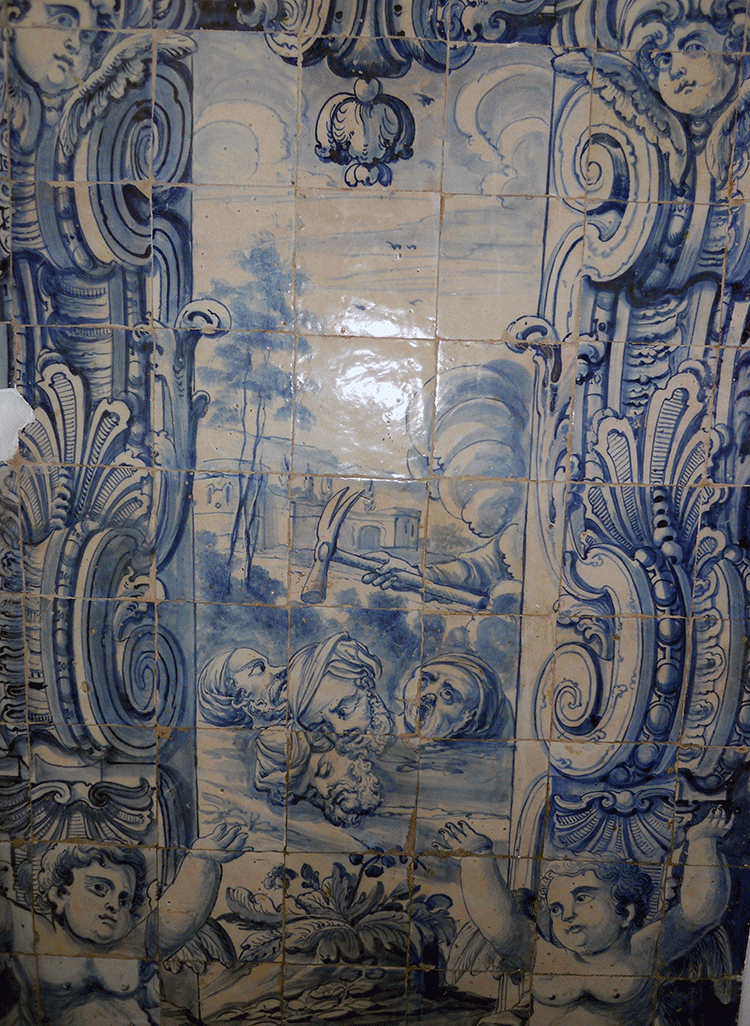
The fate of the five faithful Franciscans St. (that title bestowed later) Francis sent, or sentenced, to proselytize to the Moors in southern Spain and Morocco, on the other hand, is easier to grasp as saint-worthy. Not surprisingly, the Sultan did not embrace their message. So much so he personally beheaded the five (their shocked expressions captured on the azulejos above), whose remains were miraculously moved to Coimbra where they would inspire missionary zeal in a young Anthony – later to become St. Anthony and a great excuse for someone from a city named in his honor to journey to Portugal in advance of his feast day.
And Queen Isabel (Saint Elizabeth of Portugal, 1271-1336) certainly is recorded as a virtuous role model. Pledged to King Dinis at age 12, she plunged herself into daily devotions as he continued to relish rowdy romps at court while awaiting the actual marriage date a few years later. Once at court, she slowly began to alter the king’s ways by her pious example of prayer and service to the poor, pressuring ladies of the court to assist her, not welcomed as a popular pastime by all.
Queen Isabel was known as a peacemaker, even positioning herself upon a mule between two armed factions poised on the battlefield. She managed to broker peace between her son Affonso and his father during the Civil War arising because Affonso felt the King favored the rise in power of one of his illegitimate sons. (“Ah, Mom,” whined the Prince. “My wife, ever the party-pooper,” grunted the King.) Queen Isabel lavishly funded construction of the Santa Clara Convent while the king was still alive, and, after his death, retreated there herself to serve the poor.
This slideshow requires JavaScript.
And, of course, it’s not just their stories. Often it’s parts of them. Literally. Portugal hosts many gleaming reliquaries designed to preserve and display a bone or two of various sizes. As the Mister once remarked years ago with amazement, “One saint sure goes a long way.” Although mysteriously, many of the bones of the reliquaries prominently displayed in Portugal seem to be missing.
One day, much later, I will post my confession about my fascination with relics of saints.
But must be going, if we can make our way through all the partying Spaniards swarming Lisboa for a major soccer match. Two Spanish teams, for some reason. The Lisboa police might welcome some intercessions by Saint Isabel in the streets tonight to part the well-lubricated factions.


 Postcards from Barton Springs