Postcard from Malaga, Spain: Bits glimpsed in a final few museums

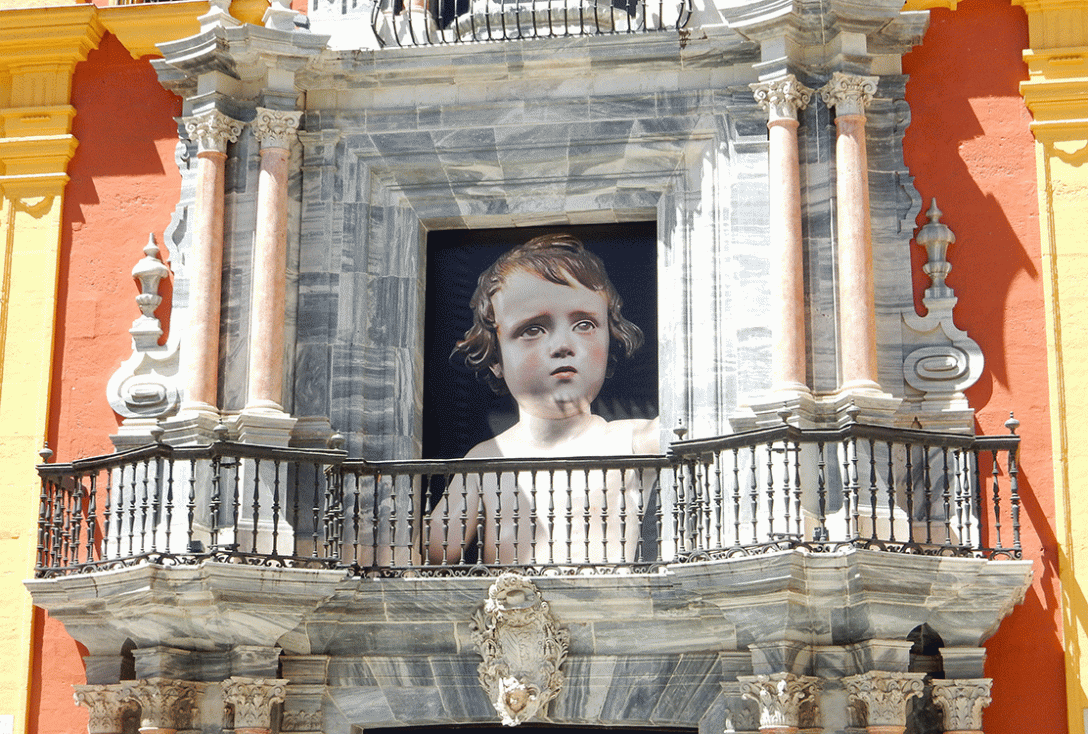
Banner on Palacio Episcopal promoting Ars Malaga exhibition of polychrome sculpture by Pedro de Mena (1628-1688)

Combining a few images from some remaining museums representing the diversity of the city’s offerings from a private 18th-century house museum containing a private Coleccion del Vidrio y Cristal to the only four-year-old impressive Coleccion del Museo Ruso showcasing works on loan from St. Petersburg in a former tobacco factory.

And there are museums with exhibits where no photographs were allowed. Several of these are dedicated to Malaga’s favorite son, Pablo Picasso (1881-1973).

From a white father and a small glass of water of Andalusian life was I born. Born from a mother, daughter of a daughter aged fifteen from the district of Percheles in Malaga, that beautiful bull that engendered my forehead crowned with jasmines.

Pablo Picasso, 1936

He was born in a home on Plaza Merced, now a house museum, Museo Casa Natal. Although the last time Picasso was known to visit the city of his birth was in 1901, purportedly he always held affection for Malaga. Receiving a commitment from Andalusian authorities to construct a museum, a daughter-in-law and grandson of Picasso donated work that makes up the core of the collection of the Fundacion Museo Picasso Malaga in 2009. The works are now housed in the Palacio de los Condes de Buenavista, a Renaissance building with Mudejar elements, and adjacent new construction.

The Olga Picasso exhibition there, which closed in June, was among my favorites of the trip. The exhibition pairs period paintings by Pablo Picasso paired with letters and personal photographs a grandson found in Olga’s portmanteau.

Olga Khokhlova (1891-1955) was born in the Ukraine but left when she joined the Ballets Russes under the direction of Sergei Diaghilev (1872-1929). Pablo Picasso was working on the décor and costumes for one of the ballet productions when he encountered the young dancer in Rome in 1917. They married in Paris in 1918 and had one child, Paul.

In the first years of their marriage, Olga often served as the model for his work. His increasingly unflattering depictions of her reflected the deterioration of their relationship. And, by 1927, Picasso had a new muse attract his interest, Marie-Therese Walter (1909-1977).

Picasso’s first marriage resulted in a separation in 1935, but the couple never divorced. Olga continued to follow him around with Paul in tow and wrote letters to her estranged husband almost daily. All unanswered.


Postcard from Malaga, Spain: High season for spotlighting cemeteries

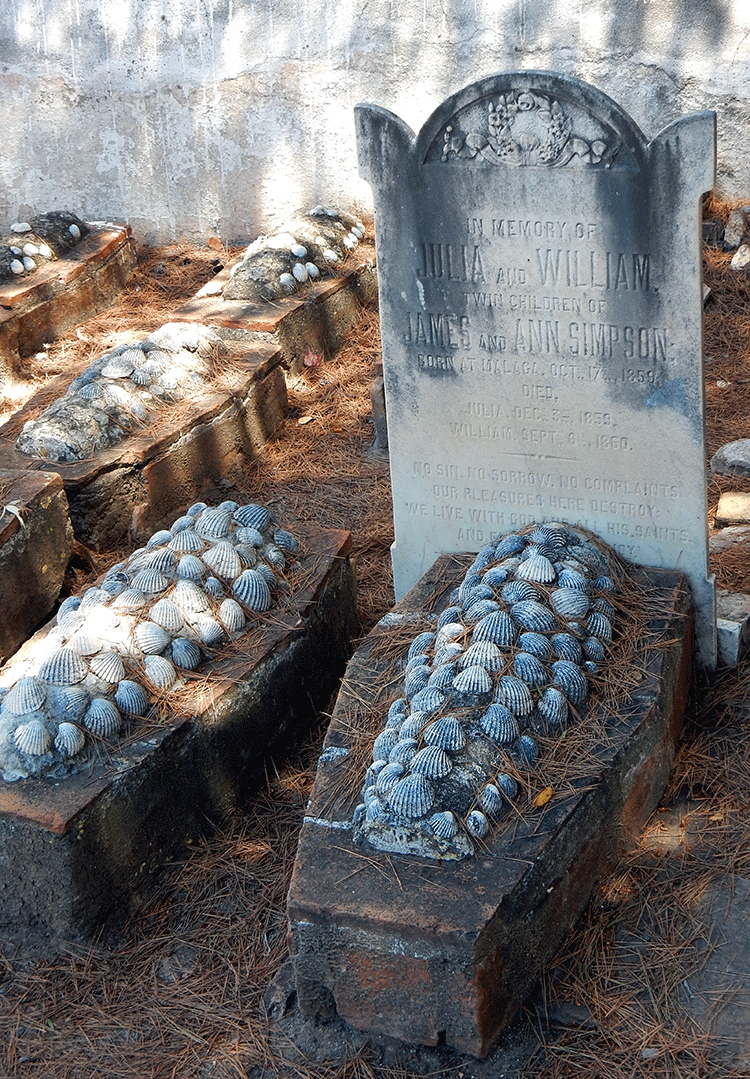
In Memory of Julia and William, Twin Children of James and Ann Simpson, Born at Malaga, October 17, 1859. Died. Julia December 3, 1859. William September 6, 1860. No sin. No sorrow. No complaints our pleasure here destroy. We live with God and all his saints….

Body disposal for non-Catholics in Malaga in the 19th century was a problem. Interment of Protestants was not permitted in the existing graveyards. By law, non-Catholics could only be buried during the night on the beach in a non-restful upright position, hardly comforting to relatives left behind to envision them exposed by tidal fluctuations, easy prey for soothing the hunger pangs of dogs on the prowl.

In 1829, the British Consul succeeded in gaining permission for a cemetery for Protestants on land that was then on the outskirts of town – the first Protestant cemetery in all of Spain.

Among its early residents was Robert Boyd, an Irish-American. Boyd came under the influence of Jose Maria Torrijos y Uriarte (1791-1831), and it is no coincidence they died on the same date. Following his exile in England, Torrijos launched a group of 60 liberals from Gibraltar to deliver a manifesto supporting the constitution of 1812 in opposition to the absolute monarchist Ferdinand VII (1784-1833).

The idealists thought they would land to spread the words that would immediately inspire an uprising. Unfortunately, the king’s men were expecting them. Forty-nine men were executed on San Andres Beach of Malaga. Forty-eight of the men regarded as heroes after the unpopular King Ferdinand VII’s death were interred under a landmark obelisk in the middle of Plaza Merced. Boyd, the Protestant, instead was bound for Cementerio Ingles.

Eight crew members of the SMS Gneisenau found permanent harbor there in December 1900. The Bismarck-class corvette of the German Imperial Navy had full sails to supplement its steam engines and bore a battery of 14 15-centimeter guns, all of which were useless when a fierce storm drove the ship into a stone breakwater at Malaga.

The nonprofit operating the English Cemetery struggles to maintain it. Much of the small graveyard is crumbling. It is far from the elevated aristocratic monumental cemeteries Protestant dead luxuriate in elsewhere in Europe.

But I’ll leave you with the words inscribed on my favorite headstone, that of Joseph Bertram Griffin (1920-1968), who died in Torremolinos. We think his wife, three children and little Zizi (a dog?) missed him, but the inscribed double negative made their feelings unclear. Typos carved in stone:

May God have your soul (in French).

Also with the love of your 3 children and your little Zizi which cannot never forget the wonderfull Daddy and for me husband you was.

Rest in peace. You too, Zizi, whatever and wherever you might be.