An exuberance of spirit from centuries past is reflected in a lack of inhibition in combining bright colors, different materials and multiple patterns in everything from jewelry to architecture. Ethnic clothing worn by Hungarians, such as the outfit on left above, easily could have served as inspiration for the current line of clothing featured in Gucci store windows, on the right above. And, in photos down below, I so would love to have a tile floor like those excavated in Buda Castle after World War II.
Taking license from this Hungarian spirit, here is a mashup of photos from four more of Budapest’s museums.
The Hungarian Diet established the Hungarian National Museum in 1808. The classic columned museum housing the collection of historical relics took a decade to construct, opening in 1846. The square in front of the museum became a gathering spot for rallies during the 1848-49 Revolution and War of Independence. Parliament convened there often until the present-day seat of government was completed on the banks of the Danube.
In 1872, the specialized Budapest Museum of Ethnography was spun off from the national museum. In celebration of the 1896 Millennial, 24 buildings characterizing residential styles of different ethnic groups were erected into a “village” in City Park. While the houses were removed, the furniture and clothing assembled to fill them became an important part of the collection. The collection grew, but its home wandered.
Today, its prominent home is across the plaza from Parliament. Topped by a chariot bearing the personification of the guiding spirit of enlightenment, the building originally served as the Ministry of Justice. Following extensive damage in World War II, the structure became home to the Institute of the Hungarian Labor Movement in 1950. The Hungarian National Gallery was moved in later, but its relocation to the Buda Palace freed the hall for the use of the Museum of Ethnography in 1975.

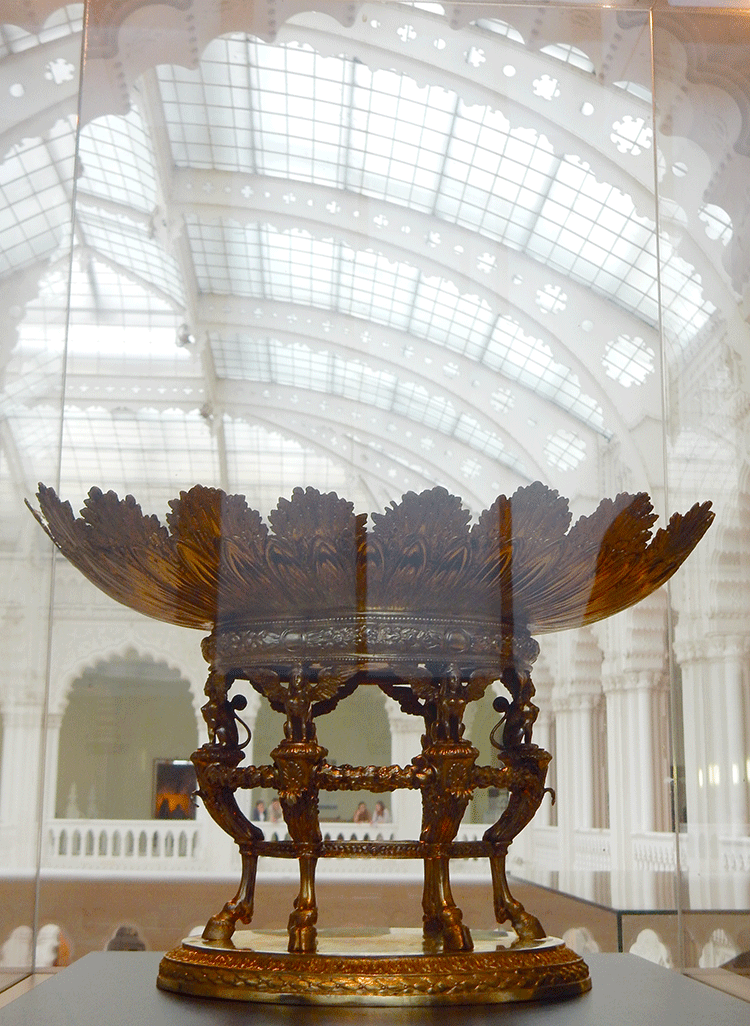
Altar of gilded silver with amethyst, topaz and pearl, 1715, Hungarian National Museum

Museum of Ethnography

Light fixtures in hallway of Mupa Budapest

Museum of Ethnography

Budapest History Museum

Hungarian National Museum

Budapest History Museum

Museum of Ethnography

Mupa Budapest housing Ludwig Museum of Contemporary Art

Museum of Ethnography

Budapest History Museum

Budapest History Museum

Museum of Ethnography

Hungarian National Museum

Hungarian National Museum

Ludwig Museum of Contemporary Art

Hungarian National Museum

Hungarian National Museum

Ludwig Museum of Contemporary Art

Museum of Ethnography

Museum of Ethnography

Oriental weapons from Wars of Expulsion, 1683-1699, Hungarian National Museum

Museum of Ethnography

Sarcophagus of Gyorgy Apafi, 1635, Hungarian National Museum

Rolling Stones atop matchboxes by Marko Pagacnik, Ludwig Museum of Contemporary Art

Hungarian National Museum

Budapest History Museum

Coat of arms of Buda Castle, Budapest History Museum

Empire pyramid piano, early 19th century, Hungarian National Museum

Sarcophagus of Gyorgy Apafi, 1635, Hungarian National Museum

Museum of Ethnography

Hungarian National Museum

Ludwig Museum of Contemporary Art

Sarcophagus of Gyorgy Apafi, 1635, Hungarian National Museum

Ludwig Museum of Contemporary Art

Budapest History Museum

Museum of Ethnography

Budapest History Museum

Museum of Ethnography

Museum of Ethnography

Hungarian National Museum

Museum of Ethnography
The Budapest History Museum, also known as the Castle Museum, was founded in 1887, moving into its home in the Royal Palace in 1967. In addition to the history of the capital, the museum focuses on artifacts found during excavation and rebuilding of the castle. To learn more about the castle’s turbulent history, please go back to an earlier post.
And then, make a leap to the contemporary. If Peter Ludwig went into the family business, cement might have weighed down his pursuit of art. Instead he married Irene Monheim and ended up in her family’s business, Monheim Schokolade. Collecting was the German couple’s passion.
Porcelain and Delft tiles were followed by rare editions, Pre-Columbian, medieval and then Classical art. But it was Ludwig’s acquisition of American Neo-Dada and Pop Art which first brought him to public attention and made him a celebrity.
At the height of his activities in the mid-Seventies Ludwig was buying on average a work of art every single day. His vast collection not only decorated the company offices and his home at Aachen but was loaned to museums in Germany and abroad. Often the loans became gifts and the museums changed their names in recognition of Ludwig’s great generosity.
Today there are no fewer than 30 Ludwig Museums in Germany and abroad….
Frank Whitford, “Obituary: Peter Ludwig,” Independent, July 26, 1996
In 1989, the Ludwig Foundation donated 70 works of art to Hungary to serve as the core of the Ludwig Museum – Museum of Contemporary Art. The museum specializes in post-1945 art to integrate the products of contemporary foreign and Hungarian art into Hungarian intellectual life. In 2005, the museum moved from space in Buda Palace into a portion of a striking new contemporary arts center on the Danube, Mupa Budapest.




 Postcards from Barton Springs