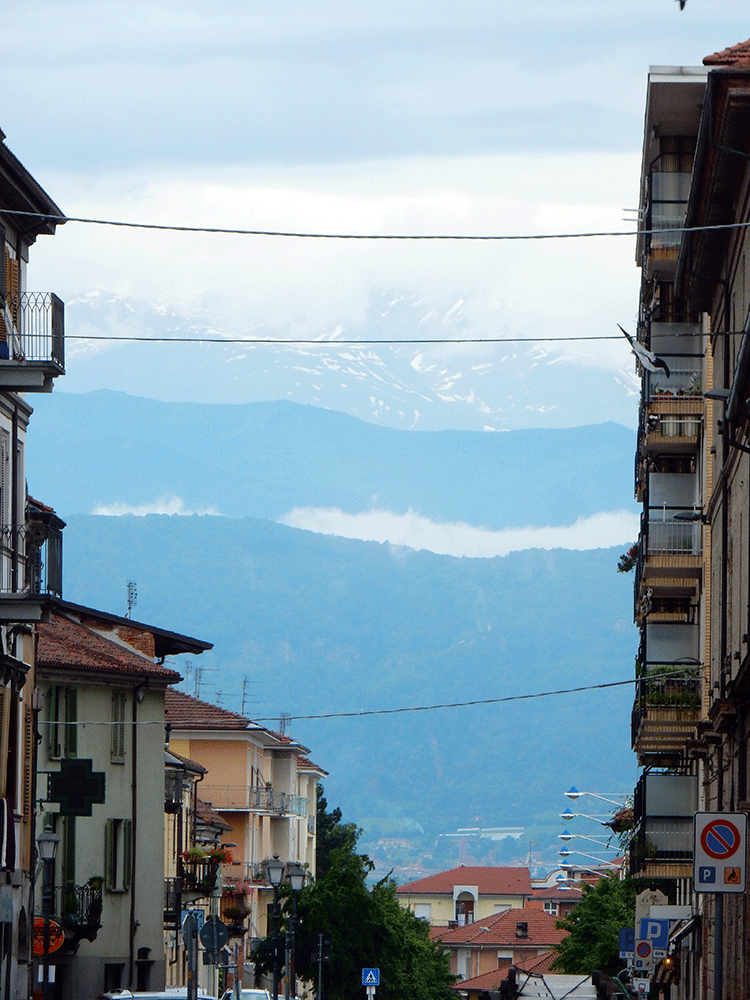
Postcard from Saluzzo, Italy: Last stopping place of a trip always get short shrift

A medieval town set against a backdrop where the snow-topped Alps melt upward into the clouds, making mountains and sky almost indistinguishable from one another.

Located in the province of Cuneo in the Piemonte region of Italy, Saluzzo spent much of its history under the House of Savoy or neighboring France’s rule.

We spent a leisurely week wandering her narrow cobbled streets. Sort of a vacation tagged onto our extended stay in Italy last year.

It is only because I have so many “postcards” waiting to be delivered that the beautiful spot will be showcased mainly through snapshots not words.


Postcard from Saluzzo, Italy: Saint John’s interior surprises with quirkiness

Dominican friars began construction of Chiesa di San Giovanni in 1330. While its façade is plain, almost to the point of homely, the crowning bell tower added in 1376 hints there might be treasures within the brick walls.

The somewhat quirky details inside the church and adjoining convent do not disappoint.


Postcard from Saluzzo, Italy: Transforming a former prison into contemporary gallery space not a problem

Located at the top of the highest hill in Saluzzo, Castello dei Marchesi – La Castiglia was an obvious choice for a fortified castle in the 13th century. Beginning with the French occupation in the 1500s, the once grand brick quarters and towers began to spiral into decline, culminating with their transformation in the 1800s into a high-security prison.

In 2006, the prison was converted into a museum. Portions of the former castle are dedicated to displays relating to life in the Middle Ages, while former prison cells now serve as exhibition space for IGAV – Garuzzo Institute for the Visual Arts, dedicated to contemporary Italian art.

Medieval castles. Former factories. Old prisons. Contemporary Italian architects view transforming existing structures into striking museums as ideal challenges for displaying their talents. Adaptive reuse of existing structures is expected.

Yet in Texas, the General Land Office seems so skeptical of the capabilities of architects that the fine historic landmarks on the west side of Alamo Plaza are deemed impossible to convert into a museum for the Alamo. Absurdly wasteful, unimaginative and disrespectful of the past. So, so very sad.