Postcard from Vicenza, Italy: Art packs punchlines and metaphors

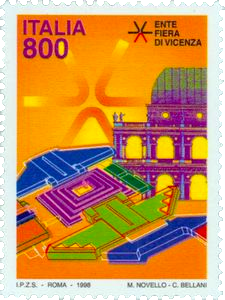
A brightly colored postage stamp depicting the architectural outline of a building with bold geometric shapes and vibrant colors, labeled 'ITALIA 800' for an event in Vicenza.

Above: Blogger’s unnecessary and intrusive fusion of Javier Jaen’s “Goya” banana (see below) with Francisco Goya’s “The Naked Maja.”

I have an interest in making things as immediate and easy to understand as possible…. It’s not always about how things look technically, but about what they say.”

Javier Jaen interviewed by Molly Long for Design Week, October 20, 2020

And artist/graphic designer Javier Jaen (1983-) succeeds in that immediacy. Without glimpsing the “Goya” title, anyone familiar with “The Naked Maja” by Francisco de Goya (1748-1828) would instantly recognize the banana as referencing it.

A large, artistic representation of a banana peeled and lying against a vibrant pink background.

“Goya” by Javier Jaen

Continue reading “Postcard from Vicenza, Italy: Art packs punchlines and metaphors”

Japanese woodblock prints at Blanton reflect ‘Floating World’ values

Above: “Shadows on the Shoji,” Kikukawa Eizan, 1815

The two fashionably dressed courtesans in the foreground appear to have just stepped away from a lively party and are chatting on a veranda. The drinking and flirting figures inside cast shadows against the shoji (lattice-and-paper screen doors) of the brothel behind them.”

Curatorial notes for “Shadows on the Shoji,” Blanton Museum of Art

1815. The date surprised me, due to my lack of understanding the accepted restrictive roles assigned courtesans and geishas in Japanese culture. The witty social commentary and humor contained in Edo-era (1603-1868) woodblock prints in “The Floating World: Masterpieces from the Edo Period” on display at the Blanton Museum of Art prove captivating.

Continue reading “Japanese woodblock prints at Blanton reflect ‘Floating World’ values”