It takes a certain build to be able to port an immense paso, or float, through the streets for the numerous processions that will be held during Semana Santa, or Holy Week. Teams of costaleros, the bearers of the floats, must all be of about the same height and have strong necks.
Costaleros are often encountered at practice, as above, with a training base topped with cinder blocks. Rewarding beer breaks appear part of the team-building practice. As the floats are assembled by members of the church confradias, or brotherhoods, what the porters carry becomes increasingly more elaborate.
In the early evening leading up to Holy Week in Sevilla, almost every church throws open their doors for the faithful to file through to view the heavily gilded pasos.

paso on advance display in a church in Sevilla

paso on advance display in a church in Sevilla

penitentes port a cross on Viernes de Pasion in Cadiz

sacred figures on display in a church in Sevilla

costaleros practice porting the lower portion of a paso in Sevilla

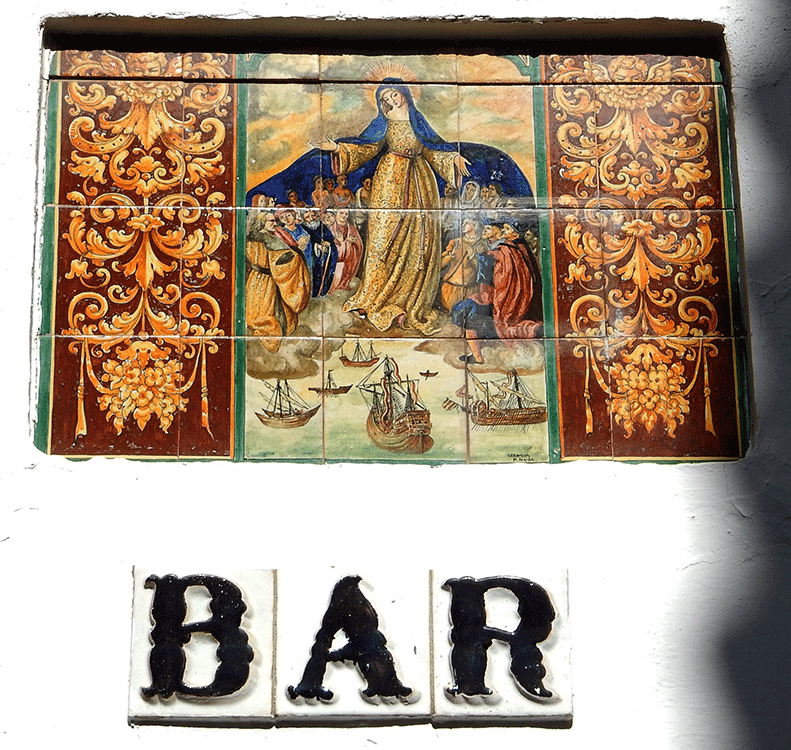
La Virgen of the lace shop in Sevilla

Semana Santa nazareno bonbons at La Campana in Sevilla

La Virgen of the antique store in Sevilla

paso on advance display in a church in Sevilla

Semana Santa chocolate float and nazareno bonbons at La Campana in Sevilla

costaleros practice porting the lower portion of a paso in Sevilla

paso on advance display in a church in Sevilla

costumes and processional banners on advance display in a church in Sevilla

paso on advance display in a church in Sevilla

paso on advance display in a church in Sevilla

paso on advance display in a church in Sevilla

A nazareno reaches into his (or her?) cloak for a holy card for a child on the streets of Cadiz

banner-bearing penitentes on Viernes de Pasion in Cadiz

paso on advance display in a church in Sevilla

paso on advance display in a church in Sevilla

paso on advance display in a church in Sevilla

paso on advance display in a church in Sevilla

paso on advance display in a church in Sevilla

Semana Santa chocolate nazarenos at La Campana in Sevilla

La Virgen of the tassle shop in Sevilla

sacred figures on display in a church in Sevilla

Semana Santa chocolate float and nazareno bonbons at La Campana in Sevilla
Ornately crowned Virgens appear front and center in displays in numerous shops, but the most tantalizing windows are those of La Campana, a confectionary store operating in Sevilla since 1885. Chocolate and bon bon Nazarenos parade side by side next to elaborately crafted candied pasos. Could not help wondering about the proper etiquette for eating a chocolate Nazareno. Feet first? The way I used to nibble at chocolate rabbits when Mother wasn’t looking, thinking she would assume the bunnies merely were sinking deeper in the shiny green grass of the basket?
Last evening found us in Cadiz for processions of penitentes slowly, dirge-like slowly, marching to mark Viernes de Pasion, or Viernes de Dolores, the final Friday of Lent commemorating the suffering of the grieving Virgin Mary. Wearing their signature capirotes, hoods with tall points revealing only their eyes, the figures appeared quite grim.
Guilty confession: dinner summoned us before any actual pasos appeared heading our way along the crowded narrow streets. There were a lot of penitentes in the advance guard.



 Postcards from Barton Springs