Located at the top of the highest hill in Saluzzo, Castello dei Marchesi – La Castiglia was an obvious choice for a fortified castle in the 13th century. Beginning with the French occupation in the 1500s, the once grand brick quarters and towers began to spiral into decline, culminating with their transformation in the 1800s into a high-security prison.
In 2006, the prison was converted into a museum. Portions of the former castle are dedicated to displays relating to life in the Middle Ages, while former prison cells now serve as exhibition space for IGAV – Garuzzo Institute for the Visual Arts, dedicated to contemporary Italian art.

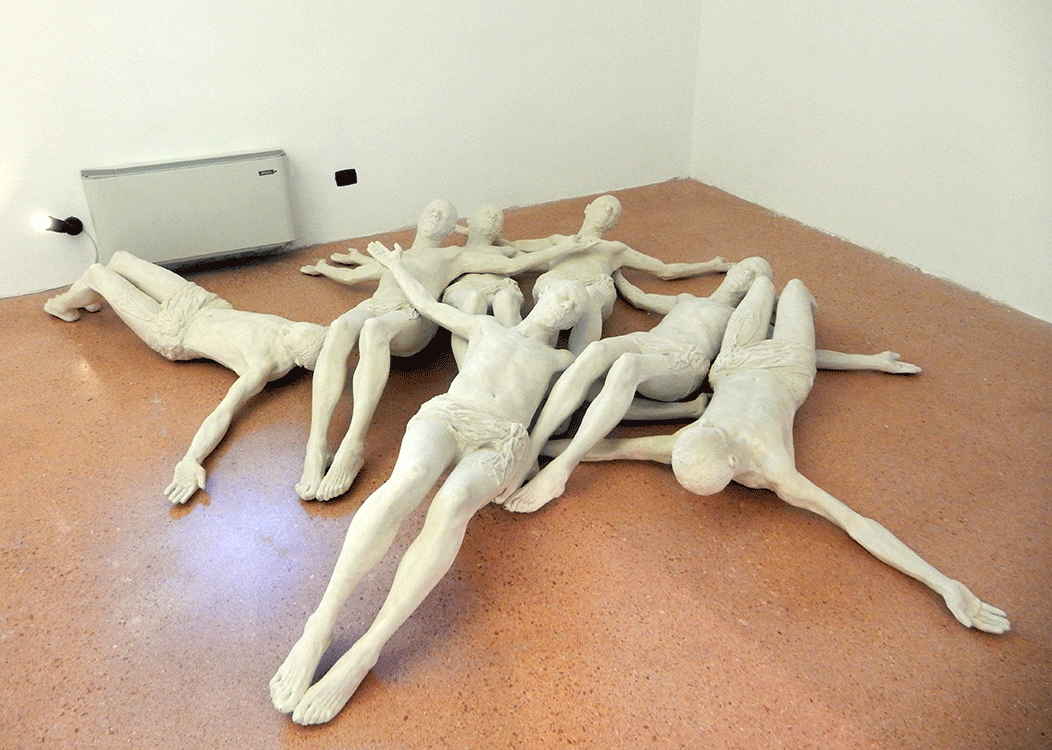
“The City,” Enrico Partengo, glazed terracotta, 2012

detail of “Thisumanity series – Circles of Sinner #2,” Matteo Basile, lambda print on aluminum, 2010

“Adolph,” Paolo Leonardo, digital print, 2011

“Of a Thousand Rivulets – Lunar,” Francesco Sena, sculptures of polystyrene and wax, acrylic and wax on wood panel, 2009

“1985,” Serana Racca, 2010

detail of “Thisumanity series – Circles of Sinner #2,” Matteo Basile, lambda print on aluminum, 2010

detail from “Persian Diary”

detail from “Persian Diary”
Medieval castles. Former factories. Old prisons. Contemporary Italian architects view transforming existing structures into striking museums as ideal challenges for displaying their talents. Adaptive reuse of existing structures is expected.
Yet in Texas, the General Land Office seems so skeptical of the capabilities of architects that the fine historic landmarks on the west side of Alamo Plaza are deemed impossible to convert into a museum for the Alamo. Absurdly wasteful, unimaginative and disrespectful of the past. So, so very sad.





 Postcards from Barton Springs