Postcard from Lisboa, Portugal: Yes, we did eat out a bit.

Traveling for six weeks, we did not always make it to the restaurants with the hottest chefs. We were reserving some of them for the end of our trip, and, by then, we weren’t up for such major meals. Plus, we had some favorite spots beckoning return visits.

Am arbitrarily dividing the food into two categories. The second post will deal with restaurants serving “foreign,” as in not Portuguese, fare.

The Mister’s favorite fish dish of the trip, meaning we went to the place twice so he could enjoy it again, was what I believe is called bream fish at Belem 2 to 8. The flaky fillet topped layers of greens, potatoes and a richly seasoned tomato sauce. For the first time after seeing it on many menus, I broke down and tried the traditional fried green beans. These are whole, long beans in a tempura batter. The Portuguese claim to have originated tempura cooking for seafood and vegetables – tempura referring to the “time” of no-meat fasting during Lent – with missionaries spreading its usage to Japan in the 1600s.

There were a multitude of restaurants within a few blocks of our apartment. Carmo Restaurante was on a lively plaza filled with jacaranda trees and street musicians. Enjoyed freshly steamed clams and octopus rice there. We were prowling for vegetables when we found Café Royale, with a “parcel” of thinly sliced eggplant wrapped around vegetables, tomatoes, basil and fresh mozzarella and a goat cheese salad. Another great haven for lighter vegetable dishes was Vertigo Café, a place one immediately felt comfortably at home. There, we enjoyed eggplant and zucchini toasts, a chicken and couscous salad plate and a “jacked-up” potato, with vegetables and tzatziki sauce.

This slideshow requires JavaScript.

The seductive patio on a hilltop drew us for several meals at Lost in Esplanada. Everything we sampled was good, from a healthy beet soup to the decadent arugula and gorgonzola cheese toast. We also enjoyed roasted vegetables, rosemary grilled shrimp and tender octopus there.

At a nearby park, grab a table, if you can, at the Café Esplanada. Humongous rubber trees provide the shade for this spot filled with locals sipping beer. On Saturdays, there’s a farmers’ market, and the people-watching is great. Don’t delve far into the menu; order what everyone else is having – large toasts, panini-like sandwiches filled with oozing cheese. So good, and so inexpensive. And they convinced me to order a panini-maker as soon as we got home.

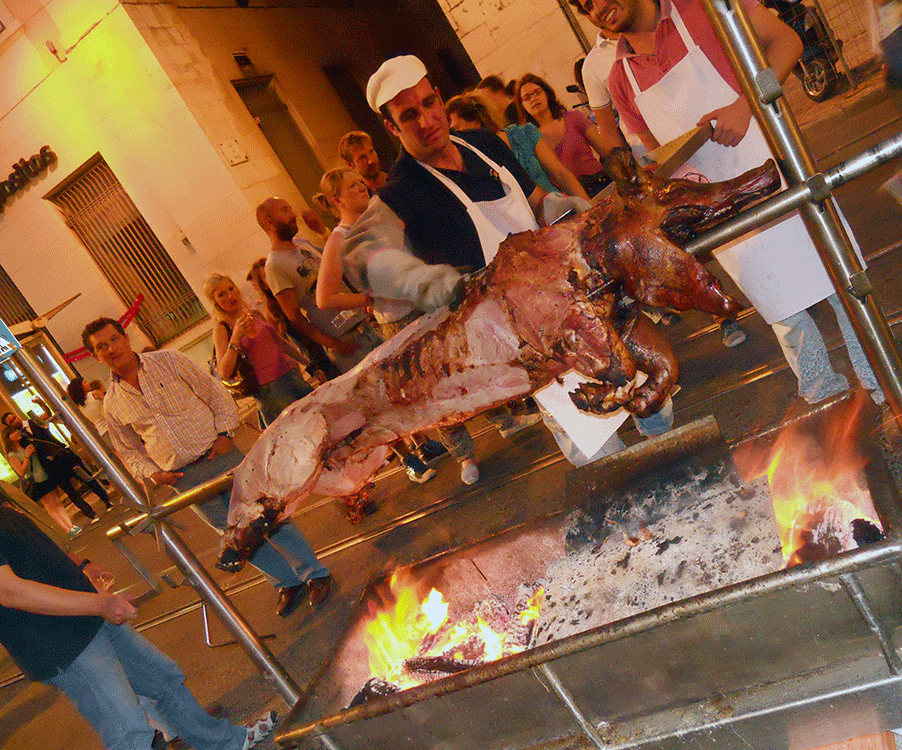
Smoke swirls around booths set up in the streets on the Feast Day of Saint Anthony, and many nights surrounding the date, vending fresh sardines and grilled meats slapped into sandwiches. Some vendors just go whole hog, speared from head to tail.


Postcard from Coimbra, Portugal: Sighing Capital of the World?

There are lots of reasons Coimbra is famous, but I’m just going to get right to the point about what impressed me most.

The size of the “sighs.” Meringues.

“Sighs of the nuns” are what a friend in Mexico told us they are called there, as we would traipse through the streets hand in hand with daughter Kate on many missions to find the egg white and sugar treats wherever we traveled.

In Coimbra, the name is shortened to simply sighs, “suspiros.” In Coimbra, the trek is simplified. They are humongous. You can’t miss them prominently displayed in windows.

We don’t know the story behind these, but, until someone calls me on this, I’m willing to proclaim Coimbra the big-nun-sigh capital of the world. Don’t know why nuns sighed more emphatically here, but perhaps it dates from major relief when Coimbra was liberated from the Moors in the year 1064. Or perhaps it’s caused by centuries of antics of students enrolled at the University of Coimbra, which opened later, not until 1290.

I had no excuse to try one; Kate’s long passed that stage. Well, maybe. Anyway, they were really hard to photograph, being plain white. So, just for the sake of showing her one, I purchased a medium-sized one.

This slideshow requires JavaScript.

The Mister consented to let me use his hand for scale, but he didn’t touch it.

Then. All by myself. Sorry, to confess, Kate. I ate the model.

But I just ate one. And it certainly was not the largest specimen on the market.

Postcard from Porto: Exploring beyond the traditional fare

Pizza always beckons us at some point no matter where we roam. And, perched over the Douro River, the glass-walled Casa d’Oro boasts both a wood-burning oven and almost the best view in town. The pizzas were pretty good, and the arancini made up for missing Central Market’s Passaporto Italia. The  arugula and parmigiano salad was perfect, and even better when combined with the pear and goat cheese salad – a mountain of cubes of both those key ingredients.

With almost an equally prime view on the opposite side of the river from Porto in Vila Nova de Gaia, Real Indiana gave us a burst of flavors totally different from the traditional  dishes of Porto. Texas tastebuds had begun yearning for an infusion of spicy flavors, so the sauces were welcome. The mixed grilled meats as an appetizer were plentiful; each one – chicken, lamb, beef, gyro – had such wonderfully distinctive seasoning. The vegetable biryani was pleasing as well, and all the dishes seemed to pack more punch than Indian restaurants at home.

This slideshow requires JavaScript.

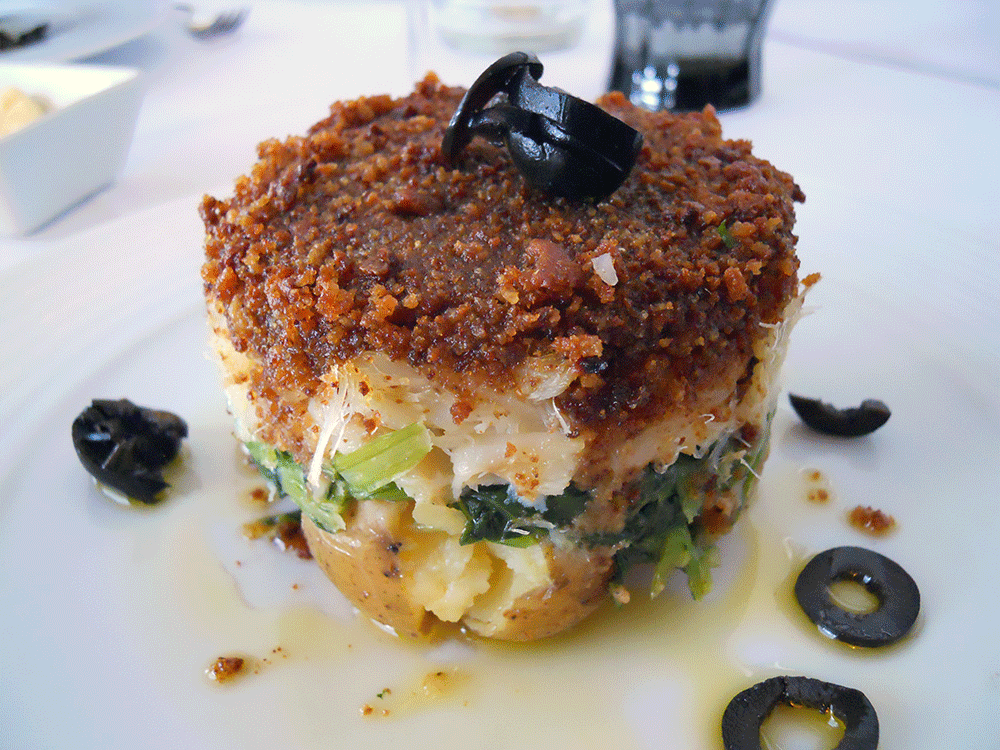
Book Restaurante is among the restaurants updating traditional Portuguese dishes well. Located in a former book store in a downtown neighborhood with several others still surviving, the restaurant keeps shelves of books on the wall and delivers menus and checks in pages of (seemingly) random books. We ate there twice, our first experience being so positive – a lunch special of luscious carrot soup followed by a large timbal of potatoes, greens and crusty codfish. Our second visit was minus the lunch special, so had a painful pinch to it. But, aside from that, the tender tentacle of octopus twisted into a pot layered with roasted slices of sweet potatoes and greens was truly a remarkable dish.

Amazingly, our other contemporary-take experiences were right in our neighborhood. This past March, an enthusiastic new manager making a career change took over a traditional restaurant located in an old post office – O Carteiro. The results were both pleasing and geographically convenient. He introduced us to the refreshing drink of white port, tonic and mint. The kitchen makes a wonderful mixed-game sausage, which was a flavorful appetizer and wonderful as a stuffing for chicken, and the grilled sardines were the best we have had so far….