Postcard from Pontevedra, Spain: Refueling stop for peregrinos

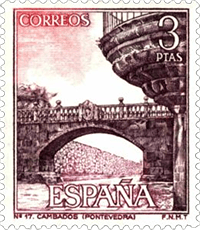
A vintage Spanish postage stamp featuring a bridge over a river, with intricate architectural details and the text 'Correos' and 'España' alongside a denomination of '3 ptas'.

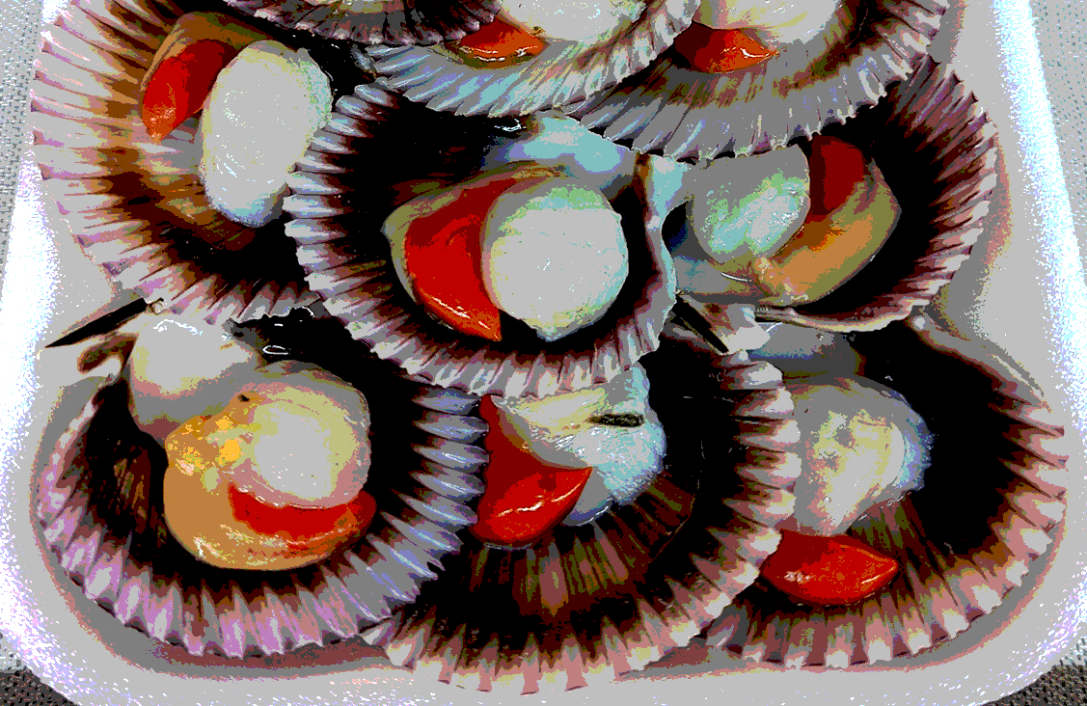
Above: Zamburinas for sale in Mercado de Abastos

During temperate seasons, approximately 280,000 pilgrims strike out on one of the Portuguese routes to Santiago de Campostela, passing through Pontevedra on their way. Pilgrims from around the world walk Camino de Santiago, collecting shell stamps as proof of stops and actual scallop shells as souvenirs. Long ago, it is said these shells served as scoops for food offered at the door of inns along the way.

Myths surround this symbol of Saint James, from his saintly remains being borne ashore at Campostela atop shells to miraculous legends of loved ones who drowned emerging alive from the sea covered in scallop shells. The ridges of the shell symbolize diverse pilgrimage routes, all converging upon Santiago de Compostela.

Whatever the religious symbolism, the zamburinas of the region are famed for their distinctive texture and flavor. Like eggshells for cascarones at Fiesta San Antonio, someone has to empty those shells for the pilgrims. So, we try to do our part by pursuing those delectable Galician zamburinas wherever we can, which translates to every couple of years. (Read about their red “commas” in an earlier postcard sent from Zaragoza in 2022.)

For all of those walkers in Pontevedra arriving tired and hungry yet spiritually recharged, we’ll take a detour before scallops because my alphabetical listing of restaurants dictates it.

Continue reading “Postcard from Pontevedra, Spain: Refueling stop for peregrinos”
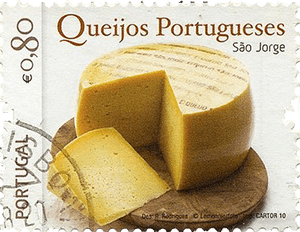
Postcard from Braga, Portugal: Regional Minho dishes and imported flavors

A Portuguese postage stamp featuring a wheel of São Jorge cheese with a wedge cut out, labeled 'Queijos Portugueses' and priced at €0.80.

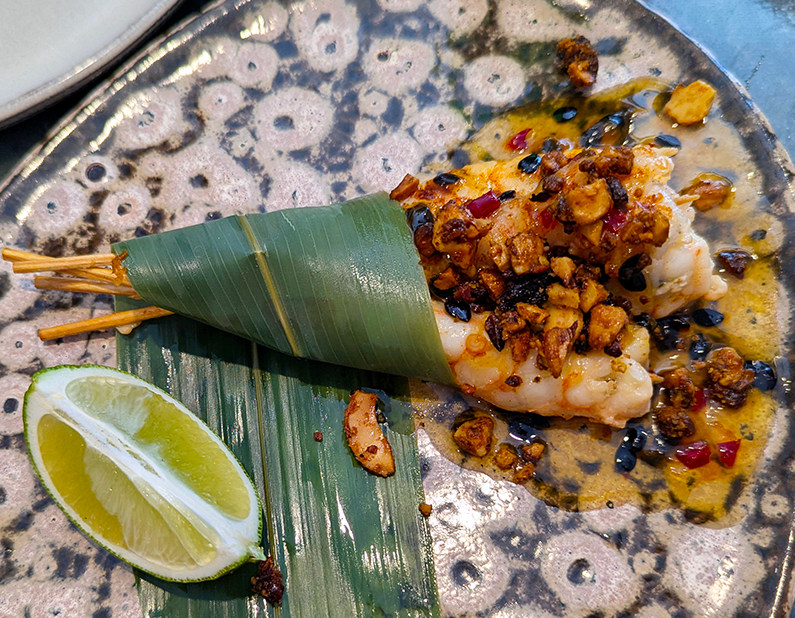
Above: Shrimp pinxtos with passion fruit and nuts at O Filho da Mae

The majority of visitors to Braga are day-trippers based in Porto or on cruise ships, as the city is located a mere 30 miles north of the bustling port city. We stayed a bit longer, as we tend to do. Here is a brief look into dishes we sampled in restaurants listed in alphabetical order, plus a bonus from nearby Guimaraes where we were the day-trippers,

When we stumbled into Casa de Pasto das Carvalheiras, we must have looked somewhat bedraggled. Braga was the first place we were staying overnight on land since leaving Austin. The staff welcomed us warmly into the pub-like environment. An easy first stop. Shaved melon brought out the flavor of tuna carpaccio with pistachios; and mussels arrived in a spicy broth. Barley risotto was flavored by paprika and pork sausage, as one expects in this Minho region of Portugal.

Continue reading “Postcard from Braga, Portugal: Regional Minho dishes and imported flavors”

Postcard from Paris, France: Chefs blur borders

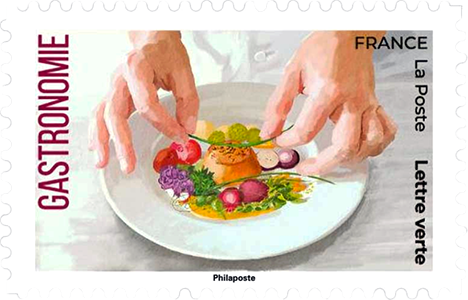
Illustration of a chef's hands arranging a plate with colorful vegetables and a small dish, featured on a French stamp labeled 'Gastronomie'.

Above: Mushroom tarte at Pristine

People who do not accept the new, grow old very quickly.”

A Guide to Modern Cookery, Auguste Escoffier, 1907

We’re already old. We arrived at this stage in but the blink of an eye and certainly have no desire to accelerate the aging process. This is the excuse I offer for not sticking to French food in France.

My hero chefs are those unafraid to pluck ingredients and fuse ideas from many cultures. The evolutionary development of European cuisine as a whole has been speeding along ever since those first traders sailed eastward to discover an explosion of spices and westward to find revolutionary crops – such as tomatoes and cacao.

Continue reading “Postcard from Paris, France: Chefs blur borders”