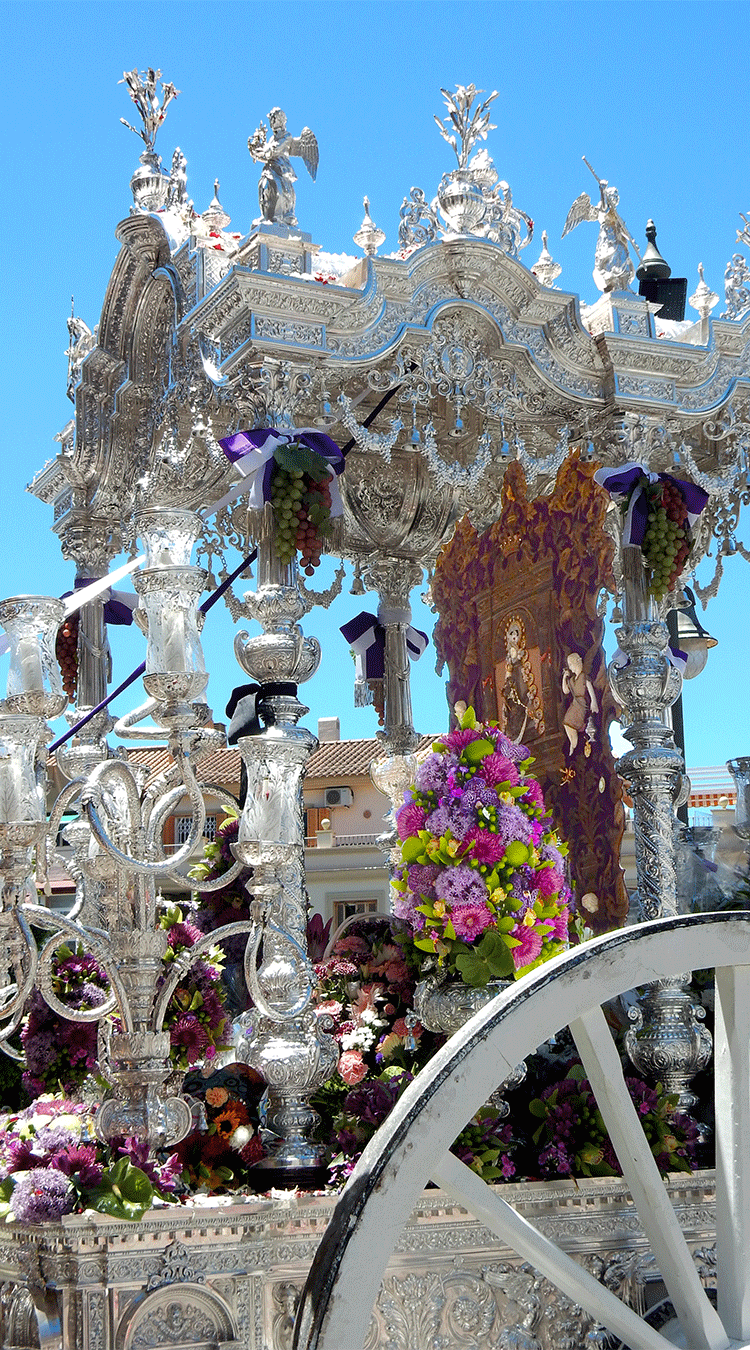
Holy banner of the Virgin Mary paying a call on Santuario de la Victoria
Judging from the silvered coach transporting the banner of the Virgin Mary on a traffic-snarling journey through the streets of Malaga to visit some of city’s other prominent figures of Mary – of which there are many, all elegantly attired and crowned – the banner must be highly regarded by the supporting brotherhood. A team of well-groomed oxen pulled her ahead of a fleet of flatbed tented trailers bearing a host of traditionally costumed followers, refueling themselves periodically from kegs of beer or wine.
We caught up with the procession after its visit to Santuario de la Victoria. The basilica dedicated to Saint Mary of Victory stands on the site of the encampment of King Ferdinand II of Aragon (1452-1516) when he laid siege to recapture Malaga from the Moors in 1487. The original church built soon after was replaced by a grander edifice completed in 1700.
What makes this church one of my favorites in Spain is the most spectacular chamber we almost missed. Up high behind the altar, accessed by a stairway tucked away behind doors off to the side of the altar, is what is referred to as a camarin torre, a changing tower. I am still unsure what that means, but inside a beautifully carved Virgin and Child are held aloft under a most ornate snowy white and gold dome.
The basilica might have risen to be my favorite anywhere if we had been allowed into the crypt down below. Inside are the sculptured tombs of the Counts of Buenavista, accompanied by a host of carved skeletons. Alas, the crypt was closed for restoration, perhaps completed by now.

Camarin Torre in Santuario de la Victoria

Santuario de la Victoria

Santuario de la Victoria

carriage bearing banner of the Virgin on visit to Santuario de la Victoria

Camarin Torre in Santuario de la Victoria

Camarin Torre in Santuario de la Victoria

Santuario de la Victoria

Santuario de la Victoria

Santuario de la Victoria

Camarin Torre in Santuario de la Victoria

Santuario de la Victoria

oxen pulling carriage bearing banner of the Virgin on visit to Santuario de la Victoria

Camarin Torre in Santuario de la Victoria

Santuario de la Victoria
Including a few final remaining shots of other Malaga churches and Marias in this post as well.




 Postcards from Barton Springs